
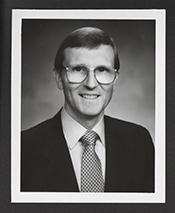
Historical · U.S. House · California · District 10
William Baker
Former U.S. Representative · California District 10 · 1993–1997 · Republican
William Baker represented California's District 10 in the United States House of Representatives (1993–1997) for the Republican party. The page below collects sourced biographical facts, term history, committee roles, and provenance for Baker.
Bioguide ID: B000078
Key facts
- Full name
- William Baker
- State
- California
- District
- District 10
- Party
- Republican
- House service
- 1993–1997
- First House term
- 1993
- Status
- Left office
- Current term ends
- —
- Born
- 1940
- Bioguide ID
- B000078
- Committee assignments
- —
- Dataset version
- 1.20260605
Biographical narrative
963 words · sourced from the Wikipedia REST extract
William Pond Baker, commonly known as Bill Baker, is a former American politician and businessman who served as a U.S. Representative for California's 10th congressional district from 1993 until 1997. A member of the Republican Party, Baker's political career was characterized by his conservative stance on various issues. Before his tenure in Congress, he had an extensive background in finance and public service, including a significant role in the California State Assembly. Following his congressional career, Baker returned to the finance sector, where he continued to influence the field through investment management.
Early life and career
Bill Baker was born on June 14, 1940. He pursued higher education at San Jose State University, where he earned a degree in business. This academic foundation laid the groundwork for his future career in finance and public service. After completing his education, Baker served in the United States Coast Guard Reserve from 1957 to 1965, an experience that contributed to his understanding of military and veteran affairs, as well as instilling a sense of discipline and commitment to public service.
Following his military service, Baker began his professional career as a budget analyst at a large financial corporation. This role allowed him to develop expertise in financial management and budgeting, skills that would prove valuable in his later political endeavors. He subsequently took a position with the California Department of Finance, where he worked for four years. In this capacity, Baker gained insights into state financial operations and public policy, further preparing him for a future in elected office.
Baker's entry into politics began in earnest when he became the vice president of a Taxpayers Association. His involvement in this organization reflected his commitment to fiscal responsibility and conservative principles. In 1980, he successfully ran for a seat in the California State Assembly as a Republican, representing a district that included portions of Contra Costa and Alameda Counties. Over the course of six terms in the Assembly, Baker developed a reputation as a political conservative, focusing on issues related to taxation, government spending, and public policy reform.
House tenure
Bill Baker's congressional career began when he ran for the U.S. House of Representatives in 1992. He successfully won election to represent California's 10th congressional district, a position he held for two terms. During his time in the House, Baker was known for his conservative viewpoints and his commitment to the principles of limited government and fiscal responsibility. His tenure in Congress coincided with a period of significant political change in the United States, including the rise of the Republican Party in the early 1990s.
Baker's first term in the House began in 1993, during which he participated in various legislative activities and contributed to discussions on key national issues. His approach to governance was influenced by his background in finance and his experience in the California State Assembly. Baker's legislative focus often revolved around economic issues, including taxation and government spending, reflecting the priorities of his constituents and his party.
Throughout his time in Congress, Baker was involved in numerous legislative initiatives and debates. He worked alongside fellow Republicans to advance a conservative agenda, advocating for policies that aligned with his beliefs in limited government intervention and fiscal conservatism. His tenure in the House was marked by active participation in committee work and engagement with constituents, as he sought to represent the interests of those in his district.
In 1996, Baker ran for re-election but faced a challenging political landscape. He ultimately lost his bid for a third term to Democratic candidate Ellen Tauscher. This defeat marked the end of his congressional career, concluding his time in the House on January 3, 1997. Baker's departure from Congress was part of a broader shift in the political dynamics of California, as the state began to see a more diverse representation in its congressional delegation.
Legislative focus and committees
During his time in the U.S. House of Representatives, Bill Baker's legislative focus primarily revolved around economic issues, reflecting his background in finance and his conservative political philosophy. He was particularly concerned with matters related to taxation, government spending, and fiscal policy. Baker's positions often aligned with the broader Republican agenda of the time, which emphasized reducing the size of government and promoting free-market principles.
Baker served on various committees during his congressional tenure, where he was able to influence legislation and contribute to discussions on key issues. His committee assignments allowed him to engage with a range of topics, from budgetary matters to economic development. Through his work on these committees, Baker sought to advocate for policies that would benefit his constituents and align with his conservative values.
In addition to his focus on fiscal responsibility, Baker was also involved in discussions surrounding social issues, although his primary emphasis remained on economic matters. His legislative efforts were often characterized by a desire to promote policies that would stimulate economic growth and enhance the financial well-being of individuals and families in his district.
After leaving Congress, Baker returned to the finance sector, where he became a partner in the investment management firm Baker, Brose & Mitsutome. This transition allowed him to leverage his experience and knowledge in finance, continuing to influence the field beyond his political career. Baker's background in both business and politics provided him with a unique perspective on the intersection of economic policy and public service.
In summary, Bill Baker's career as a U.S. Representative was marked by a commitment to conservative principles and a focus on fiscal responsibility. His background in finance and public service informed his legislative priorities, and his tenure in the House reflected the political dynamics of the early 1990s. Following his congressional service, Baker continued to engage with the financial sector, maintaining an active role in investment management.
Notable legislation
Sponsored and co-sponsored legislation for William Baker is pending operator curation. The biographical narrative above carries the same provenance trail until per-bill rows are written.
Sources
- [1]https://en.wikipedia.org/wiki/Bill_Baker_(politician)Wikipedia · retrieved 2026-06-05
Notable quotes
Sourced quotes for William Baker are pending operator curation. Narrative-scope provenance remains attached below.
Sources
- [1]https://en.wikipedia.org/wiki/Bill_Baker_(politician)Wikipedia · retrieved 2026-06-05
Key positions
Curated policy positions for William Baker are pending operator review. The biographical narrative above carries the same provenance trail until per-topic positions are written.
Sources
- [1]https://en.wikipedia.org/wiki/Bill_Baker_(politician)Wikipedia · retrieved 2026-06-05
Terms served
- 1993–1995U.S. House · Term 1 · Republican
- 1995–1997U.S. House · Term 2 · Republican
Sources & provenance
Every attributable claim above carries a per-section [N] marker that resolves to the corresponding URL below. Each entry records the upstream provider, the canonical URL, and the timestamp at which the source was retrieved by the ingest pipeline.
Key facts
- https://bioguide.congress.gov/search/bio/B000078bioguide · retrieved 2026-06-05
- https://www.govtrack.us/congress/members/401081govtrack · retrieved 2026-06-05
Biographical narrative
- https://en.wikipedia.org/wiki/Bill_Baker_(politician)wikipedia · retrieved 2026-06-05
Find your representative
Every U.S. state elects representatives by district. Browse California’s delegation, the full former-representative roster, or explore the role and term length.
Related on The Candidate
- Preceded by Charles GubserEarlier holder of the California District 10 House seat · Republican.Open
- Succeeded by Ellen TauscherLater holder of the California District 10 House seat · Democratic.Open
- Barclay HenleyFormer U.S. Representative · California District 1 · DemocraticOpen
- Charles ClaytonFormer U.S. Representative · California District 1 · RepublicanOpen
- Clarence LeaFormer U.S. Representative · California District 1 · DemocraticOpen
- Clement MillerFormer U.S. Representative · California District 1 · DemocraticOpen