
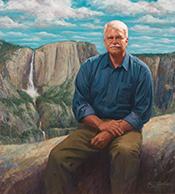
Historical · U.S. House · California · District 11
George Miller
Former U.S. Representative · California District 11 · 1975–2015 · Democratic
George Miller represented California's District 11 in the United States House of Representatives (1975–2015) for the Democratic party. The page below collects sourced biographical facts, term history, committee roles, and provenance for Miller.
Bioguide ID: M000725
Key facts
- Full name
- George Miller
- State
- California
- District
- District 11
- Party
- Democratic
- House service
- 1975–2015
- First House term
- 1975
- Status
- Left office
- Current term ends
- —
- Born
- 1945
- Bioguide ID
- M000725
- Committee assignments
- —
- Dataset version
- 1.20260605
Biographical narrative
924 words · sourced from the Wikipedia REST extract
George Miller is a former U.S. Representative from California, who served in the House of Representatives from 1975 until 2015. A member of the Democratic Party, he represented California's 7th congressional district until redistricting in 2013, after which he served the 11th congressional district until his retirement. Over his two-decade tenure, Miller held significant leadership positions, including Chairman of the House Natural Resources Committee and Chairman of the House Education and Labor Committee. His legislative focus encompassed a wide range of issues, particularly environmental protection, labor rights, and education reform.
Early life and career
George Miller was born on May 17, 1945, in Richmond, California. He is the son of George Miller Jr., a prominent figure in the liberal wing of the California Democratic Party during his time. Miller's educational journey began at Diablo Valley Community College, followed by San Francisco State University, where he completed his undergraduate studies. He later attended the University of California, Davis School of Law, earning his Juris Doctor degree.
Miller's political career began early when he attempted to succeed his father in the California State Senate after his father's death in 1969. He ran in a special election for California's 7th State Senate district but was defeated by Republican John A. Nejedly. Following this setback, Miller served as a legislative assistant to California State Senate Majority Leader George Moscone, gaining valuable experience in the legislative process.
In 1974, Miller decided to run for the U.S. House of Representatives after incumbent Democratic Representative Jerome Waldie chose to pursue a gubernatorial campaign. The congressional district had been renumbered from the 14th to the 7th district due to mid-decade redistricting. Miller won the Democratic primary with a plurality of 38% and subsequently defeated Republican candidate Gary Fernandez in the general election with a vote share of 56%. This election marked the beginning of Miller's long career in Congress.
House tenure
Miller's tenure in the U.S. House of Representatives spanned 20 terms, making him one of the longest-serving members in the history of Congress. His first term began in 1975, and he quickly became known for his liberal stance on various issues. Throughout his career, he consistently won re-election, often with significant margins, and never received less than 60% of the vote in subsequent elections after his initial term.
During his time in Congress, Miller was recognized as one of the most liberal members of the House. A 2013 article in the National Journal noted that he was among the most liberal members of the 113th Congress. His legislative activity included sponsoring numerous bills, although not all were enacted into law. He co-sponsored a substantial number of bills, reflecting his active engagement in the legislative process.
Miller's political career was also marked by a notable incident in 1975 when he walked out of the House chamber during President Gerald Ford's State of the Union Address in protest of the request for military aid to South Vietnam. This act underscored his commitment to his principles and his willingness to take a stand on controversial issues.
In 2012, following redistricting, Miller's congressional district was renumbered to the 11th district. He successfully ran for re-election against Republican Virginia Fuller, continuing his long-standing presence in Congress until his retirement in 2015.
Legislative focus and committees
Throughout his congressional career, George Miller focused on a variety of legislative issues, with particular emphasis on environmental protection, labor rights, and education reform. As a member of the House Natural Resources Committee, Miller served as chairman from 1991 to 1994. During this time, he was instrumental in advancing legislation aimed at preserving public lands, including the California Desert Protection Act of 1994, which established Death Valley National Park and Joshua Tree National Park.
Miller was also the chief sponsor of the Central Valley Project Improvement Act of 1992, which aimed to enhance the management of California's water resources while protecting fish and wildlife populations in the Bay-Delta region. His commitment to environmental issues remained a hallmark of his legislative agenda throughout his career, even after losing his chairmanship when Republicans gained control of Congress in 1994. He continued to serve on the Natural Resources Committee until his retirement.
In addition to environmental concerns, Miller was deeply involved in labor issues. From 2001 to 2006, he served as the ranking Democrat on the Education and Workforce Committee. He played a significant role in drafting the No Child Left Behind Act, which aimed to reform education standards across the nation. His advocacy extended to pension issues and labor rights, particularly in the aftermath of Hurricane Katrina, where he worked to reinstate wage protections for affected workers.
Miller's commitment to education reform included efforts to increase funding for the No Child Left Behind Act and to investigate controversial practices related to the promotion of the law. He was also an advocate for labor and immigration reform in the Commonwealth of the Northern Mariana Islands, highlighting his dedication to workers' rights.
In 2007, as chairman of the House Education and Labor Committee, Miller sponsored the Fair Minimum Wage Act, which was enacted as an amendment to another bill, further demonstrating his commitment to labor rights. His advocacy for worker safety, particularly in foreign factories, underscored his focus on improving conditions for workers globally.
Throughout his career, Miller was known for his ability to navigate complex legislative challenges and for his dedication to the issues he championed. His long tenure in Congress and his involvement in significant legislative initiatives reflect a commitment to public service and advocacy for the constituents he represented.
Notable legislation
Sponsored and co-sponsored legislation for George Miller is pending operator curation. The biographical narrative above carries the same provenance trail until per-bill rows are written.
Sources
- [1]https://en.wikipedia.org/wiki/George_Miller_(California_politician)Wikipedia · retrieved 2026-06-05
Notable quotes
Sourced quotes for George Miller are pending operator curation. Narrative-scope provenance remains attached below.
Sources
- [1]https://en.wikipedia.org/wiki/George_Miller_(California_politician)Wikipedia · retrieved 2026-06-05
Key positions
Curated policy positions for George Miller are pending operator review. The biographical narrative above carries the same provenance trail until per-topic positions are written.
Sources
- [1]https://en.wikipedia.org/wiki/George_Miller_(California_politician)Wikipedia · retrieved 2026-06-05
Terms served
- 1975–1977U.S. House · Term 1 · Democratic
- 1977–1979U.S. House · Term 2 · Democratic
- 1979–1981U.S. House · Term 3 · Democratic
- 1981–1983U.S. House · Term 4 · Democratic
- 1983–1985U.S. House · Term 5 · Democratic
- 1985–1987U.S. House · Term 6 · Democratic
- 1987–1989U.S. House · Term 7 · Democratic
- 1989–1991U.S. House · Term 8 · Democratic
- 1991–1993U.S. House · Term 9 · Democratic
- 1993–1995U.S. House · Term 10 · Democratic
- 1995–1997U.S. House · Term 11 · Democratic
- 1997–1999U.S. House · Term 12 · Democratic
- 1999–2001U.S. House · Term 13 · Democratic
- 2001–2003U.S. House · Term 14 · Democratic
- 2003–2005U.S. House · Term 15 · Democratic
- 2005–2007U.S. House · Term 16 · Democratic
- 2007–2009U.S. House · Term 17 · Democratic
- 2009–2011U.S. House · Term 18 · Democratic
- 2011–2013U.S. House · Term 19 · Democratic
- 2013–2015U.S. House · Term 20 · Democratic
Sources & provenance
Every attributable claim above carries a per-section [N] marker that resolves to the corresponding URL below. Each entry records the upstream provider, the canonical URL, and the timestamp at which the source was retrieved by the ingest pipeline.
Key facts
- https://bioguide.congress.gov/search/bio/M000725bioguide · retrieved 2026-06-05
- http://georgemiller.house.govhouse.gov · retrieved 2026-06-05
Biographical narrative
- https://en.wikipedia.org/wiki/George_Miller_(California_politician)wikipedia · retrieved 2026-06-05
Find your representative
Every U.S. state elects representatives by district. Browse California’s delegation, the full former-representative roster, or explore the role and term length.
Related on The Candidate
- Preceded by Jesse YoungerEarlier holder of the California District 11 House seat · Republican.Open
- Barclay HenleyFormer U.S. Representative · California District 1 · DemocraticOpen
- Charles ClaytonFormer U.S. Representative · California District 1 · RepublicanOpen
- Clarence LeaFormer U.S. Representative · California District 1 · DemocraticOpen
- Clement MillerFormer U.S. Representative · California District 1 · DemocraticOpen
- Democratic PartyFederal candidates and office holders on the Democratic line.Open