
Historical · U.S. House · California · District 11
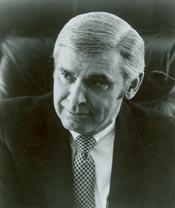
Leo Ryan
Former U.S. Representative · California District 11 · 1973–1979 · Democratic
Leo Ryan represented California's District 11 in the United States House of Representatives (1973–1979) for the Democratic party. The page below collects sourced biographical facts, term history, committee roles, and provenance for Ryan.
Bioguide ID: R000558
Key facts
- Full name
- Leo Ryan
- State
- California
- District
- District 11
- Party
- Democratic
- House service
- 1973–1979
- First House term
- 1973
- Status
- Left office
- Current term ends
- —
- Born
- 1925
- Bioguide ID
- R000558
- Committee assignments
- —
- Dataset version
- 1.20260605
Biographical narrative
922 words · sourced from the Wikipedia REST extract
Leo J. Ryan was an American politician and educator who served as a U.S. Representative for California's 11th congressional district from 1973 until his assassination in 1978. A member of the Democratic Party, Ryan was known for his commitment to social justice and his investigative approach to legislative issues. His tenure in Congress was marked by significant efforts in prison reform, oversight of intelligence operations, and a tragic end during his investigation into the Peoples Temple in Jonestown, Guyana.
Early life and career
Leo Joseph Ryan Jr. was born on May 5, 1925, in Lincoln, Nebraska. His family relocated frequently during his childhood, living in various states including Illinois, Florida, New York, Wisconsin, and Massachusetts. Ryan completed his secondary education at Campion Jesuit High School in Prairie du Chien, Wisconsin, graduating in 1943. Following high school, he participated in the V-12 officer training program at Bates College and served in the United States Navy from 1943 to 1946 as a submariner during World War II.
After his military service, Ryan pursued higher education at Creighton University in Nebraska, where he earned a Bachelor of Arts degree in 1949 and a Master of Science degree in 1951. His professional career began in education, where he worked as a teacher and school administrator. He was also active in local politics, serving on the South San Francisco city council from 1956 to 1962. During this time, he taught English at Capuchino High School and participated in various community activities, including chaperoning the school's marching band to Washington, D.C., for President John F. Kennedy's inaugural parade in 1961. Inspired by Kennedy's call to service, Ryan decided to pursue a career in public office.
In 1962, Ryan was elected mayor of South San Francisco, but his tenure was brief as he soon transitioned to the California State Assembly. He won the election for the 27th district by a significant margin, defeating his opponent by 20,000 votes. Although he had previously run for the Assembly's 25th district in 1958 and lost, his political career gained momentum as he served in the Assembly until 1972. During his time in the state legislature, Ryan was a delegate to the Democratic National Convention in both 1964 and 1968.
Ryan's approach to legislation was characterized by what his aide Jackie Speier described as "experiential legislating." Following the Watts riots in 1965, he took a job as a substitute teacher in the affected area to better understand the conditions faced by residents. In 1970, he conducted a controversial investigation into California's prison system, using a pseudonym to enter Folsom State Prison as an inmate. This experience allowed him to gather firsthand knowledge of the issues within the prison system while he chaired the Assembly committee overseeing prison reform.
House tenure
In 1972, Ryan was elected to the United States House of Representatives, representing California's 11th congressional district. He was reelected three times during his tenure, which lasted until January 3, 1979. His congressional career was marked by a commitment to various social issues, including education, civil rights, and government accountability. Ryan's legislative style was hands-on, often involving direct investigations into the matters he sought to address.
While in Congress, Ryan was particularly vocal about the need for oversight of the Central Intelligence Agency (CIA). He co-authored the Hughes–Ryan Amendment, which mandated that the president report covert CIA activities to Congress. This legislation aimed to enhance transparency and accountability regarding intelligence operations. Ryan's advocacy for oversight extended to other areas as well; he traveled to Newfoundland to investigate the inhumane practices associated with seal hunting, highlighting his concern for animal rights and environmental issues.
Ryan's commitment to social justice was evident in his support for various causes, including his involvement in the case of Patty Hearst, a kidnapping victim who became a controversial figure. He worked alongside Senator S. I. Hayakawa to deliver Hearst's application for presidential commutation to the Pardon Attorney, reflecting his belief in the complexities of justice and rehabilitation.
Legislative focus and committees
During his time in the House, Ryan served on several committees that aligned with his interests and expertise. His focus on education led him to advocate for policies that aimed to improve educational standards and access. He was instrumental in pushing through significant educational reforms, including the Ryan Act, which established an independent regulatory commission to oversee educational credentialing in California.
Ryan's investigative approach to legislation was a hallmark of his career. He believed in gathering firsthand information to inform his policy decisions. This was evident in his investigations into the conditions of California's prisons and his efforts to understand the implications of covert CIA operations. His commitment to transparency and accountability in government was a driving force behind his legislative initiatives.
Tragically, Ryan's life and career were cut short when he traveled to Guyana in 1978 to investigate reports of human rights abuses at the Peoples Temple, led by Jim Jones. His concerns were heightened by the testimonies of former Temple members and the alarming reports emerging from Jonestown. On November 18, 1978, while attempting to leave the settlement, Ryan was assassinated at an airstrip, making him the second sitting member of Congress to be killed in office.
In the aftermath of his death, Ryan's legacy continued to resonate. He was posthumously awarded the Congressional Gold Medal in 1983, recognizing his dedication to public service and the sacrifices he made in pursuit of justice. Ryan's life exemplified a commitment to social change, and his investigative spirit left a lasting impact on the legislative landscape.
Notable legislation
Sponsored and co-sponsored legislation for Leo Ryan is pending operator curation. The biographical narrative above carries the same provenance trail until per-bill rows are written.
Sources
- [1]https://en.wikipedia.org/wiki/Leo_RyanWikipedia · retrieved 2026-06-05
Notable quotes
Sourced quotes for Leo Ryan are pending operator curation. Narrative-scope provenance remains attached below.
Sources
- [1]https://en.wikipedia.org/wiki/Leo_RyanWikipedia · retrieved 2026-06-05
Key positions
Curated policy positions for Leo Ryan are pending operator review. The biographical narrative above carries the same provenance trail until per-topic positions are written.
Sources
- [1]https://en.wikipedia.org/wiki/Leo_RyanWikipedia · retrieved 2026-06-05
Terms served
- 1973–1975U.S. House · Term 1 · Democratic
- 1975–1977U.S. House · Term 2 · Democratic
- 1977–1979U.S. House · Term 3 · Democratic
Sources & provenance
Every attributable claim above carries a per-section [N] marker that resolves to the corresponding URL below. Each entry records the upstream provider, the canonical URL, and the timestamp at which the source was retrieved by the ingest pipeline.
Key facts
- https://bioguide.congress.gov/search/bio/R000558bioguide · retrieved 2026-06-05
- https://www.govtrack.us/congress/members/409514govtrack · retrieved 2026-06-05
Biographical narrative
- https://en.wikipedia.org/wiki/Leo_Ryanwikipedia · retrieved 2026-06-05
Find your representative
Every U.S. state elects representatives by district. Browse California’s delegation, the full former-representative roster, or explore the role and term length.
Related on The Candidate
- Preceded by Jesse YoungerEarlier holder of the California District 11 House seat · Republican.Open
- Succeeded by William RoyerLater holder of the California District 11 House seat · Republican.Open
- Barclay HenleyFormer U.S. Representative · California District 1 · DemocraticOpen
- Charles ClaytonFormer U.S. Representative · California District 1 · RepublicanOpen
- Clarence LeaFormer U.S. Representative · California District 1 · DemocraticOpen
- Clement MillerFormer U.S. Representative · California District 1 · DemocraticOpen