
Historical · U.S. House · California · District 12
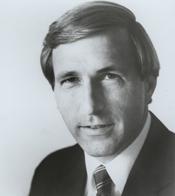
Edwin Zschau
Former U.S. Representative · California District 12 · 1983–1987 · Republican
Edwin Zschau represented California's District 12 in the United States House of Representatives (1983–1987) for the Republican party. The page below collects sourced biographical facts, term history, committee roles, and provenance for Zschau.
Bioguide ID: Z000014
Key facts
- Full name
- Edwin Zschau
- State
- California
- District
- District 12
- Party
- Republican
- House service
- 1983–1987
- First House term
- 1983
- Status
- Left office
- Current term ends
- —
- Born
- 1940
- Bioguide ID
- Z000014
- Committee assignments
- —
- Dataset version
- 1.20260605
Biographical narrative
926 words · sourced from the Wikipedia REST extract
Edwin V. W. Zschau is a former U.S. Representative who served California’s 12th congressional district from 1983 to 1987. A member of the Republican Party, Zschau's career spans various fields, including education, business, and politics. He has held significant roles in academia and the private sector, and he briefly re-entered the political scene in the 1990s. His educational background is extensive, with degrees from prestigious institutions, and he has contributed to various organizations and initiatives throughout his career.
Early life and career
Edwin Van Wyck Zschau was born on January 6, 1940, in Omaha, Nebraska. His early years were marked by notable achievements, including becoming a figure skating champion during his teenage years. Zschau pursued higher education at Princeton University, where he graduated cum laude with an A.B. in philosophy in 1961. His academic pursuits included a senior thesis that explored the concepts of space, time, and geometry through the lens of prominent philosophers and scientists, from Kant to Einstein.
Following his undergraduate studies, Zschau continued his education at Stanford University, earning multiple degrees, including an M.B.A., an M.S. in statistics, and a Ph.D. His academic career began in the 1960s when he served as an assistant professor at the Stanford Graduate School of Business for five years. During this time, he taught courses in computer systems, management science, and business policy. His expertise in economics led him to a visiting assistant professorship at the Harvard Business School during the 1967-68 academic year, where he taught the foundational MBA course in managerial economics.
In 1968, Zschau ventured into the business world by founding System Industries, a computer company. His collaboration with Henry B. Eyring was instrumental in establishing the company, which focused on innovative solutions in the computing sector. Zschau held the position of CEO at System Industries until 1981, during which he contributed to the growth and development of the company.
After his tenure at System Industries, Zschau transitioned into venture capital, becoming a general partner at Brentwood Associates, a firm based in Los Angeles, in 1987. His career continued to evolve as he took on leadership roles in various companies, including serving as chairman and CEO of Censtor Corp., which was established by Brentwood to develop advanced magnetic recording components for disk drives. In 1993, he was recruited to lead AdStar, the IBM Storage Systems Division, further solidifying his reputation in the technology sector.
House tenure
Zschau's political career began in earnest when he was elected to the U.S. House of Representatives, representing California's 12th congressional district. His first term commenced in 1983, and he served two terms in total, concluding his congressional service on January 3, 1987. During his time in office, Zschau was involved in various legislative initiatives and contributed to discussions on a range of issues pertinent to his constituents and the nation.
In 1986, Zschau sought to expand his political influence by running for a seat in the United States Senate. He emerged victorious in a competitive Republican primary that featured several notable candidates, including conservative commentator Bruce Herschensohn and Congresswoman Bobbi Fiedler. Despite his success in the primary, Zschau faced incumbent Democrat Alan Cranston in the general election, where he ultimately lost by a narrow margin.
Following his congressional career, Zschau briefly re-entered the political arena in 1996 as the vice presidential running mate to former Colorado Governor Dick Lamm, who was a Democratic candidate challenging Ross Perot for the Reform Party presidential nomination. This foray into politics marked a significant moment in Zschau's career, as he sought to engage with a broader audience on national issues.
Legislative focus and committees
During his tenure in the House of Representatives, Zschau's legislative focus encompassed various areas, reflecting the interests and needs of his constituents in California. While specific details regarding the bills he sponsored or supported are not provided, it is common for representatives to engage in issues related to economic development, education, technology, and public policy, given Zschau's extensive background in business and academia.
Zschau's involvement in committees would have been integral to his role as a legislator, as committee assignments typically allow representatives to influence legislation and address specific areas of concern. The nature of his committee work would have likely aligned with his expertise in business and technology, enabling him to contribute meaningfully to discussions and decisions affecting these sectors.
Beyond his legislative duties, Zschau's post-congressional career has included significant contributions to education and innovation. He has served as a visiting lecturer at Princeton University, where he has taught in various departments, including Electrical Engineering and Operations Research. His role as a mentor to students, including notable figures such as Tim Ferriss, highlights his commitment to education and the development of future leaders.
In addition to his academic pursuits, Zschau has held leadership positions in several organizations, including serving as the founding chairman of The Tech Museum of Innovation in San Jose. His involvement in various boards and advisory roles underscores his ongoing commitment to advancing technology and innovation in society.
Zschau's personal life includes his marriage to Jo, and they reside in Nantucket, Massachusetts, and Los Altos, California. The couple has three children, comprising one son and two daughters. Zschau is also known for his musical talent, particularly his skill in playing the ukulele, which earned him the nickname "the singing congressman."
Throughout his career, Edwin V. W. Zschau has demonstrated a multifaceted approach to his professional life, balancing roles in education, business, and public service. His contributions to the fields of technology and politics reflect a commitment to innovation and civic engagement.
Notable legislation
Sponsored and co-sponsored legislation for Edwin Zschau is pending operator curation. The biographical narrative above carries the same provenance trail until per-bill rows are written.
Sources
- [1]https://en.wikipedia.org/wiki/Ed_ZschauWikipedia · retrieved 2026-06-05
Notable quotes
Sourced quotes for Edwin Zschau are pending operator curation. Narrative-scope provenance remains attached below.
Sources
- [1]https://en.wikipedia.org/wiki/Ed_ZschauWikipedia · retrieved 2026-06-05
Key positions
Curated policy positions for Edwin Zschau are pending operator review. The biographical narrative above carries the same provenance trail until per-topic positions are written.
Sources
- [1]https://en.wikipedia.org/wiki/Ed_ZschauWikipedia · retrieved 2026-06-05
Terms served
- 1983–1985U.S. House · Term 1 · Republican
- 1985–1987U.S. House · Term 2 · Republican
Sources & provenance
Every attributable claim above carries a per-section [N] marker that resolves to the corresponding URL below. Each entry records the upstream provider, the canonical URL, and the timestamp at which the source was retrieved by the ingest pipeline.
Key facts
- https://bioguide.congress.gov/search/bio/Z000014bioguide · retrieved 2026-06-05
- https://www.govtrack.us/congress/members/412007govtrack · retrieved 2026-06-05
Biographical narrative
- https://en.wikipedia.org/wiki/Ed_Zschauwikipedia · retrieved 2026-06-05
Find your representative
Every U.S. state elects representatives by district. Browse California’s delegation, the full former-representative roster, or explore the role and term length.
Related on The Candidate
- Preceded by Pete McCloskey Jr.Earlier holder of the California District 12 House seat · Republican.Open
- Succeeded by Ernest KonnyuLater holder of the California District 12 House seat · Republican.Open
- Barclay HenleyFormer U.S. Representative · California District 1 · DemocraticOpen
- Charles ClaytonFormer U.S. Representative · California District 1 · RepublicanOpen
- Clarence LeaFormer U.S. Representative · California District 1 · DemocraticOpen
- Clement MillerFormer U.S. Representative · California District 1 · DemocraticOpen