
Historical · U.S. House · California · District 13
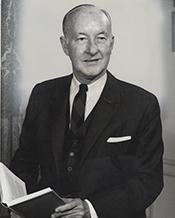
Charles Teague
Former U.S. Representative · California District 13 · 1955–1975 · Republican
Charles Teague represented California's District 13 in the United States House of Representatives (1955–1975) for the Republican party. The page below collects sourced biographical facts, term history, committee roles, and provenance for Teague.
Bioguide ID: T000109
Key facts
- Full name
- Charles Teague
- State
- California
- District
- District 13
- Party
- Republican
- House service
- 1955–1975
- First House term
- 1955
- Status
- Left office
- Current term ends
- —
- Born
- 1909
- Bioguide ID
- T000109
- Committee assignments
- —
- Dataset version
- 1.20260605
Biographical narrative
912 words · sourced from the Wikipedia REST extract
Charles M. Teague was an American lawyer and politician who served as a U.S. Representative for California's 13th congressional district from 1955 until his death in 1974. A member of the Republican Party, Teague was known for his long tenure in Congress, during which he contributed to various legislative efforts and served on important committees. His background in law and his involvement in local agriculture shaped his political career and legislative priorities.
Early life and career
Charles McKevett Teague was born on September 18, 1909, in Santa Paula, California. He came from a family with deep roots in the citrus farming industry; his father, Charles C. Teague, was a co-founder of Sunkist Growers, Incorporated, a significant organization in the agricultural sector. Teague's upbringing in this environment provided him with a unique perspective on the agricultural needs and challenges facing his community. His brother, Milton Teague, later took on a leadership role within Sunkist, further entrenching the family in the agricultural landscape of California.
Teague pursued his education in the public school system before attending Stanford University, where he graduated in 1931. He continued his studies at Stanford Law School, earning his law degree in 1934. Following his admission to the bar in the same year, Teague began his legal career, which would later complement his political endeavors.
In addition to his legal practice, Teague served in the United States Army Air Forces during World War II from 1942 to 1946. His military service earned him the Air Force Commendation Ribbon, reflecting his dedication and contributions during a pivotal time in American history. After the war, he returned to his business interests, serving as a director of the McKevett Corporation and Teague-McKevett Company, both of which were later merged with Limoneira, a company involved in agriculture.
Before entering Congress, Teague was actively involved in local politics and community organizations. He held the position of president of the Ventura County Republican Assembly, which positioned him as a prominent figure within the local Republican Party and set the stage for his future political career.
House tenure
Teague was elected to the United States House of Representatives in 1954, representing California's 13th congressional district. His election marked the beginning of a decade-long career in Congress, where he would serve a total of ten terms. Teague's tenure in the House was characterized by his active participation in legislative matters and his commitment to representing the interests of his constituents.
During his time in Congress, Teague held significant roles, including serving as the ranking Republican on the House Agriculture Committee. This position allowed him to influence agricultural policy and advocate for the needs of farmers and agricultural workers, which were critical to the economy of his district. Additionally, he was a member of the House Veterans' Affairs Committee, where he contributed to discussions and legislation affecting veterans and their families.
Teague's legislative record included support for several key civil rights measures. He voted in favor of the Civil Rights Acts of 1957, 1960, 1964, and 1968, demonstrating his commitment to advancing civil rights in the United States. He also supported the 24th Amendment to the U.S. Constitution, which prohibited poll taxes in federal elections, and the Voting Rights Act of 1965, which aimed to eliminate barriers to voting for African Americans.
Teague's voting record reflects a complex engagement with the social issues of his time, balancing his party's positions with the evolving landscape of civil rights in America. His participation in these legislative efforts positioned him as a figure of significance during a transformative era in U.S. history.
Legislative focus and committees
Throughout his congressional career, Teague's legislative focus was primarily centered on agriculture and veterans' affairs, reflecting the needs of his constituents in California's 13th district. His role on the House Agriculture Committee was particularly influential, as he worked on policies that directly impacted the agricultural sector, which was a cornerstone of the local economy. Teague's understanding of agricultural issues, informed by his family's background in the industry, allowed him to advocate effectively for farmers and agricultural workers.
In addition to his work on agriculture, Teague's involvement in the House Veterans' Affairs Committee highlighted his dedication to addressing the needs of veterans. This committee played a crucial role in shaping policies related to veterans' benefits, healthcare, and other services essential for those who had served in the military. Teague's commitment to veterans was evident in his legislative actions and his efforts to ensure that they received the support they deserved.
Teague's voting record on civil rights legislation indicates a willingness to engage with the pressing social issues of his time. His support for various civil rights acts and amendments demonstrated a recognition of the importance of equality and justice in American society. This aspect of his legislative focus reflects the broader changes occurring in the United States during the 1960s, as the nation grappled with issues of race, voting rights, and social justice.
Teague's career in the House of Representatives came to an end with his passing on January 1, 1974. He was found deceased at his home in Santa Paula, California, at the age of 64, due to an apparent heart attack. His contributions to Congress and his commitment to his constituents left a lasting impact on the community he served. Following his death, Teague was cremated, and his ashes were interred at the Santa Paula Cemetery, marking the end of a significant chapter in the political history of California's 13th congressional district.
Notable legislation
Sponsored and co-sponsored legislation for Charles Teague is pending operator curation. The biographical narrative above carries the same provenance trail until per-bill rows are written.
Sources
- [1]https://en.wikipedia.org/wiki/Charles_M._TeagueWikipedia · retrieved 2026-06-05
Notable quotes
Sourced quotes for Charles Teague are pending operator curation. Narrative-scope provenance remains attached below.
Sources
- [1]https://en.wikipedia.org/wiki/Charles_M._TeagueWikipedia · retrieved 2026-06-05
Key positions
Curated policy positions for Charles Teague are pending operator review. The biographical narrative above carries the same provenance trail until per-topic positions are written.
Sources
- [1]https://en.wikipedia.org/wiki/Charles_M._TeagueWikipedia · retrieved 2026-06-05
Terms served
- 1955–1957U.S. House · Term 1 · Republican
- 1957–1959U.S. House · Term 2 · Republican
- 1959–1961U.S. House · Term 3 · Republican
- 1961–1963U.S. House · Term 4 · Republican
- 1963–1965U.S. House · Term 5 · Republican
- 1965–1967U.S. House · Term 6 · Republican
- 1967–1969U.S. House · Term 7 · Republican
- 1969–1971U.S. House · Term 8 · Republican
- 1971–1973U.S. House · Term 9 · Republican
- 1973–1975U.S. House · Term 10 · Republican
Sources & provenance
Every attributable claim above carries a per-section [N] marker that resolves to the corresponding URL below. Each entry records the upstream provider, the canonical URL, and the timestamp at which the source was retrieved by the ingest pipeline.
Key facts
- https://bioguide.congress.gov/search/bio/T000109bioguide · retrieved 2026-06-05
- https://www.govtrack.us/congress/members/410691govtrack · retrieved 2026-06-05
Biographical narrative
- https://en.wikipedia.org/wiki/Charles_M._Teaguewikipedia · retrieved 2026-06-05
Find your representative
Every U.S. state elects representatives by district. Browse California’s delegation, the full former-representative roster, or explore the role and term length.
Related on The Candidate
- Preceded by Ernest BramblettEarlier holder of the California District 13 House seat · Republican.Open
- Succeeded by John DuarteLater holder of the California District 13 House seat · Republican.Open
- Barclay HenleyFormer U.S. Representative · California District 1 · DemocraticOpen
- Charles ClaytonFormer U.S. Representative · California District 1 · RepublicanOpen
- Clarence LeaFormer U.S. Representative · California District 1 · DemocraticOpen
- Clement MillerFormer U.S. Representative · California District 1 · DemocraticOpen