
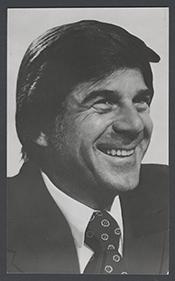
Historical · U.S. House · California · District 13
Pete Stark
Former U.S. Representative · California District 13 · 1973–2013 · Democratic
Pete Stark represented California's District 13 in the United States House of Representatives (1973–2013) for the Democratic party. The page below collects sourced biographical facts, term history, committee roles, and provenance for Stark.
Bioguide ID: S000810
Key facts
- Full name
- Pete Stark
- State
- California
- District
- District 13
- Party
- Democratic
- House service
- 1973–2013
- First House term
- 1973
- Status
- Left office
- Current term ends
- —
- Born
- 1931
- Bioguide ID
- S000810
- Committee assignments
- —
- Dataset version
- 1.20260605
Biographical narrative
888 words · sourced from the Wikipedia REST extract
Fortney Pete Stark was a prominent American politician and businessman who served as a U.S. Representative from California for 40 years, from 1973 until 2013. A member of the Democratic Party, Stark represented California's 13th congressional district, which included parts of Alameda County, during the latter part of his tenure. He was known for his progressive stances on various issues and was recognized as the only openly atheist member of Congress during his time in office. Stark's long career in the House made him one of the most senior members of Congress at the time of his departure.
Early life and career
Fortney Hillman Stark Jr. was born on November 11, 1931, in Milwaukee, Wisconsin. He was the son of Dorothy M. (née Mueller) and Fortney Hillman Stark, and he had German and Swiss ancestry. Stark completed his secondary education at Wauwatosa High School, graduating in 1949. He pursued higher education at the Massachusetts Institute of Technology (MIT), where he earned a Bachelor of Science degree in general engineering in 1953. Following his graduation, Stark served in the United States Air Force from 1955 to 1957.
After his military service, Stark continued his education at the Haas School of Business at the University of California, Berkeley, where he obtained his Master of Business Administration (MBA) in 1960. In 1963, he founded Security National Bank in Walnut Creek, California, which he described as a financial institution dedicated to meeting the needs of working people. Notably, the bank was among the first in the nation to offer free checking services. Stark's early political inclinations were aligned with the Republican Party; however, his opposition to the Vietnam War prompted him to switch to the Democratic Party in the mid-1960s. His political activism was evident during this period, as he printed checks adorned with peace signs and placed a large peace symbol on the roof of his bank's headquarters. Stark's political career began to take shape when he was elected to the Common Cause National Governing Board in 1971. He sold his interest in the bank for a substantial sum in 1972, shortly before beginning his tenure in the U.S. House of Representatives.
House tenure
Stark entered the U.S. House of Representatives after winning the Democratic primary in 1972 against 14-term incumbent George Paul Miller, securing 56% of the vote. He subsequently defeated Republican candidate Lew Warden in the general election with 53% of the vote. Over the course of his career, Stark was reelected 18 times, often with significant margins. His tenure in the House began on January 3, 1973, and he continued to serve until January 3, 2013, making him the longest-serving member of Congress from California at the time of his departure. Stark's district was renumbered as the 15th district following the 2010 redistricting, which altered the boundaries of congressional districts in California.
In the 2012 election, Stark faced a primary challenge from fellow Democrat Eric Swalwell, who was significantly younger than Stark. Despite narrowly finishing first in the primary, Stark lost to Swalwell in the general election, marking a notable upset in his political career. This defeat was significant as it made Stark the second-longest-serving U.S. Congressman to lose a general election, following Jack Brooks of Texas. Throughout his time in office, Stark was known for his strong positions on various issues, particularly fiscal policy and healthcare.
Legislative focus and committees
During his lengthy congressional career, Stark was involved in numerous legislative initiatives and served on several committees. He was particularly vocal about fiscal policy, often expressing concerns about government spending and economic stability. Stark voted against the Food, Conservation, and Energy Act of 2008, which was supported by many of his Democratic colleagues, citing concerns over its cost. He was also a vocal critic of the Emergency Economic Stabilization Act of 2008, which established the Troubled Asset Relief Program (TARP). Stark opposed the bank bailout legislation, arguing that it rewarded the financial institutions responsible for the economic crisis.
In addition to his fiscal policy stances, Stark had a longstanding commitment to healthcare issues. He was critical of the health insurance system in the United States, particularly during the administration of President George W. Bush. Stark, along with fellow Congressman John Conyers, initiated legal action against President Bush regarding the Deficit Reduction Act of 2005, which included cuts to Medicaid payments. This case, known as Conyers v. Bush, was ultimately dismissed due to a lack of standing.
Stark's legislative initiatives included introducing a bill in 2010 aimed at implementing a financial transaction tax on large-scale traders. The proposed tax was intended to generate revenue for various programs, including climate change adaptation, child care services, and a Global Health Trust Fund to combat diseases such as HIV/AIDS, malaria, and tuberculosis. Throughout his tenure, Stark was recognized for his commitment to progressive policies and his advocacy for the needs of his constituents.
Stark's extensive career in the U.S. House of Representatives left a lasting impact on California's political landscape and on the issues he championed. His unique position as the only openly atheist member of Congress and his progressive viewpoints contributed to his distinct identity within the legislative body. Stark's papers and records from his time in office are preserved by the Hayward Area Historical Society, serving as a resource for understanding his contributions to American politics.
Notable legislation
Sponsored and co-sponsored legislation for Pete Stark is pending operator curation. The biographical narrative above carries the same provenance trail until per-bill rows are written.
Sources
- [1]https://en.wikipedia.org/wiki/Pete_StarkWikipedia · retrieved 2026-06-05
Notable quotes
Sourced quotes for Pete Stark are pending operator curation. Narrative-scope provenance remains attached below.
Sources
- [1]https://en.wikipedia.org/wiki/Pete_StarkWikipedia · retrieved 2026-06-05
Key positions
Curated policy positions for Pete Stark are pending operator review. The biographical narrative above carries the same provenance trail until per-topic positions are written.
Sources
- [1]https://en.wikipedia.org/wiki/Pete_StarkWikipedia · retrieved 2026-06-05
Terms served
- 1973–1975U.S. House · Term 1 · Democratic
- 1975–1977U.S. House · Term 2 · Democratic
- 1977–1979U.S. House · Term 3 · Democratic
- 1979–1981U.S. House · Term 4 · Democratic
- 1981–1983U.S. House · Term 5 · Democratic
- 1983–1985U.S. House · Term 6 · Democratic
- 1985–1987U.S. House · Term 7 · Democratic
- 1987–1989U.S. House · Term 8 · Democratic
- 1989–1991U.S. House · Term 9 · Democratic
- 1991–1993U.S. House · Term 10 · Democratic
- 1993–1995U.S. House · Term 11 · Democratic
- 1995–1997U.S. House · Term 12 · Democratic
- 1997–1999U.S. House · Term 13 · Democratic
- 1999–2001U.S. House · Term 14 · Democratic
- 2001–2003U.S. House · Term 15 · Democratic
- 2003–2005U.S. House · Term 16 · Democratic
- 2005–2007U.S. House · Term 17 · Democratic
- 2007–2009U.S. House · Term 18 · Democratic
- 2009–2011U.S. House · Term 19 · Democratic
- 2011–2013U.S. House · Term 20 · Democratic
Sources & provenance
Every attributable claim above carries a per-section [N] marker that resolves to the corresponding URL below. Each entry records the upstream provider, the canonical URL, and the timestamp at which the source was retrieved by the ingest pipeline.
Key facts
- https://bioguide.congress.gov/search/bio/S000810bioguide · retrieved 2026-06-05
- http://www.house.gov/starkhouse.gov · retrieved 2026-06-05
Biographical narrative
- https://en.wikipedia.org/wiki/Pete_Starkwikipedia · retrieved 2026-06-05
Find your representative
Every U.S. state elects representatives by district. Browse California’s delegation, the full former-representative roster, or explore the role and term length.
Related on The Candidate
- Preceded by Ernest BramblettEarlier holder of the California District 13 House seat · Republican.Open
- Succeeded by John DuarteLater holder of the California District 13 House seat · Republican.Open
- Barclay HenleyFormer U.S. Representative · California District 1 · DemocraticOpen
- Charles ClaytonFormer U.S. Representative · California District 1 · RepublicanOpen
- Clarence LeaFormer U.S. Representative · California District 1 · DemocraticOpen
- Clement MillerFormer U.S. Representative · California District 1 · DemocraticOpen