
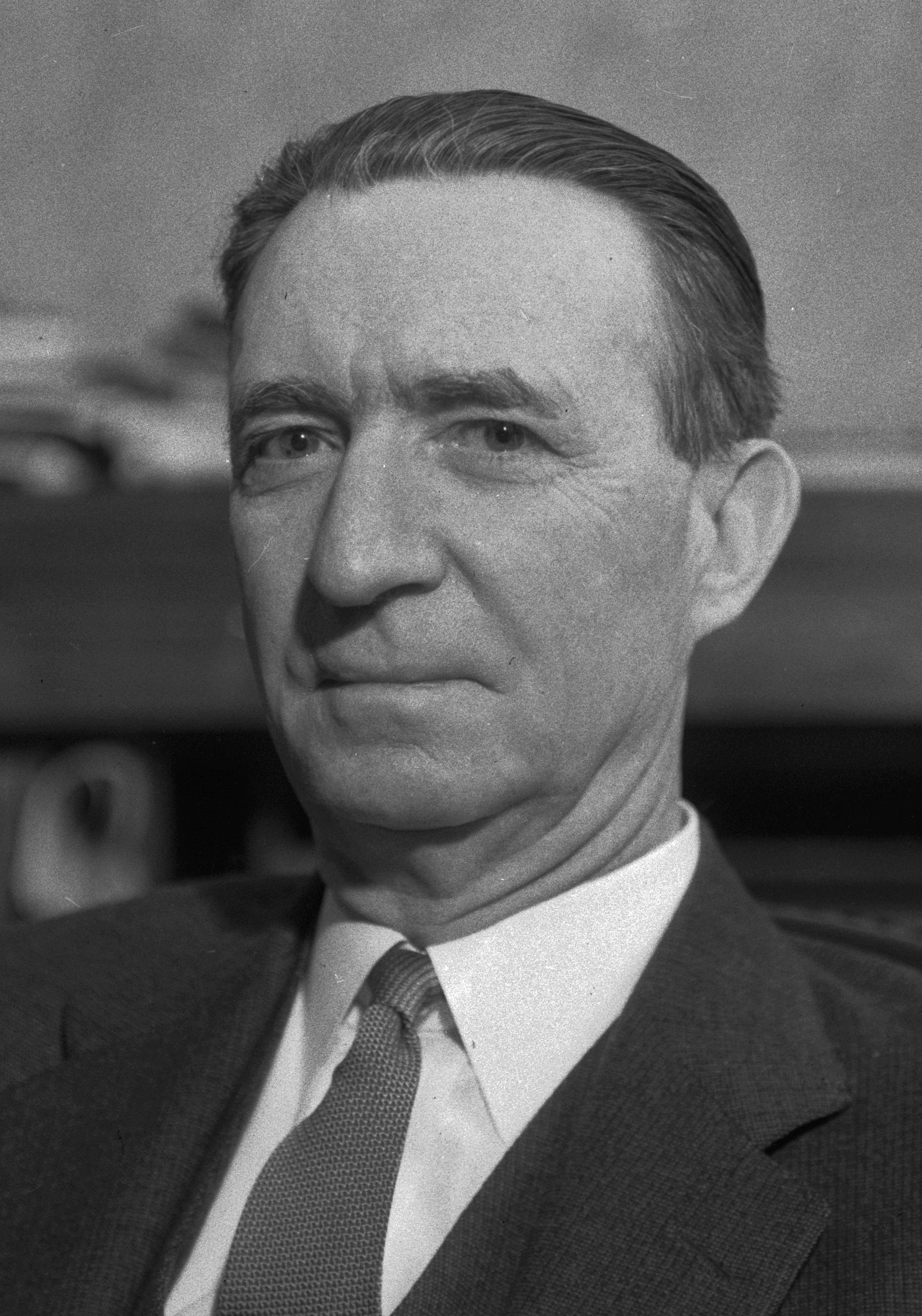
Historical · U.S. House · California · District 14
Thomas Ford
Former U.S. Representative · California District 14 · 1933–1945 · Democratic
Thomas Ford represented California's District 14 in the United States House of Representatives (1933–1945) for the Democratic party. The page below collects sourced biographical facts, term history, committee roles, and provenance for Ford.
Bioguide ID: F000267
Key facts
- Full name
- Thomas Ford
- State
- California
- District
- District 14
- Party
- Democratic
- House service
- 1933–1945
- First House term
- 1933
- Status
- Left office
- Current term ends
- —
- Born
- 1873
- Bioguide ID
- F000267
- Committee assignments
- —
- Dataset version
- 1.20260605
Biographical narrative
1,180 words · sourced from the Wikipedia REST extract
Thomas Ford was an American politician, journalist, and editor who served as a U.S. Representative for California's 14th congressional district from 1933 until 1945. A member of the Democratic Party, Ford's political career was marked by his commitment to various social issues and his active participation in local governance prior to his congressional tenure. He is also noted for his unique electoral history, having been elected to the Los Angeles City Council through a write-in campaign, which underscored his connection to the community and his ability to mobilize support. His career in public service was complemented by a background in journalism, where he contributed to significant publications and engaged in discussions on international trade.
Early life and career
Thomas Ford was born on February 18, 1873, in St. Louis, Missouri, to Thomas Ford and Ellen Ferris. His early education took place in both public and private schools in St. Louis and Toledo, Ohio. Following his schooling, he pursued legal studies in Toledo, which provided him with a foundational understanding of law and governance that would later inform his political career.
In 1896, Ford began his professional journey with the U.S. Post Office Department, which marked the start of his long career in public service and journalism. In 1900, seeking new opportunities, he moved westward, working for various newspapers in Idaho and Washington. By 1904, he had settled in Los Angeles, California, where he continued his work in journalism.
Ford's personal life included two marriages. His first marriage was to Martha Alison McCracken on October 22, 1901, in Pittsburgh, Pennsylvania. Tragically, Martha passed away in February 1905 in Toledo, Ohio. Ford later married Lillian Cope Cummings in Los Angeles on June 21, 1911. Together, they collaborated on a book titled "The Foreign Trade of the United States," which was published in 1920 and reflected Ford's interest in international commerce.
Between 1909 and 1913, Ford traveled extensively throughout Europe, where he wrote feature articles for newspapers focusing on foreign trade. His experiences abroad enriched his understanding of international relations and trade dynamics. After returning to the United States, he served as the West Coast correspondent for the Washington Post from 1913 to 1918. In 1919, he became the literary editor of the Los Angeles Times, a position that allowed him to influence public opinion and engage with the community on various issues. He also edited the rotogravure section of the Times, showcasing his versatility in journalism. Additionally, he lectured on international trade at the University of Southern California during the 1920-1921 academic year, further establishing his expertise in the field.
In the late 1920s, Ford transitioned from journalism to public service in a more direct capacity. By October 1930, he had left the Los Angeles Times and took a position in the publicity department of the city's Water and Power Department. However, he resigned from this role in December 1930, signaling his intention to pursue a more active role in local politics.
House tenure
Ford's political career took a significant turn when he ran for a seat on the Los Angeles City Council in 1931. His campaign was notable for being supported by friends and supporters of the late incumbent councilman Thomas W. Williams. Ford's election was particularly remarkable as he was nominated through a write-in vote during the primary, a testament to his grassroots support and community engagement. In the final election, he secured victory against his opponent, Douglas E. Foster, by a substantial margin.
During his two-year tenure on the City Council, Ford was involved in several key initiatives and decisions. He voted against a proposal to instruct the city attorney to appeal a judge's ruling that mandated the desegregation of the city's swimming pools, a decision that had immediate implications for racial equality in Los Angeles. Ford's vote was part of a larger council decision that resulted in the pools being desegregated in the summer of 1931.
In addition to his stance on civil rights, Ford was proactive in addressing crime and public safety issues. He submitted a motion urging the Police Department to focus its resources on major crimes rather than minor infractions, highlighting his concern over the prevalence of gambling operations in the city. He also investigated the issuance of special investigators' badges by the City Prosecutor, seeking transparency in the electoral process.
Ford's commitment to social welfare was evident in his proposal for a public works program aimed at providing employment for the unemployed, suggesting that workers be compensated with certificates that could be used as currency. This initiative reflected his awareness of the economic challenges faced by many during the Great Depression. He also took a critical stance against the mayor's attempts to remove members of the Water and Power Commission, advocating for accountability in local governance.
In 1932, Ford made a bid for a seat in the U.S. House of Representatives, successfully winning election in 1932. He served a total of six terms in Congress from 1933 until 1945, during which time he was involved in various legislative efforts and initiatives. Notably, he supported Upton Sinclair's "End Poverty in California" program during the 1934 gubernatorial election, aligning himself with progressive movements aimed at addressing economic disparities.
Ford chose not to seek renomination in 1944, concluding his congressional career after a decade of service. His time in the House was characterized by a focus on issues relevant to his constituents and the broader national landscape during a period of significant change in the United States.
Legislative focus and committees
During his tenure in the U.S. House of Representatives, Thomas Ford was involved in a range of legislative activities that reflected the priorities of his constituents and the Democratic Party. While specific details regarding the bills he sponsored or voted on are not provided, it is evident that his background in journalism and public service informed his approach to governance. His experience as a city councilman likely contributed to his understanding of local issues and the importance of community engagement in the legislative process.
Ford's commitment to social justice and economic reform was evident in his support for initiatives aimed at improving the lives of his constituents. His backing of Upton Sinclair's campaign and his advocacy for public works programs illustrated his alignment with progressive ideals during a time when the nation was grappling with the effects of the Great Depression.
Throughout his congressional service, Ford likely participated in various committees that aligned with his interests and expertise, although specific committee assignments are not detailed in the available information. His work in Congress would have involved collaboration with colleagues to address pressing national issues, including economic recovery, labor rights, and social welfare programs.
Following his departure from Congress in 1945, Ford continued to reside in California, where he remained engaged in community affairs until his death on December 26, 1958. He passed away in his home in South Pasadena and was laid to rest at Forest Lawn Memorial Park in Glendale. His legacy as a public servant, journalist, and advocate for social change continues to be recognized as part of California's political history.
Notable legislation
Sponsored and co-sponsored legislation for Thomas Ford is pending operator curation. The biographical narrative above carries the same provenance trail until per-bill rows are written.
Sources
- [1]https://en.wikipedia.org/wiki/Thomas_F._FordWikipedia · retrieved 2026-06-05
Notable quotes
Sourced quotes for Thomas Ford are pending operator curation. Narrative-scope provenance remains attached below.
Sources
- [1]https://en.wikipedia.org/wiki/Thomas_F._FordWikipedia · retrieved 2026-06-05
Key positions
Curated policy positions for Thomas Ford are pending operator review. The biographical narrative above carries the same provenance trail until per-topic positions are written.
Sources
- [1]https://en.wikipedia.org/wiki/Thomas_F._FordWikipedia · retrieved 2026-06-05
Terms served
- 1933–1935U.S. House · Term 1 · Democratic
- 1935–1937U.S. House · Term 2 · Democratic
- 1937–1939U.S. House · Term 3 · Democratic
- 1939–1941U.S. House · Term 4 · Democratic
- 1941–1943U.S. House · Term 5 · Democratic
- 1943–1945U.S. House · Term 6 · Democratic
Sources & provenance
Every attributable claim above carries a per-section [N] marker that resolves to the corresponding URL below. Each entry records the upstream provider, the canonical URL, and the timestamp at which the source was retrieved by the ingest pipeline.
Key facts
- https://bioguide.congress.gov/search/bio/F000267bioguide · retrieved 2026-06-05
- https://www.govtrack.us/congress/members/404218govtrack · retrieved 2026-06-05
Biographical narrative
- https://en.wikipedia.org/wiki/Thomas_F._Fordwikipedia · retrieved 2026-06-05
Find your representative
Every U.S. state elects representatives by district. Browse California’s delegation, the full former-representative roster, or explore the role and term length.
Related on The Candidate
- Succeeded by Helen DouglasLater holder of the California District 14 House seat · Democratic.Open
- Barclay HenleyFormer U.S. Representative · California District 1 · DemocraticOpen
- Charles ClaytonFormer U.S. Representative · California District 1 · RepublicanOpen
- Clarence LeaFormer U.S. Representative · California District 1 · DemocraticOpen
- Clement MillerFormer U.S. Representative · California District 1 · DemocraticOpen
- Democratic PartyFederal candidates and office holders on the Democratic line.Open