
Historical · U.S. House · California · District 15
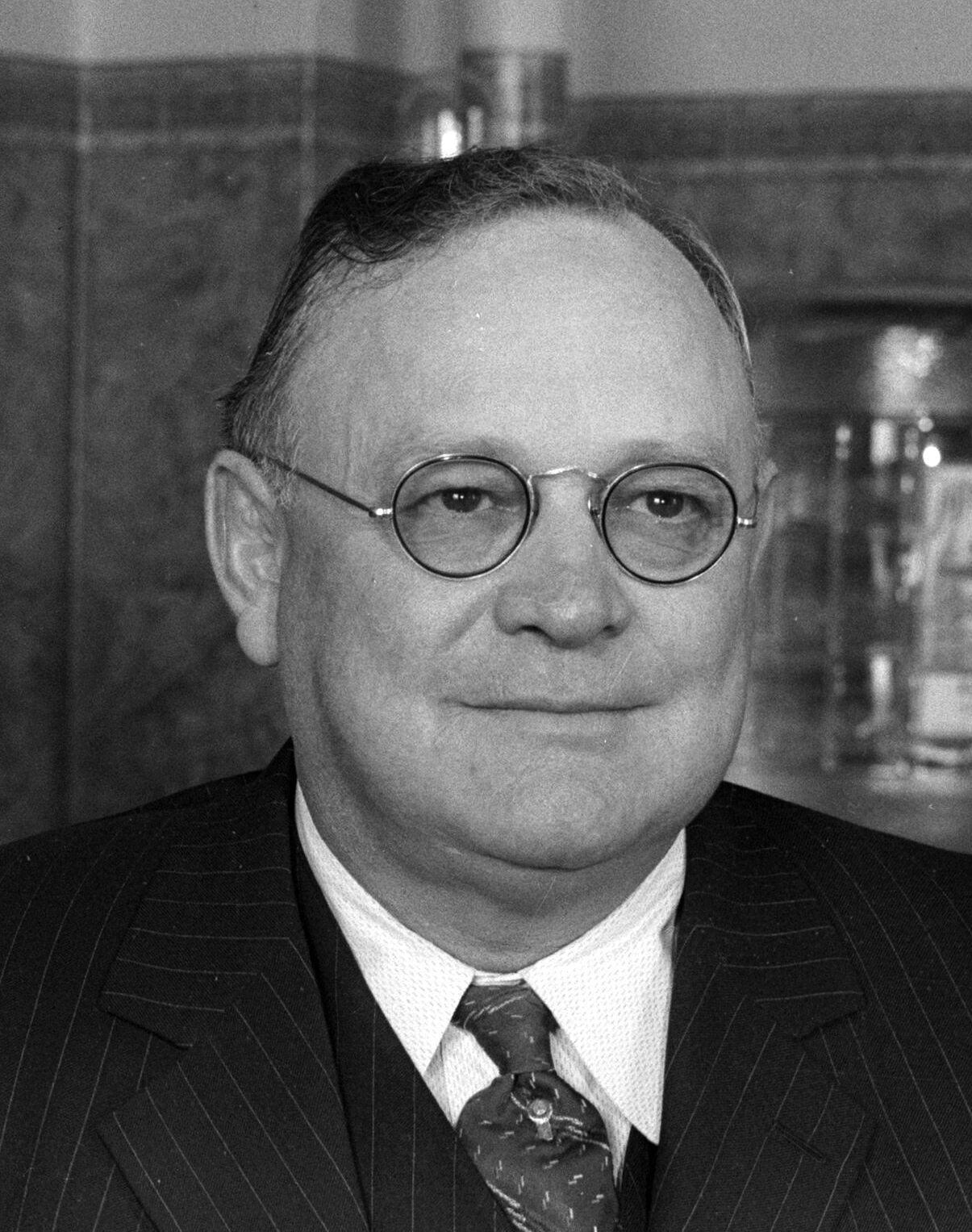
William Traeger
Former U.S. Representative · California District 15 · 1933–1935 · Republican
William Traeger represented California's District 15 in the United States House of Representatives (1933–1935) for the Republican party. The page below collects sourced biographical facts, term history, committee roles, and provenance for Traeger.
Bioguide ID: T000349
Key facts
- Full name
- William Traeger
- State
- California
- District
- District 15
- Party
- Republican
- House service
- 1933–1935
- First House term
- 1933
- Status
- Left office
- Current term ends
- —
- Born
- 1880
- Bioguide ID
- T000349
- Committee assignments
- —
- Dataset version
- 1.20260606
Biographical narrative
916 words · sourced from the Wikipedia REST extract
William Traeger was an American law enforcement official and politician who served as a U.S. Representative for California's 15th congressional district from 1933 until 1935. A member of the Republican Party, Traeger had a diverse career that included serving as the Sheriff of Los Angeles County, a college football coach, and a practicing attorney. His tenure in Congress occurred during a challenging political landscape marked by the Great Depression, and he was ultimately defeated in his bid for re-election.
Early life and career
William Traeger was born on February 26, 1880, in Porterville, California. He was the eldest of five children born to Augustus Traeger, a blacksmith who had migrated to California from Wisconsin in 1872, and Martha Ellen Dunn Traeger, who had come from Arkansas in 1874. Traeger grew up in Porterville, where he attended local elementary and high schools. In his youth, he assisted his father in his blacksmithing trade. The family faced hardship when Martha Traeger passed away in 1895.
Traeger’s early adulthood was marked by military service during the Spanish-American War. He enlisted as a private and later served as a corporal in the 6th California Volunteer Infantry from May to December 1898. Following his military service, Traeger pursued higher education at Stanford University, where he studied law and earned his undergraduate degree in 1901. While at Stanford, he was also a notable athlete, playing as a tackle on the football team. He contributed to the team's success in the 1900 rivalry game against the University of California, where he scored a field goal. Traeger later captained the Stanford team that participated in the inaugural Rose Bowl Game in 1902, where he sustained an injury but continued to play.
After completing his studies, Traeger moved to Los Angeles in 1902, where he began his career in athletics and coaching. He led the Pomona College football team to a winning record in 1902 and subsequently coached at Occidental College. His early career in law enforcement began when he served as a deputy United States Marshal from 1903 to 1906, followed by a position as a deputy sheriff for Los Angeles County from 1907 to 1911. In addition to his law enforcement duties, Traeger worked for a general contracting company. During this period, he married Alice Collier, who tragically passed away in 1908 due to tuberculosis.
Traeger continued his education at the University of Southern California (USC), where he attended law school. While studying at USC, he also took on the role of head football coach for the 1908 season. His coaching record at USC was 3–1–1, and he faced teams primarily from Southern California, including his former teams at Pomona and Occidental. He was succeeded in this role by Dean Cromwell in 1909.
House tenure
Traeger’s political career took a significant turn when he was elected as Sheriff of Los Angeles County in 1921. He was re-elected for additional four-year terms in 1922, 1926, and 1930, serving until December 1932. During his tenure as sheriff, Traeger implemented various reforms, including the reorganization of the county jail and the establishment of honor camps for first-time misdemeanor offenders. He also initiated an employment contact office to assist prisoners in finding jobs after their release. His leadership in law enforcement extended to his role as the first president of the Los Angeles County Peace Officers' Association in 1929.
In 1932, amidst a national political landscape dominated by the Democratic Party due to the effects of the Great Depression, Traeger was elected as a Republican to the 73rd United States Congress. He began his term on March 4, 1933, representing California's 15th congressional district. Traeger’s election was notable given the broader context of the Democratic landslide during that election cycle. He served in Congress until January 3, 1935, when he completed his term.
Traeger’s time in the House of Representatives was relatively brief, and he faced challenges in navigating the political environment of the time. He sought re-election in 1934 but was defeated by Democratic challenger John M. Costello. Traeger’s congressional career was marked by the difficulties of the era, as many Americans were grappling with economic hardship and the resulting political shifts.
Legislative focus and committees
During his time in Congress, Traeger was involved in various legislative matters, although specific details regarding his committee assignments and legislative initiatives are not extensively documented. His background in law enforcement and public service likely informed his perspectives on issues related to crime, justice, and public safety. However, the specifics of his legislative focus during his congressional tenure remain less clear.
Traeger’s career in public service and law enforcement, combined with his experience as a college football coach, provided him with a unique perspective on the challenges facing his constituents. His commitment to community service was evident in his earlier efforts as sheriff, where he sought to improve the conditions of the county jail and support the reintegration of offenders into society.
After leaving Congress, Traeger faced health issues and passed away on January 20, 1935, just weeks after his congressional term ended. He died from a liver disorder at Wadsworth Hospital in Los Angeles. Traeger was 54 years old at the time of his death. He was survived by his second wife, Ruth McAllister, a schoolteacher whom he married in 1912, as well as by one daughter from each of his marriages. Traeger was interred at Rosedale Cemetery in Los Angeles, leaving behind a legacy shaped by his diverse career in law enforcement, education, and politics.
Notable legislation
Sponsored and co-sponsored legislation for William Traeger is pending operator curation. The biographical narrative above carries the same provenance trail until per-bill rows are written.
Sources
- [1]https://en.wikipedia.org/wiki/William_I._TraegerWikipedia · retrieved 2026-06-06
Notable quotes
Sourced quotes for William Traeger are pending operator curation. Narrative-scope provenance remains attached below.
Sources
- [1]https://en.wikipedia.org/wiki/William_I._TraegerWikipedia · retrieved 2026-06-06
Key positions
Curated policy positions for William Traeger are pending operator review. The biographical narrative above carries the same provenance trail until per-topic positions are written.
Sources
- [1]https://en.wikipedia.org/wiki/William_I._TraegerWikipedia · retrieved 2026-06-06
Terms served
- 1933–1935U.S. House · Term 1 · Republican
Sources & provenance
Every attributable claim above carries a per-section [N] marker that resolves to the corresponding URL below. Each entry records the upstream provider, the canonical URL, and the timestamp at which the source was retrieved by the ingest pipeline.
Key facts
- https://bioguide.congress.gov/search/bio/T000349bioguide · retrieved 2026-06-06
- https://www.govtrack.us/congress/members/410920govtrack · retrieved 2026-06-06
Biographical narrative
- https://en.wikipedia.org/wiki/William_I._Traegerwikipedia · retrieved 2026-06-06
Find your representative
Every U.S. state elects representatives by district. Browse California’s delegation, the full former-representative roster, or explore the role and term length.
Related on The Candidate
- Succeeded by John CostelloLater holder of the California District 15 House seat · Democratic.Open
- Barclay HenleyFormer U.S. Representative · California District 1 · DemocraticOpen
- Charles ClaytonFormer U.S. Representative · California District 1 · RepublicanOpen
- Clarence LeaFormer U.S. Representative · California District 1 · DemocraticOpen
- Clement MillerFormer U.S. Representative · California District 1 · DemocraticOpen
- Republican PartyFederal candidates and office holders on the Republican line.Open