
Historical · U.S. House · California · District 16
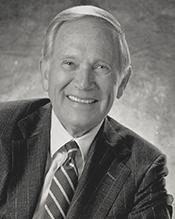
Don Edwards
Former U.S. Representative · California District 16 · 1963–1995 · Democratic
Don Edwards represented California's District 16 in the United States House of Representatives (1963–1995) for the Democratic party. The page below collects sourced biographical facts, term history, committee roles, and provenance for Edwards.
Bioguide ID: E000064
Key facts
- Full name
- Don Edwards
- State
- California
- District
- District 16
- Party
- Democratic
- House service
- 1963–1995
- First House term
- 1963
- Status
- Left office
- Current term ends
- —
- Born
- 1915
- Bioguide ID
- E000064
- Committee assignments
- —
- Dataset version
- 1.20260605
Biographical narrative
1,013 words · sourced from the Wikipedia REST extract
William Donlon Edwards was an American politician who served as a member of the United States House of Representatives from California for over three decades. A member of the Democratic Party, he represented California's 16th congressional district, having previously served in the 9th and 10th districts due to redistricting. Edwards's congressional career spanned from January 3, 1963, to January 3, 1995, during which he was involved in significant legislative actions and served on various committees. His contributions to civil rights legislation and his opposition to certain military interventions marked his tenure in Congress.
Early life and career
Don Edwards was born on January 6, 1915, in San Jose, California, into a family with Republican affiliations. His father and grandfather operated a land title business, which likely influenced his understanding of property and legal matters from an early age. Edwards completed his secondary education at San Jose High School before pursuing higher education at Stanford University, where he earned a Bachelor of Arts degree in 1936. While at Stanford, he was also a member of the university's golf team, showcasing his involvement in extracurricular activities.
Following his undergraduate studies, Edwards attended Stanford Law School and was admitted to the bar in 1940. His early career included a brief stint as a special agent for the Federal Bureau of Investigation from 1940 to 1941. Shortly thereafter, he joined the United States Navy, serving as a naval intelligence and gunnery officer during World War II. This military experience likely shaped his perspectives on national security and foreign policy.
In the post-war period, Edwards became politically active, initially aligning with the Republican Party. He was elected president of the California Young Republicans in 1950 but soon became disillusioned with the party's direction, perceiving it as increasingly conservative. This shift in ideology led him to join the United World Federalists, a group advocating for global governance and cooperation. Ultimately, he transitioned to the Democratic Party, which aligned more closely with his evolving political beliefs. Edwards's political career began to take shape when he successfully ran for a seat in the U.S. House of Representatives in 1962.
House tenure
Edwards was first elected to the House of Representatives as a member of the Democratic Party, representing California's 9th Congressional District. His tenure began on January 3, 1963, and he was subsequently re-elected to fifteen additional terms, serving until January 3, 1995. Throughout his time in Congress, Edwards was known for his active participation in critical legislative matters. In his inaugural year, he voted to abolish the House Un-American Activities Committee, reflecting his commitment to civil liberties.
During the 1960s, Edwards played a significant role in the passage of landmark legislation, including the Civil Rights Act of 1964 and the Voting Rights Act of 1965. These laws were pivotal in advancing civil rights and ensuring equal voting access for all Americans. Edwards's involvement in these legislative efforts underscored his dedication to social justice and equality.
In addition to his work on civil rights, Edwards was a member of the House Judiciary Committee during the Watergate scandal, a pivotal moment in American political history. He was one of the eight committee members who voted in favor of all five articles of impeachment against President Richard Nixon, demonstrating his commitment to accountability and the rule of law. This involvement in the impeachment process highlighted his willingness to confront issues of governmental integrity.
Edwards's opposition to U.S. military interventions was another defining aspect of his congressional career. He consistently voiced his dissent regarding the Vietnam War, the invasion of Panama, and the Persian Gulf War, advocating for a more restrained approach to foreign military engagements. His stance on these issues resonated with constituents who shared similar concerns about U.S. military actions abroad.
In 1988, Edwards was appointed as one of the House impeachment managers for the trial of Alcee Hastings, a federal judge, although he was later replaced before the trial commenced. He did, however, serve as an impeachment manager in the trial of Walter Nixon in 1989. His long tenure on the House Judiciary Committee, including 23 years as chairman of the Subcommittee on Civil Liberties and Civil Rights, allowed him to influence significant legal and civil rights issues.
Edwards chose not to seek re-election for the 104th Congress, concluding his lengthy service in the House. His departure marked the end of an era, and his seat was subsequently won by Zoe Lofgren, a former aide who continues to serve in Congress.
Legislative focus and committees
Throughout his congressional career, Don Edwards was deeply engaged in issues related to civil liberties, civil rights, and government accountability. His leadership on the House Subcommittee on Civil Liberties and Civil Rights for over two decades allowed him to shape discussions and legislation surrounding these critical areas. Edwards's commitment to civil rights was evident in his support for major legislative initiatives aimed at dismantling systemic discrimination and promoting equality.
In addition to his focus on civil rights, Edwards's role on the House Judiciary Committee placed him at the forefront of significant legal matters, including impeachment proceedings and investigations into governmental misconduct. His participation in the Watergate investigation and subsequent impeachment votes against President Nixon underscored his belief in the importance of checks and balances within the government.
Edwards's legislative priorities also included a focus on social justice issues, reflecting his commitment to advocating for marginalized communities. His opposition to military interventions and advocacy for diplomatic solutions to international conflicts highlighted his belief in a more peaceful approach to foreign policy.
In recognition of his contributions to civil rights and public service, Edwards received the Congressional Distinguished Service Award in 2003. His legacy is further commemorated by the naming of the Don Edwards San Francisco Bay National Wildlife Refuge, which honors his commitment to environmental conservation and the protection of natural habitats.
Edwards's impact on American politics, particularly in the areas of civil rights and government accountability, remains significant. His long tenure in Congress and active engagement in pivotal legislative efforts reflect a career dedicated to public service and the advancement of democratic principles.
Notable legislation
Sponsored and co-sponsored legislation for Don Edwards is pending operator curation. The biographical narrative above carries the same provenance trail until per-bill rows are written.
Sources
- [1]https://en.wikipedia.org/wiki/Don_EdwardsWikipedia · retrieved 2026-06-05
Notable quotes
Sourced quotes for Don Edwards are pending operator curation. Narrative-scope provenance remains attached below.
Sources
- [1]https://en.wikipedia.org/wiki/Don_EdwardsWikipedia · retrieved 2026-06-05
Key positions
Curated policy positions for Don Edwards are pending operator review. The biographical narrative above carries the same provenance trail until per-topic positions are written.
Sources
- [1]https://en.wikipedia.org/wiki/Don_EdwardsWikipedia · retrieved 2026-06-05
Terms served
- 1963–1965U.S. House · Term 1 · Democratic
- 1965–1967U.S. House · Term 2 · Democratic
- 1967–1969U.S. House · Term 3 · Democratic
- 1969–1971U.S. House · Term 4 · Democratic
- 1971–1973U.S. House · Term 5 · Democratic
- 1973–1975U.S. House · Term 6 · Democratic
- 1975–1977U.S. House · Term 7 · Democratic
- 1977–1979U.S. House · Term 8 · Democratic
- 1979–1981U.S. House · Term 9 · Democratic
- 1981–1983U.S. House · Term 10 · Democratic
- 1983–1985U.S. House · Term 11 · Democratic
- 1985–1987U.S. House · Term 12 · Democratic
- 1987–1989U.S. House · Term 13 · Democratic
- 1989–1991U.S. House · Term 14 · Democratic
- 1991–1993U.S. House · Term 15 · Democratic
- 1993–1995U.S. House · Term 16 · Democratic
Sources & provenance
Every attributable claim above carries a per-section [N] marker that resolves to the corresponding URL below. Each entry records the upstream provider, the canonical URL, and the timestamp at which the source was retrieved by the ingest pipeline.
Key facts
- https://bioguide.congress.gov/search/bio/E000064bioguide · retrieved 2026-06-05
- https://www.govtrack.us/congress/members/403776govtrack · retrieved 2026-06-05
Biographical narrative
- https://en.wikipedia.org/wiki/Don_Edwardswikipedia · retrieved 2026-06-05
Find your representative
Every U.S. state elects representatives by district. Browse California’s delegation, the full former-representative roster, or explore the role and term length.
Related on The Candidate
- Preceded by Donald JacksonEarlier holder of the California District 16 House seat · Republican.Open
- Barclay HenleyFormer U.S. Representative · California District 1 · DemocraticOpen
- Charles ClaytonFormer U.S. Representative · California District 1 · RepublicanOpen
- Clarence LeaFormer U.S. Representative · California District 1 · DemocraticOpen
- Clement MillerFormer U.S. Representative · California District 1 · DemocraticOpen
- Democratic PartyFederal candidates and office holders on the Democratic line.Open