
Historical · U.S. House · California · District 17
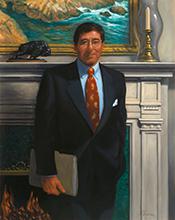
Leon Panetta
Former U.S. Representative · California District 17 · 1977–1993 · Democratic
Leon Panetta represented California's District 17 in the United States House of Representatives (1977–1993) for the Democratic party. The page below collects sourced biographical facts, term history, committee roles, and provenance for Panetta.
Bioguide ID: P000047
Key facts
- Full name
- Leon Panetta
- State
- California
- District
- District 17
- Party
- Democratic
- House service
- 1977–1993
- First House term
- 1977
- Status
- Left office
- Current term ends
- —
- Born
- 1938
- Bioguide ID
- P000047
- Committee assignments
- —
- Dataset version
- 1.20260605
Biographical narrative
975 words · sourced from the Wikipedia REST extract
Leon Panetta is a retired American politician and government official who served as a U.S. Representative for California's 16th congressional district from 1977 to 1993. A member of the Democratic Party, Panetta's political career spans several key roles in the federal government, including Secretary of Defense, Director of the Central Intelligence Agency, and White House Chief of Staff. He is also known for his involvement in public policy education through the Panetta Institute for Public Policy, which he co-founded.
Early life and career
Leon Edward Panetta was born on June 28, 1938, in Monterey, California. He is the son of Carmelina Maria and Carmelo Frank Panetta, both of whom were Italian immigrants from Gerace, Calabria. The Panetta family operated a restaurant in Monterey during the 1940s, which contributed to his early community engagement. Growing up in the Monterey area, Panetta attended two Catholic grammar schools: San Carlos School and Junípero Serra School, followed by Monterey High School. His early involvement in student politics began during high school, where he was active in the Junior Statesmen of America. He served as vice president of the student body in his junior year and became president in his senior year.
In 1956, Panetta enrolled at Santa Clara University, where he earned a Bachelor of Arts degree in political science, graduating magna cum laude in 1960. He continued his education at the Santa Clara University School of Law, obtaining his Juris Doctor in 1963. Following his legal education, Panetta joined the United States Army in 1964 as a second lieutenant, serving in the Army Military Intelligence Corps. He was awarded the Army Commendation Medal for his service and was discharged in 1966 with the rank of first lieutenant.
Panetta's political career began shortly after his military service when he became a legislative assistant to Republican Senator Thomas Kuchel, who was the Senate Minority Whip from California. Panetta has acknowledged Kuchel as a significant role model in his early career. In 1969, he transitioned to the Nixon administration, serving as an assistant to Robert H. Finch, the Secretary of the Department of Health, Education, and Welfare. He was later appointed as the director of the Office for Civil Rights, where he took a firm stance on enforcing civil rights and equal education laws, despite facing opposition from the Nixon administration. His commitment to civil rights led to his eventual departure from the position in 1970. Following this, he worked as an executive assistant to John Lindsay, the mayor of New York City, before returning to Monterey to practice law.
House tenure
In 1971, Panetta switched his political affiliation from the Republican Party to the Democratic Party, citing a shift in the Republican Party away from the political center. His political aspirations culminated in 1976 when he was elected to the U.S. House of Representatives, representing California's 16th congressional district. He unseated the incumbent Republican, Burt Talcott, with a majority of the vote. Throughout his tenure in Congress, which lasted until 1993, Panetta was re-elected multiple times, consistently winning his elections by significant margins.
During his time in the House, Panetta focused on a variety of issues, including budgetary matters, civil rights, education, healthcare, agriculture, immigration, and environmental protection. He was particularly active in efforts to prevent oil drilling off the California coast, reflecting his commitment to environmental conservation. Among his notable legislative achievements is the Hunger Prevention Act of 1988, which aimed to address food insecurity. He also authored the Fair Employment Practices Resolution and played a pivotal role in establishing the Monterey Bay National Marine Sanctuary, which aimed to protect the marine environment in the region.
Panetta's legislative efforts extended to healthcare, where he advocated for Medicare coverage for hospice care. He collaborated with California State University Chancellor Barry Munitz to help establish California State University, Monterey Bay, located at the former Fort Ord military base. Additionally, he attempted to create the Big Sur National Scenic Area in partnership with Senator Alan Cranston. This ambitious proposal sought to designate a 700,000-acre scenic area along the Big Sur coast, but it faced opposition from various stakeholders, including development interests and local residents.
Legislative focus and committees
Throughout his congressional career, Panetta served on several committees that aligned with his legislative priorities. His focus on budget issues was a defining aspect of his work, as he sought to address fiscal challenges while advocating for social programs. His commitment to civil rights and education reform was evident in his legislative initiatives, which aimed to improve access to quality education and protect the rights of marginalized communities.
Panetta's environmental advocacy was another cornerstone of his legislative agenda. His efforts to establish the Monterey Bay National Marine Sanctuary and protect California's coastline from oil drilling underscored his dedication to environmental stewardship. He recognized the importance of preserving natural resources for future generations and worked to create policies that reflected this commitment.
In addition to his legislative accomplishments, Panetta's experience in various roles within the federal government after his House tenure further solidified his reputation as a public servant. He served as the Director of the Office of Management and Budget and later as White House Chief of Staff under President Bill Clinton. His appointment as Director of the Central Intelligence Agency and subsequently as Secretary of Defense under President Barack Obama highlighted his extensive experience in national security and defense matters.
Following his retirement from public office, Panetta continued to contribute to public policy discourse through the Panetta Institute for Public Policy, which he co-founded in 1997. The institute focuses on educating and preparing individuals for public service and fostering engagement in the democratic process.
Panetta's legacy includes not only his legislative achievements but also his ongoing commitment to public service and civic engagement. His son, Jimmy Panetta, succeeded him in the U.S. House of Representatives, continuing the family's political legacy.
Notable legislation
Sponsored and co-sponsored legislation for Leon Panetta is pending operator curation. The biographical narrative above carries the same provenance trail until per-bill rows are written.
Sources
- [1]https://en.wikipedia.org/wiki/Leon_PanettaWikipedia · retrieved 2026-06-05
Notable quotes
Sourced quotes for Leon Panetta are pending operator curation. Narrative-scope provenance remains attached below.
Sources
- [1]https://en.wikipedia.org/wiki/Leon_PanettaWikipedia · retrieved 2026-06-05
Key positions
Curated policy positions for Leon Panetta are pending operator review. The biographical narrative above carries the same provenance trail until per-topic positions are written.
Sources
- [1]https://en.wikipedia.org/wiki/Leon_PanettaWikipedia · retrieved 2026-06-05
Terms served
- 1977–1979U.S. House · Term 1 · Democratic
- 1979–1981U.S. House · Term 2 · Democratic
- 1981–1983U.S. House · Term 3 · Democratic
- 1983–1985U.S. House · Term 4 · Democratic
- 1985–1987U.S. House · Term 5 · Democratic
- 1987–1989U.S. House · Term 6 · Democratic
- 1989–1991U.S. House · Term 7 · Democratic
- 1991–1993U.S. House · Term 8 · Democratic
- 1993–1993U.S. House · Term 9 · Democratic
Sources & provenance
Every attributable claim above carries a per-section [N] marker that resolves to the corresponding URL below. Each entry records the upstream provider, the canonical URL, and the timestamp at which the source was retrieved by the ingest pipeline.
Key facts
- https://bioguide.congress.gov/search/bio/P000047bioguide · retrieved 2026-06-05
- https://www.govtrack.us/congress/members/408457govtrack · retrieved 2026-06-05
Biographical narrative
- https://en.wikipedia.org/wiki/Leon_Panettawikipedia · retrieved 2026-06-05
Find your representative
Every U.S. state elects representatives by district. Browse California’s delegation, the full former-representative roster, or explore the role and term length.
Related on The Candidate
- Preceded by Cecil KingEarlier holder of the California District 17 House seat · Democratic.Open
- Succeeded by Mike HondaLater holder of the California District 17 House seat · Democratic.Open
- Barclay HenleyFormer U.S. Representative · California District 1 · DemocraticOpen
- Charles ClaytonFormer U.S. Representative · California District 1 · RepublicanOpen
- Clarence LeaFormer U.S. Representative · California District 1 · DemocraticOpen
- Clement MillerFormer U.S. Representative · California District 1 · DemocraticOpen