
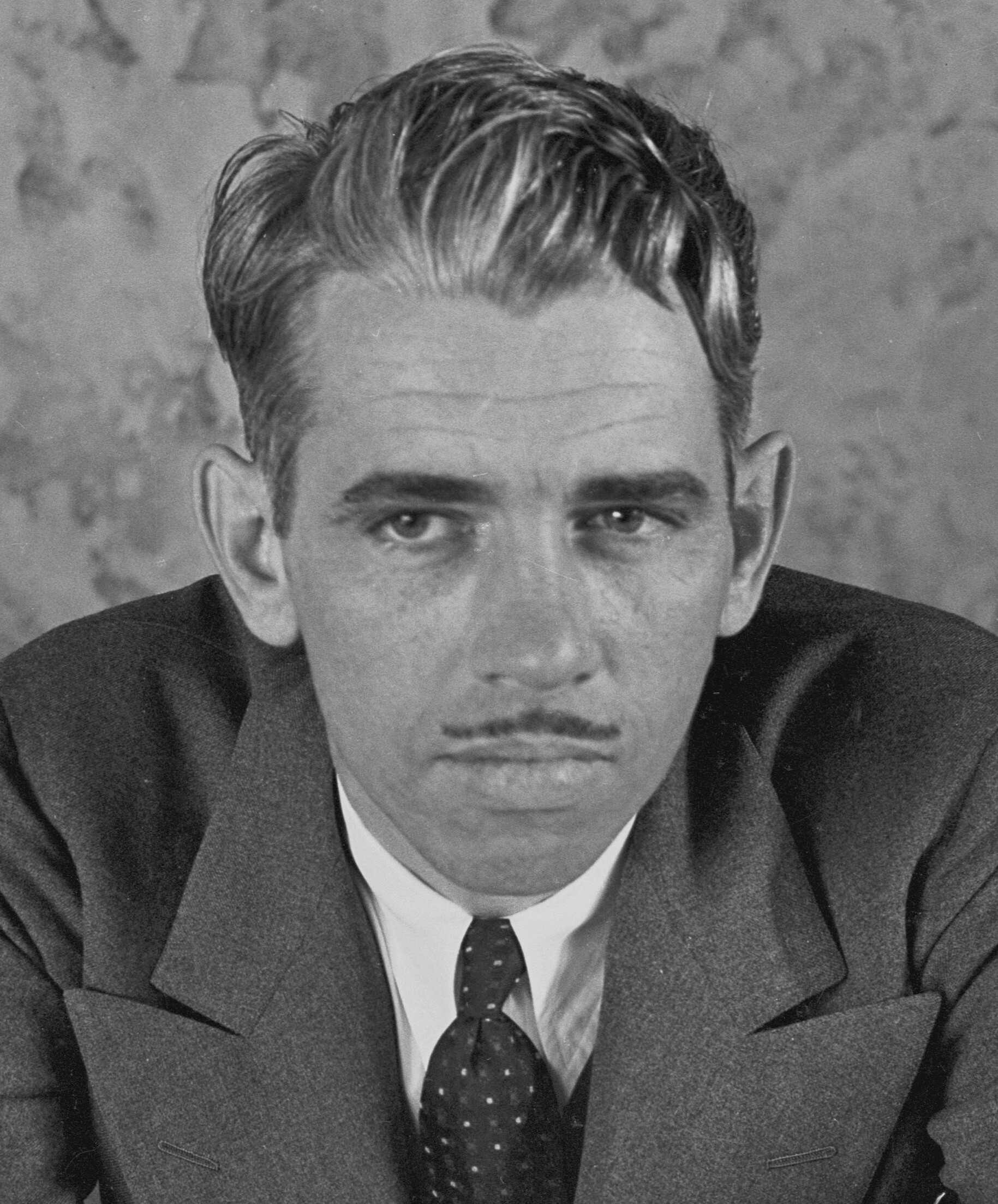
Historical · U.S. House · California · District 18
Byron Scott
Former U.S. Representative · California District 18 · 1935–1939 · Democratic
Byron Scott represented California's District 18 in the United States House of Representatives (1935–1939) for the Democratic party. The page below collects sourced biographical facts, term history, committee roles, and provenance for Scott.
Bioguide ID: S000165
Key facts
- Full name
- Byron Scott
- State
- California
- District
- District 18
- Party
- Democratic
- House service
- 1935–1939
- First House term
- 1935
- Status
- Left office
- Current term ends
- —
- Born
- 1903
- Bioguide ID
- S000165
- Committee assignments
- —
- Dataset version
- 1.20260605
Biographical narrative
814 words · sourced from the Wikipedia REST extract
Byron Scott was an American educator, lawyer, and politician who served as a U.S. Representative for California's 18th congressional district from 1935 to 1939. A member of the Democratic Party, Scott's political career was marked by his involvement in educational initiatives and his support for progressive economic policies during the Great Depression. Following his congressional tenure, he continued to engage in public service and legal practice until his retirement.
Early life and career
Byron Scott was born on March 21, 1903, in Council Grove, located in Morris County, Kansas. He spent his formative years in Council Grove, where he attended the local public schools. After completing his secondary education, Scott pursued higher education at the University of Kansas in Lawrence, graduating in 1924. His early career began in Tucson, Arizona, where he worked as a teacher from 1924 until 1926. Following this, he relocated to Long Beach, California, where he continued his teaching career in public schools.
While teaching in Long Beach, Scott furthered his education by attending the University of Southern California, where he earned a master's degree in 1930. He remained in the Long Beach area, contributing to the education sector until 1934. His experiences in education and community engagement laid the groundwork for his eventual foray into politics.
In 1934, Scott became actively involved in the Democratic Party, serving as a delegate to the California Democratic state convention. This engagement marked the beginning of his political career, leading him to seek election to the U.S. House of Representatives for California's newly established 18th congressional district.
House tenure
Scott's political journey culminated in his election to the U.S. House of Representatives, where he began his first term in 1935. He successfully secured the Democratic nomination for the 18th congressional district and faced Republican candidate William Brayton in the general election. Scott won the election decisively, garnering a significant majority of the vote.
During his time in Congress, Scott was a delegate at the Democratic National Convention held in Philadelphia in 1936, where he participated in the renomination of President Franklin D. Roosevelt and Vice President John Nance Garner. His congressional tenure was characterized by his advocacy for progressive policies, particularly those aimed at addressing the economic challenges of the Great Depression.
In the 1936 elections, Scott sought re-election and faced Republican challenger James F. Collins. He won this election with a substantial margin, further solidifying his position in Congress. His support for Upton Sinclair's End Poverty in California (EPIC) program during the 1934 gubernatorial election earned him the nickname "California's EPIC Congressman" in some media outlets. Scott was known for his alignment with the EPIC economic platform, which aimed to address poverty and promote social welfare.
However, Scott's political career faced challenges in the 1938 elections when he was opposed by Thomas M. Eaton. The race was closely contested, and Scott ultimately lost by a narrow margin. Following his defeat, he served as the secretary of the California Highway Commission for two years. He made another attempt to regain his congressional seat in 1940 but was defeated again, this time by Republican Ward Johnson.
Legislative focus and committees
During his tenure in the House of Representatives, Scott focused on issues related to education, labor, and economic reform. His background as an educator informed his legislative priorities, and he was an advocate for policies that aimed to improve educational opportunities and address the needs of working-class Americans.
Scott's involvement in the EPIC movement highlighted his commitment to progressive economic policies. He supported initiatives designed to alleviate poverty and promote social welfare, reflecting the broader goals of the New Deal era. His participation in the Democratic National Convention further demonstrated his engagement with national political issues and his alignment with the party's leadership.
After leaving Congress, Scott continued his public service by working on the California Highway Commission and later served on the War Production Board during World War II. His legal career began after he obtained his Bachelor of Laws degree from the National University School of Law in 1949. He was admitted to the bar in Washington, D.C., and established a law practice that included notable cases related to civil rights and government accountability.
Scott's legal work included representing individuals in significant cases, such as those involving loyalty and security hearings during the McCarthy era. He was involved in early gay rights litigation, representing Frank Kameny in a landmark case challenging the U.S. government's ban on homosexual employees. Although the case was ultimately unsuccessful, it was significant in the context of civil rights advocacy.
Byron Scott retired from his law practice in 1979 and spent his later years residing in Sun City, California. He passed away on December 21, 1991, at the age of 88. His legacy includes contributions to education, civil rights, and public service, reflecting a career dedicated to addressing social issues and advocating for progressive change.
Notable legislation
Sponsored and co-sponsored legislation for Byron Scott is pending operator curation. The biographical narrative above carries the same provenance trail until per-bill rows are written.
Sources
- [1]https://en.wikipedia.org/wiki/Byron_N._ScottWikipedia · retrieved 2026-06-05
Notable quotes
Sourced quotes for Byron Scott are pending operator curation. Narrative-scope provenance remains attached below.
Sources
- [1]https://en.wikipedia.org/wiki/Byron_N._ScottWikipedia · retrieved 2026-06-05
Key positions
Curated policy positions for Byron Scott are pending operator review. The biographical narrative above carries the same provenance trail until per-topic positions are written.
Sources
- [1]https://en.wikipedia.org/wiki/Byron_N._ScottWikipedia · retrieved 2026-06-05
Terms served
- 1935–1937U.S. House · Term 1 · Democratic
- 1937–1939U.S. House · Term 2 · Democratic
Sources & provenance
Every attributable claim above carries a per-section [N] marker that resolves to the corresponding URL below. Each entry records the upstream provider, the canonical URL, and the timestamp at which the source was retrieved by the ingest pipeline.
Key facts
- https://bioguide.congress.gov/search/bio/S000165bioguide · retrieved 2026-06-05
- https://www.govtrack.us/congress/members/409672govtrack · retrieved 2026-06-05
Biographical narrative
- https://en.wikipedia.org/wiki/Byron_N._Scottwikipedia · retrieved 2026-06-05
Find your representative
Every U.S. state elects representatives by district. Browse California’s delegation, the full former-representative roster, or explore the role and term length.
Related on The Candidate
- Preceded by John BurkeEarlier holder of the California District 18 House seat · Democratic.Open
- Succeeded by Thomas EatonLater holder of the California District 18 House seat · Republican.Open
- Barclay HenleyFormer U.S. Representative · California District 1 · DemocraticOpen
- Charles ClaytonFormer U.S. Representative · California District 1 · RepublicanOpen
- Clarence LeaFormer U.S. Representative · California District 1 · DemocraticOpen
- Clement MillerFormer U.S. Representative · California District 1 · DemocraticOpen