
Historical · U.S. House · California · District 24
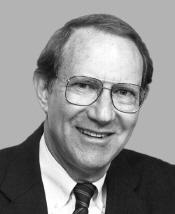
Anthony Beilenson
Former U.S. Representative · California District 24 · 1977–1997 · Democratic
Anthony Beilenson represented California's District 24 in the United States House of Representatives (1977–1997) for the Democratic party. The page below collects sourced biographical facts, term history, committee roles, and provenance for Beilenson.
Bioguide ID: B000318
Key facts
- Full name
- Anthony Beilenson
- State
- California
- District
- District 24
- Party
- Democratic
- House service
- 1977–1997
- First House term
- 1977
- Status
- Left office
- Current term ends
- —
- Born
- 1932
- Bioguide ID
- B000318
- Committee assignments
- —
- Dataset version
- 1.20260605
Biographical narrative
932 words · sourced from the Wikipedia REST extract
Anthony C. Beilenson was an American lawyer and politician who served as a Democratic Congressman representing California's 24th congressional district. His tenure in the United States House of Representatives spanned two decades, from 1977 until 1997, during which he was involved in various legislative efforts and held significant committee positions. Beilenson's political career was marked by his commitment to public service and advocacy for social issues, particularly in health and reproductive rights.
Early life and career
Anthony C. Beilenson was born on October 26, 1932, in New Rochelle, New York. He grew up in a well-to-do suburb of New York City, where he was exposed to a community that valued education and civic engagement. Beilenson pursued higher education at Harvard University, where he earned a Bachelor of Arts degree in 1954, followed by a Juris Doctor degree in 1957. After completing his education, he relocated to Los Angeles, California, where he began his professional career as a lawyer. He became a partner in a Beverly Hills law firm that specialized in representing clients in the film industry, which provided him with a unique perspective on the intersection of law, business, and public policy.
Beilenson's entry into politics began at the state level. In 1963, he was elected to the California State Assembly, where he served until 1967. His legislative career continued in the California State Senate from 1967 to 1976. During his time in the state legislature, Beilenson was instrumental in several significant legislative initiatives. Notably, he authored the Therapeutic Abortion Act in 1967, which was among the most progressive abortion laws of its time, allowing for legal abortions under specific circumstances related to the health of the woman or in cases of rape or incest. Additionally, he championed the Beilenson Act, which mandated public hearings whenever hospitals in California planned to close or reduce services, reflecting his commitment to healthcare accessibility and transparency.
In 1968, Beilenson sought to elevate his political career by running for the Democratic nomination for the U.S. Senate. However, he was unsuccessful in this bid, losing to Alan Cranston. Despite this setback, Beilenson continued to build his political profile and was ultimately elected to the U.S. House of Representatives in 1976.
House tenure
Anthony Beilenson began his tenure in the U.S. House of Representatives on January 3, 1977. Over the course of ten terms, he became a prominent figure in Congress, representing California's 24th congressional district. His legislative career in the House was characterized by a focus on various issues, including health care, intelligence, and civil rights.
During his time in Congress, Beilenson served on several important committees. He was a member of the House Rules Committee, which plays a crucial role in determining the rules and procedures for legislative debate. His leadership abilities were further recognized when he was appointed Chairman of the Permanent Select Committee on Intelligence from 1989 to 1991. In this role, he oversaw matters related to national security and intelligence operations, contributing to the legislative framework that governs these critical areas.
Beilenson's legislative efforts were often aligned with the Democratic Party's broader goals, and he was known for his collaborative approach to governance. He was a member of the ReFormers Caucus of Issue One, which focused on reforming campaign finance and promoting transparency in government. Throughout his congressional career, Beilenson maintained a commitment to addressing the needs of his constituents and advocating for policies that reflected his values and priorities.
His tenure in the House concluded on January 3, 1997, after which he retired from public office. Beilenson's long service in Congress left a significant impact on his district and the legislative landscape of California.
Legislative focus and committees
Throughout his congressional career, Anthony Beilenson was involved in a range of legislative issues, with a particular emphasis on health care, civil rights, and national security. His early work in the California State Legislature laid the groundwork for his advocacy in Congress, particularly in the areas of reproductive rights and health care access.
Beilenson's authorship of the Therapeutic Abortion Act in California was a pivotal moment in his career and set the stage for his continued focus on women's health issues in Congress. He advocated for policies that aimed to protect and enhance reproductive rights, reflecting a broader national conversation about women's autonomy and health care.
In addition to health care, Beilenson's role as Chairman of the Permanent Select Committee on Intelligence positioned him at the forefront of national security discussions during a transformative period in American history. His leadership in this committee involved oversight of intelligence agencies and operations, ensuring that legislative measures aligned with national interests and security needs.
Beilenson's participation in the House Rules Committee further illustrated his engagement with the legislative process, as this committee is responsible for establishing the procedures under which legislation is debated and voted on in the House. His involvement in these committees underscored his commitment to effective governance and legislative integrity.
After retiring from Congress, Beilenson continued to be recognized for his contributions to public service. In 1998, Lake Balboa Park in Van Nuys, California, was renamed Anthony C. Beilenson Park in honor of his long-standing commitment to community service and government. The park features recreational facilities and serves as a testament to his legacy in the region.
Beilenson passed away on March 5, 2017, at his home in the Westwood neighborhood of Los Angeles, California, after suffering a heart attack. He was 84 years old at the time of his death. His career in public service and his contributions to American politics remain a significant part of California's legislative history.
Notable legislation
Sponsored and co-sponsored legislation for Anthony Beilenson is pending operator curation. The biographical narrative above carries the same provenance trail until per-bill rows are written.
Sources
- [1]https://en.wikipedia.org/wiki/Anthony_BeilensonWikipedia · retrieved 2026-06-05
Notable quotes
Sourced quotes for Anthony Beilenson are pending operator curation. Narrative-scope provenance remains attached below.
Sources
- [1]https://en.wikipedia.org/wiki/Anthony_BeilensonWikipedia · retrieved 2026-06-05
Key positions
Curated policy positions for Anthony Beilenson are pending operator review. The biographical narrative above carries the same provenance trail until per-topic positions are written.
Sources
- [1]https://en.wikipedia.org/wiki/Anthony_BeilensonWikipedia · retrieved 2026-06-05
Terms served
- 1977–1979U.S. House · Term 1 · Democratic
- 1979–1981U.S. House · Term 2 · Democratic
- 1981–1983U.S. House · Term 3 · Democratic
- 1983–1985U.S. House · Term 4 · Democratic
- 1985–1987U.S. House · Term 5 · Democratic
- 1987–1989U.S. House · Term 6 · Democratic
- 1989–1991U.S. House · Term 7 · Democratic
- 1991–1993U.S. House · Term 8 · Democratic
- 1993–1995U.S. House · Term 9 · Democratic
- 1995–1997U.S. House · Term 10 · Democratic
Sources & provenance
Every attributable claim above carries a per-section [N] marker that resolves to the corresponding URL below. Each entry records the upstream provider, the canonical URL, and the timestamp at which the source was retrieved by the ingest pipeline.
Key facts
- https://bioguide.congress.gov/search/bio/B000318bioguide · retrieved 2026-06-05
- https://www.govtrack.us/congress/members/401310govtrack · retrieved 2026-06-05
Biographical narrative
- https://en.wikipedia.org/wiki/Anthony_Beilensonwikipedia · retrieved 2026-06-05
Find your representative
Every U.S. state elects representatives by district. Browse California’s delegation, the full former-representative roster, or explore the role and term length.
Related on The Candidate
- Preceded by Glenard LipscombEarlier holder of the California District 24 House seat · Republican.Open
- Succeeded by Lois CappsLater holder of the California District 24 House seat · Democratic.Open
- Barclay HenleyFormer U.S. Representative · California District 1 · DemocraticOpen
- Charles ClaytonFormer U.S. Representative · California District 1 · RepublicanOpen
- Clarence LeaFormer U.S. Representative · California District 1 · DemocraticOpen
- Clement MillerFormer U.S. Representative · California District 1 · DemocraticOpen