
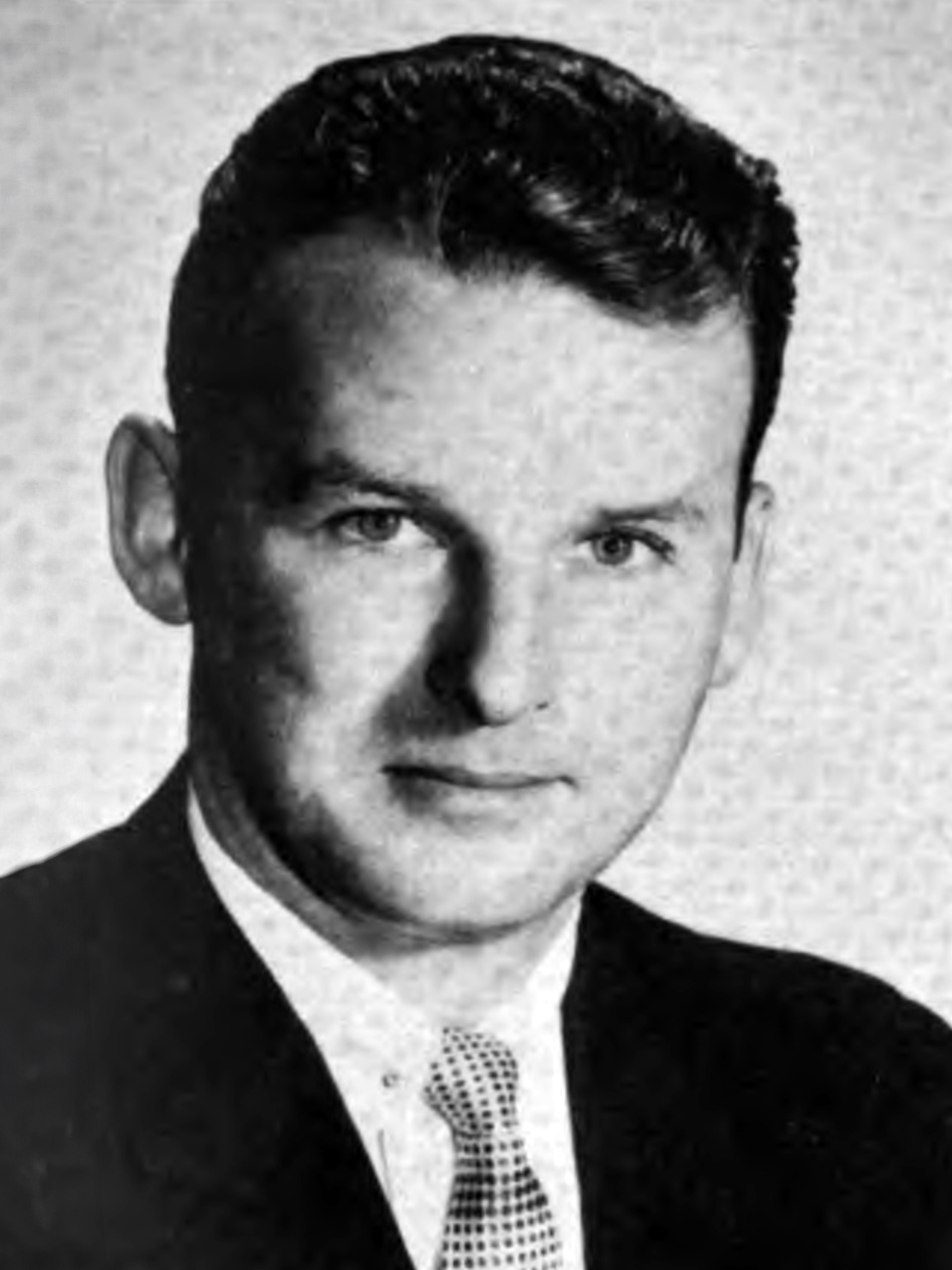
Historical · U.S. House · California · District 25
Ronald Cameron
Former U.S. Representative · California District 25 · 1963–1967 · Democratic
Ronald Cameron represented California's District 25 in the United States House of Representatives (1963–1967) for the Democratic party. The page below collects sourced biographical facts, term history, committee roles, and provenance for Cameron.
Bioguide ID: C000067
Key facts
- Full name
- Ronald Cameron
- State
- California
- District
- District 25
- Party
- Democratic
- House service
- 1963–1967
- First House term
- 1963
- Status
- Left office
- Current term ends
- —
- Born
- 1927
- Bioguide ID
- C000067
- Committee assignments
- —
- Dataset version
- 1.20260605
Biographical narrative
839 words · sourced from the Wikipedia REST extract
Ronald Cameron was an American lawyer and politician who served as a U.S. Representative for California's 25th congressional district from 1963 to 1967. A member of the Democratic Party, Cameron's political career included two terms in the House of Representatives, during which he participated in significant legislative actions, including key civil rights legislation. His background as a certified public accountant and his education in law contributed to his professional and political endeavors. After his congressional service, he returned to his legal and accounting practices and continued to engage in public service through various roles.
Early life and career
Ronald Brooks Cameron was born on August 16, 1927, in Kansas City, Missouri. His early education culminated at Western Reserve Academy in Hudson, Ohio, where he graduated in 1945. Following high school, Cameron served in the United States Marine Corps from 1945 to 1946, a period that likely influenced his later commitment to public service and civic responsibility. After his military service, he pursued higher education at Case Western Reserve University in Cleveland, Ohio, from 1946 to 1947, before transferring to the University of California, Los Angeles (UCLA), where he studied from 1949 to 1953.
Cameron's academic journey laid a foundation for his professional career. In 1954, he became a certified public accountant, which provided him with a strong financial background that would later inform his work in public office. His early career included a significant role in the California State Assembly, where he served from 1958 to 1962. This experience in state politics allowed him to gain valuable insights into legislative processes and governance, preparing him for his future role in the U.S. Congress. Additionally, Cameron was active in the Democratic Party, serving as a delegate to the Democratic National Conventions in both 1960 and 1964, further establishing his political credentials and connections within the party.
House tenure
Cameron's tenure in the U.S. House of Representatives began when he was elected to the Eighty-eighth Congress, taking office on January 3, 1963. He served two full terms, concluding his congressional service on January 3, 1967. During his time in office, Cameron represented California's 25th congressional district, which encompassed a diverse constituency. His election to Congress was part of a broader Democratic wave during the early 1960s, a period marked by significant social and political change in the United States.
Throughout his congressional career, Cameron participated in various legislative activities and debates, aligning himself with the Democratic Party's priorities of the time. He was known to support key civil rights initiatives, including the Civil Rights Act of 1964 and the Voting Rights Act of 1965. These landmark pieces of legislation aimed to eliminate racial discrimination and protect voting rights for all citizens, reflecting the Democratic Party's commitment to civil rights during the 1960s.
Despite his contributions, Cameron faced challenges in securing re-election. He was defeated in his bid for a third term in the Ninetieth Congress in 1966, which marked the end of his congressional career. The political landscape of the time was shifting, and various factors, including changes in voter sentiment and demographic shifts within his district, likely influenced the election outcome.
Legislative focus and committees
During his time in the House of Representatives, Cameron's legislative focus aligned with the Democratic Party's agenda, particularly in areas concerning civil rights and social justice. His support for the Civil Rights Act of 1964 and the Voting Rights Act of 1965 positioned him as an advocate for equality and justice during a pivotal era in American history. These acts were crucial in addressing systemic racial discrimination and ensuring that all citizens had the right to vote, regardless of race.
In addition to his focus on civil rights, Cameron's background as a certified public accountant likely influenced his approach to fiscal policy and economic issues. While specific details regarding his committee assignments during his congressional tenure are not provided, it is common for members of Congress with financial expertise to serve on committees related to finance, budget, or taxation. Cameron's professional experience may have contributed to his understanding of economic matters, which would have been relevant to his constituents and the broader legislative agenda.
After his congressional service, Cameron returned to his professional roots, resuming his practice as an accountant and attorney. His legal education, which culminated in a Juris Doctor degree from Pepperdine University School of Law in 1973, further enhanced his qualifications in the legal field. In 1970, he was the Democratic nominee for California State Controller, a position that would have involved overseeing the state's financial operations and ensuring fiscal accountability.
Cameron's life after Congress continued to reflect his commitment to public service and civic engagement. He remained active in his professional pursuits until his passing on February 1, 2006, in Whittier, California. His contributions to both the legal and political landscapes of California, along with his advocacy for civil rights, mark his legacy as a dedicated public servant. Through his work, Cameron exemplified the intersection of law, politics, and social justice during a transformative period in American history.
Notable legislation
Sponsored and co-sponsored legislation for Ronald Cameron is pending operator curation. The biographical narrative above carries the same provenance trail until per-bill rows are written.
Sources
- [1]https://en.wikipedia.org/wiki/Ronald_B._CameronWikipedia · retrieved 2026-06-05
Notable quotes
Sourced quotes for Ronald Cameron are pending operator curation. Narrative-scope provenance remains attached below.
Sources
- [1]https://en.wikipedia.org/wiki/Ronald_B._CameronWikipedia · retrieved 2026-06-05
Key positions
Curated policy positions for Ronald Cameron are pending operator review. The biographical narrative above carries the same provenance trail until per-topic positions are written.
Sources
- [1]https://en.wikipedia.org/wiki/Ronald_B._CameronWikipedia · retrieved 2026-06-05
Terms served
- 1963–1965U.S. House · Term 1 · Democratic
- 1965–1967U.S. House · Term 2 · Democratic
Sources & provenance
Every attributable claim above carries a per-section [N] marker that resolves to the corresponding URL below. Each entry records the upstream provider, the canonical URL, and the timestamp at which the source was retrieved by the ingest pipeline.
Key facts
- https://bioguide.congress.gov/search/bio/C000067bioguide · retrieved 2026-06-05
- https://www.govtrack.us/congress/members/402225govtrack · retrieved 2026-06-05
Biographical narrative
- https://en.wikipedia.org/wiki/Ronald_B._Cameronwikipedia · retrieved 2026-06-05
Find your representative
Every U.S. state elects representatives by district. Browse California’s delegation, the full former-representative roster, or explore the role and term length.
Related on The Candidate
- Preceded by George KasemEarlier holder of the California District 25 House seat · Democratic.Open
- Succeeded by Buck McKeonLater holder of the California District 25 House seat · Republican.Open
- Barclay HenleyFormer U.S. Representative · California District 1 · DemocraticOpen
- Charles ClaytonFormer U.S. Representative · California District 1 · RepublicanOpen
- Clarence LeaFormer U.S. Representative · California District 1 · DemocraticOpen
- Clement MillerFormer U.S. Representative · California District 1 · DemocraticOpen