
Historical · U.S. House · California · District 26
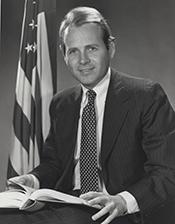
David Dreier
Former U.S. Representative · California District 26 · 1981–2013 · Republican
David Dreier represented California's District 26 in the United States House of Representatives (1981–2013) for the Republican party. The page below collects sourced biographical facts, term history, committee roles, and provenance for Dreier.
Bioguide ID: D000492
Key facts
- Full name
- David Dreier
- State
- California
- District
- District 26
- Party
- Republican
- House service
- 1981–2013
- First House term
- 1981
- Status
- Left office
- Current term ends
- —
- Born
- 1952
- Bioguide ID
- D000492
- Committee assignments
- —
- Dataset version
- 1.20260605
Biographical narrative
1,012 words · sourced from the Wikipedia REST extract
David Timothy Dreier is a former American politician, businessman, and philanthropist who served as a Republican member of the United States House of Representatives from California's 26th congressional district from 1981 until 2013. Dreier was one of the youngest individuals ever elected to Congress and held significant leadership roles during his tenure, including being the youngest chairman of the House Rules Committee. He played a pivotal role in the passage of the North American Free Trade Agreement (NAFTA) in 1993 and has been involved in various initiatives aimed at strengthening U.S. relations with Latin American countries. After leaving Congress, Dreier continued to engage in public service and business ventures, including leadership roles in media and philanthropic organizations.
Early life and career
David Dreier was born on July 5, 1952. His early political aspirations began in 1978 when he ran for the United States House of Representatives at the age of 25. He challenged incumbent Democrat James Fredrick Lloyd in a Republican-leaning district. Despite being a relatively unknown candidate and still an undergraduate at Claremont McKenna College, Dreier's initial campaign resulted in a loss, garnering 46% of the vote compared to Lloyd's 54%. This experience, however, did not deter him from pursuing a political career.
In 1980, Dreier ran for the House again and successfully defeated Lloyd, winning 52% of the vote. His victory was aided by the political climate surrounding the presidential election of former California Governor Ronald Reagan. Upon taking office, Dreier became one of the youngest members of Congress in history. Following the 1980 United States census, his district was renumbered to the 33rd. In 1982, Dreier faced Congressman Wayne Grisham in the Republican primary, where he won decisively with 57% of the vote. He continued his electoral success by defeating Grisham in the general election with 65% of the vote, marking a notable achievement as he became the first individual to defeat two incumbent members of Congress in consecutive elections.
Dreier maintained a strong electoral presence, winning re-election every two years with a minimum of 57% of the vote until 2004. His district underwent further renumbering, becoming the 28th district after the 1990 census and then the 26th district after the 2000 census. In the 2004 election, Dreier faced criticism from his opponent Cynthia Matthews regarding his stance on illegal immigration, yet he secured victory with 54% of the vote.
In subsequent elections, Dreier continued to demonstrate electoral resilience. He won a rematch against Matthews in 2006 with 57% of the vote, despite the Republican Party losing its majority that year. In 2008, he defeated Democrat Russ Warner with 53% of the vote and repeated this success in a rematch in 2010, winning again with 54%. However, as the political landscape shifted following the 2010 United States census, Dreier's district was reconfigured into a Democratic-leaning, majority-Latino district. This prompted him to choose not to run for re-election in 2012, instead encouraging fellow Republican Gary Miller to seek election in the newly drawn district.
House tenure
Dreier's tenure in the House of Representatives was marked by significant leadership roles and contributions to legislative processes. He became the youngest chairman of the House Rules Committee in U.S. history, a position that allowed him to play a central role in shaping legislative procedures. His leadership in this capacity began in 1999, and he was the only Californian to hold this position. Following the Democrats' gain of control in the House during the 2006 midterm elections, Dreier served as the ranking member for the 110th and 111th Congresses. When Republicans regained control in the 2010 midterms, he resumed his chairmanship during the 112th Congress.
Dreier's leadership was further highlighted when he was temporarily asked to assume the role of majority leader after the indictment of House Majority Leader Tom DeLay in 2005. However, he declined the position, preferring to retain his chairmanship of the Rules Committee. The role ultimately went to Roy Blunt, who was then the Majority Whip.
Throughout his time in Congress, Dreier was known for his involvement in trade policy. He was one of the first members of Congress to propose a North American free trade agreement in 1987, and he played a crucial role in the creation and passage of NAFTA in 1993. His contributions to this landmark legislation were acknowledged by President Bill Clinton during the signing ceremony. Dreier remained an advocate for trade agreements and opposed efforts by President Donald Trump to abandon NAFTA, instead supporting an updated version that would address modern trade issues, including digital commerce.
Legislative focus and committees
Dreier's legislative focus extended beyond trade, as he was an active participant in various committees and initiatives aimed at enhancing U.S. relations with Latin America. He founded the bipartisan House Trade Working Group, which aimed to foster dialogue and cooperation on trade issues. His commitment to strengthening ties with Latin American countries was evident through his frequent meetings with leaders from the region, and he received honors from several Latin American presidents for his efforts.
In addition to his work on trade, Dreier's tenure included a focus on legislative procedures and governance. As chairman of the House Rules Committee, he was instrumental in determining how legislation was debated and voted on in the House, influencing the legislative agenda significantly. His leadership style was characterized by a collaborative approach, seeking to build consensus among members of both parties.
After leaving Congress in 2013, Dreier continued to engage in public service and business. He served on the Foreign Affairs Policy Board under President Barack Obama and held the position of chairman at the Tribune Publishing Company from 2019 to 2020. Additionally, he founded and chairs the Fallen Journalists Memorial Foundation, reflecting his ongoing commitment to public service and advocacy.
David Dreier's extensive career in the U.S. House of Representatives, marked by significant legislative contributions and leadership roles, has left a lasting impact on American politics, particularly in the areas of trade and governance. His efforts to foster international relations and his involvement in legislative processes underscore his dedication to public service throughout his career.
Notable legislation
Sponsored and co-sponsored legislation for David Dreier is pending operator curation. The biographical narrative above carries the same provenance trail until per-bill rows are written.
Sources
- [1]https://en.wikipedia.org/wiki/David_DreierWikipedia · retrieved 2026-06-05
Notable quotes
Sourced quotes for David Dreier are pending operator curation. Narrative-scope provenance remains attached below.
Sources
- [1]https://en.wikipedia.org/wiki/David_DreierWikipedia · retrieved 2026-06-05
Key positions
Curated policy positions for David Dreier are pending operator review. The biographical narrative above carries the same provenance trail until per-topic positions are written.
Sources
- [1]https://en.wikipedia.org/wiki/David_DreierWikipedia · retrieved 2026-06-05
Terms served
- 1981–1983U.S. House · Term 1 · Republican
- 1983–1985U.S. House · Term 2 · Republican
- 1985–1987U.S. House · Term 3 · Republican
- 1987–1989U.S. House · Term 4 · Republican
- 1989–1991U.S. House · Term 5 · Republican
- 1991–1993U.S. House · Term 6 · Republican
- 1993–1995U.S. House · Term 7 · Republican
- 1995–1997U.S. House · Term 8 · Republican
- 1997–1999U.S. House · Term 9 · Republican
- 1999–2001U.S. House · Term 10 · Republican
- 2001–2003U.S. House · Term 11 · Republican
- 2003–2005U.S. House · Term 12 · Republican
- 2005–2007U.S. House · Term 13 · Republican
- 2007–2009U.S. House · Term 14 · Republican
- 2009–2011U.S. House · Term 15 · Republican
- 2011–2013U.S. House · Term 16 · Republican
Sources & provenance
Every attributable claim above carries a per-section [N] marker that resolves to the corresponding URL below. Each entry records the upstream provider, the canonical URL, and the timestamp at which the source was retrieved by the ingest pipeline.
Key facts
- https://bioguide.congress.gov/search/bio/D000492bioguide · retrieved 2026-06-05
- http://dreier.house.govhouse.gov · retrieved 2026-06-05
Biographical narrative
- https://en.wikipedia.org/wiki/David_Dreierwikipedia · retrieved 2026-06-05
Find your representative
Every U.S. state elects representatives by district. Browse California’s delegation, the full former-representative roster, or explore the role and term length.
Related on The Candidate
- Preceded by James RooseveltEarlier holder of the California District 26 House seat · Democratic.Open
- Barclay HenleyFormer U.S. Representative · California District 1 · DemocraticOpen
- Charles ClaytonFormer U.S. Representative · California District 1 · RepublicanOpen
- Clarence LeaFormer U.S. Representative · California District 1 · DemocraticOpen
- Clement MillerFormer U.S. Representative · California District 1 · DemocraticOpen
- Republican PartyFederal candidates and office holders on the Republican line.Open