
Historical · U.S. House · California · District 29
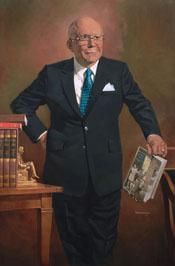
Gus Hawkins
Former U.S. Representative · California District 29 · 1963–1991 · Democratic
Gus Hawkins represented California's District 29 in the United States House of Representatives (1963–1991) for the Democratic party. The page below collects sourced biographical facts, term history, committee roles, and provenance for Hawkins.
Bioguide ID: H000367
Key facts
- Full name
- Gus Hawkins
- State
- California
- District
- District 29
- Party
- Democratic
- House service
- 1963–1991
- First House term
- 1963
- Status
- Left office
- Current term ends
- —
- Born
- 1907
- Bioguide ID
- H000367
- Committee assignments
- —
- Dataset version
- 1.20260605
Biographical narrative
949 words · sourced from the Wikipedia REST extract
Augustus F. Hawkins was an influential American politician who served as a U.S. Representative from California for nearly three decades. A member of the Democratic Party, Hawkins was known for his commitment to civil rights, education, and economic equity. His legislative career spanned from 1963 to 1991, during which he authored significant laws, including Title VII of the Civil Rights Act of 1964 and the Humphrey-Hawkins Full Employment Act of 1978. Hawkins's work in Congress and the California State Assembly reflected his dedication to addressing the needs of his constituents and advocating for marginalized communities.
Early life and career
Augustus Freeman Hawkins was born on August 31, 1907, in Shreveport, Louisiana, to Nyanza Hawkins and Hattie Freeman. He was the youngest of five children in a family that would later relocate to Los Angeles in 1918. Hawkins completed his secondary education at Jefferson High School in 1926 and pursued higher education at the University of California, Los Angeles (UCLA), where he earned a bachelor's degree in economics in 1931. Initially intending to study civil engineering, Hawkins's plans were thwarted by the financial constraints imposed by the Great Depression. This experience deepened his interest in politics and solidified his commitment to education and social justice.
Following his graduation, Hawkins entered the business world, operating a real estate company with his brother while simultaneously studying government. His political career began in earnest when he was elected to the California State Assembly in 1935. During his time in the Assembly, Hawkins married Pegga Adeline Smith on August 28, 1945. After her passing in 1966, he married Elsie Taylor in 1977. Hawkins remained in the Washington, D.C. area after his congressional career, primarily due to his wife's preference for the location, and he lived there until his death on November 10, 2007, two months after his second wife's passing.
Hawkins's racial background was complex; he was an African American of mixed-race ancestry and was often perceived as white due to his light skin. Despite this, he chose not to pass as white, embracing his identity and advocating for the rights of African Americans throughout his life. His early political inclinations were shaped by a broader trend among African Americans during the 1930s, as many began shifting their support from the Republican Party to the Democratic Party. Hawkins was an early supporter of Franklin D. Roosevelt, aligning himself with the New Deal policies that resonated with many in the African American community.
House tenure
Hawkins's tenure in the U.S. House of Representatives began in 1963 after he won election to a newly established majority-black congressional district in central Los Angeles. His election was endorsed by President John F. Kennedy, and he secured both the primary and general elections with relative ease. Hawkins served in the 21st District from 1963 until 1975, after which he represented the 29th District until his retirement in 1991. Over his 14 terms in Congress, Hawkins consistently garnered over 80% of the vote in his predominantly Democratic district, making him the first African American representative elected from west of the Mississippi River.
Throughout his congressional career, Hawkins was a staunch advocate for civil rights and social justice. He was a strong supporter of President Lyndon B. Johnson's Great Society initiatives, which aimed to eliminate poverty and racial injustice. Hawkins's legislative accomplishments included significant contributions to civil rights legislation, such as his authorship of Title VII of the Civil Rights Act of 1964, which established the Equal Employment Opportunity Commission. This landmark legislation aimed to prevent employment discrimination based on race, color, religion, sex, or national origin.
Hawkins's commitment to civil rights was further demonstrated during the tumultuous period following the signing of the Voting Rights Act of 1965. Just days after the Act was enacted, the Watts Riots erupted in his district, highlighting the urgent need for increased antipoverty funding and social reform. While he condemned the violence associated with the riots, Hawkins used the incident to advocate for greater federal support to address the underlying issues of poverty and inequality in his community.
Legislative focus and committees
Throughout his time in Congress, Hawkins focused on a range of issues that reflected the needs of his constituents and his commitment to social justice. His legislative priorities included education, housing, employment, and civil rights. Hawkins introduced and supported numerous bills aimed at improving access to education and promoting fair employment practices. His work in these areas was informed by his own experiences and the challenges faced by the communities he represented.
Hawkins was particularly known for his advocacy for fair housing and employment practices. He introduced legislation that sought to eliminate discrimination in housing and employment, recognizing that these issues were critical to achieving economic equity for African Americans and other marginalized groups. His fair housing law, which prohibited discrimination by builders receiving federal funds, was one of the notable successes of his legislative efforts.
In addition to his work on civil rights and education, Hawkins served on various committees during his time in Congress, which further enabled him to influence policy and advocate for his constituents. His positions on these committees allowed him to address a wide range of issues, including economic development and social welfare. Hawkins's long tenure in Congress and his ability to navigate the political landscape contributed to his effectiveness as a legislator.
Hawkins's legacy is marked by his dedication to public service and his significant contributions to civil rights legislation. His work has had a lasting impact on the lives of many Americans, particularly those in his district and the broader African American community. His commitment to education, fair employment, and housing continues to resonate in contemporary discussions about social justice and equity.
Notable legislation
Sponsored and co-sponsored legislation for Gus Hawkins is pending operator curation. The biographical narrative above carries the same provenance trail until per-bill rows are written.
Sources
- [1]https://en.wikipedia.org/wiki/Augustus_HawkinsWikipedia · retrieved 2026-06-05
Notable quotes
Sourced quotes for Gus Hawkins are pending operator curation. Narrative-scope provenance remains attached below.
Sources
- [1]https://en.wikipedia.org/wiki/Augustus_HawkinsWikipedia · retrieved 2026-06-05
Key positions
Curated policy positions for Gus Hawkins are pending operator review. The biographical narrative above carries the same provenance trail until per-topic positions are written.
Sources
- [1]https://en.wikipedia.org/wiki/Augustus_HawkinsWikipedia · retrieved 2026-06-05
Terms served
- 1963–1965U.S. House · Term 1 · Democratic
- 1965–1967U.S. House · Term 2 · Democratic
- 1967–1969U.S. House · Term 3 · Democratic
- 1969–1971U.S. House · Term 4 · Democratic
- 1971–1973U.S. House · Term 5 · Democratic
- 1973–1975U.S. House · Term 6 · Democratic
- 1975–1977U.S. House · Term 7 · Democratic
- 1977–1979U.S. House · Term 8 · Democratic
- 1979–1981U.S. House · Term 9 · Democratic
- 1981–1983U.S. House · Term 10 · Democratic
- 1983–1985U.S. House · Term 11 · Democratic
- 1985–1987U.S. House · Term 12 · Democratic
- 1987–1989U.S. House · Term 13 · Democratic
- 1989–1991U.S. House · Term 14 · Democratic
Sources & provenance
Every attributable claim above carries a per-section [N] marker that resolves to the corresponding URL below. Each entry records the upstream provider, the canonical URL, and the timestamp at which the source was retrieved by the ingest pipeline.
Key facts
- https://bioguide.congress.gov/search/bio/H000367bioguide · retrieved 2026-06-05
- https://www.govtrack.us/congress/members/405236govtrack · retrieved 2026-06-05
Biographical narrative
- https://en.wikipedia.org/wiki/Augustus_Hawkinswikipedia · retrieved 2026-06-05
Find your representative
Every U.S. state elects representatives by district. Browse California’s delegation, the full former-representative roster, or explore the role and term length.
Related on The Candidate
- Preceded by Dalip SaundEarlier holder of the California District 29 House seat · Democratic.Open
- Succeeded by Tony CárdenasLater holder of the California District 29 House seat · Democratic.Open
- Barclay HenleyFormer U.S. Representative · California District 1 · DemocraticOpen
- Charles ClaytonFormer U.S. Representative · California District 1 · RepublicanOpen
- Clarence LeaFormer U.S. Representative · California District 1 · DemocraticOpen
- Clement MillerFormer U.S. Representative · California District 1 · DemocraticOpen