
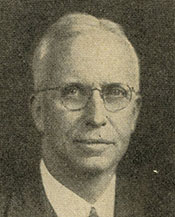
Historical · U.S. House · California · District 29
John Phillips
Former U.S. Representative · California District 29 · 1943–1957 · Republican
John Phillips represented California's District 29 in the United States House of Representatives (1943–1957) for the Republican party. The page below collects sourced biographical facts, term history, committee roles, and provenance for Phillips.
Bioguide ID: P000309
Key facts
- Full name
- John Phillips
- State
- California
- District
- District 29
- Party
- Republican
- House service
- 1943–1957
- First House term
- 1943
- Status
- Left office
- Current term ends
- —
- Born
- 1887
- Bioguide ID
- P000309
- Committee assignments
- —
- Dataset version
- 1.20260605
Biographical narrative
835 words · sourced from the Wikipedia REST extract
John Phillips was an American businessman and politician who served as a U.S. Representative for California's 29th congressional district from 1943 until 1957. A member of the Republican Party, Phillips held office during a transformative period in American history, contributing to legislative discussions and decisions that shaped post-war America. His career in public service was preceded by a background in business and military service, reflecting a diverse set of experiences that informed his political endeavors.
Early life and career
John Phillips was born on September 11, 1887, in Wilkes-Barre, Pennsylvania. His family relocated to St. Davids, Pennsylvania, in 1891, where he spent his formative years. Phillips pursued higher education at Haverford College, graduating in 1910. His early career was marked by a commitment to public service and community involvement.
In 1917, during World War I, Phillips enlisted in the United States Army, where he served in the Adjutant General's Office and in the Ordnance Department until 1919. This military experience not only shaped his character but also instilled in him a sense of duty and leadership that would later influence his political career. After the war, Phillips transitioned into the business sector, working as a business analyst and rancher after moving to California in 1924. His professional background in business provided him with insights into economic issues, which would later inform his legislative priorities.
Phillips's entry into politics began at the local level when he served on the city council of Banning, California, from 1930 to 1932. His political aspirations continued to grow, leading him to the California Assembly, where he served from 1933 to 1937. Following his tenure in the Assembly, he was elected to the California Senate, serving from 1937 until 1942. During this time, he also represented the United States as a delegate to the Eleventh World's Dairy Congress in Berlin in 1937, highlighting his engagement with agricultural and economic issues on an international stage.
House tenure
Phillips's congressional career began when he was elected as a Republican to the U.S. House of Representatives in 1943. He was a member of the Seventy-eighth Congress and subsequently served in six additional Congresses, totaling seven terms in office. His tenure in the House extended until January 3, 1957, when he chose not to seek renomination for another term. Throughout his time in Congress, Phillips was involved in various legislative initiatives and discussions that reflected the priorities of his constituents and the broader national context.
As a member of the House, Phillips participated in the post-World War II recovery efforts, which included addressing economic challenges and supporting veterans' affairs. His background as a veteran likely influenced his commitment to issues affecting military personnel and their families. Additionally, Phillips's experience in state politics provided him with a solid foundation for navigating the complexities of federal legislation.
During his congressional career, Phillips was active in the Republican Party, serving as a delegate to multiple Republican National Conventions from 1944 through 1960. His involvement in these conventions underscored his commitment to the party and its platform, as well as his influence within the party structure at both the state and national levels.
Legislative focus and committees
While specific details regarding the bills and legislative measures Phillips supported during his time in Congress are not provided, it can be inferred that his legislative focus was shaped by his background in business and agriculture, as well as his experiences as a veteran. Given the historical context of his tenure, Phillips likely engaged with a range of issues, including economic development, veterans' affairs, and agricultural policy.
Phillips's work on committees would have further defined his legislative priorities and areas of expertise. His experience in the California Senate and Assembly likely equipped him with the skills necessary to navigate the legislative process effectively. His contributions to the House would have included participation in discussions and votes on significant national issues, reflecting the interests of his constituents in California's 29th district.
After leaving Congress in 1957, Phillips continued to engage in public service as a member of the American Battle Monuments Commission from 1952 to 1961. This role allowed him to remain involved in issues related to military service and commemoration, emphasizing his ongoing commitment to veterans and their contributions to the nation.
Phillips spent his later years in Hemet, California, where he worked as a public relations counselor. He remained active in various community and civic affairs until his death on December 18, 1983, in Palm Springs, California, at the age of 96. His interment took place at Desert Memorial Park in Cathedral City, California, marking the end of a life dedicated to service in both the military and public office.
John Phillips's career reflects a blend of military service, business acumen, and political engagement, illustrating the diverse pathways individuals can take to contribute to their communities and the nation. His legacy as a U.S. Representative is characterized by his commitment to public service and the issues that resonated with his constituents during a pivotal era in American history.
Notable legislation
Sponsored and co-sponsored legislation for John Phillips is pending operator curation. The biographical narrative above carries the same provenance trail until per-bill rows are written.
Sources
- [1]https://en.wikipedia.org/wiki/John_R._Phillips_(American_politician)Wikipedia · retrieved 2026-06-05
Notable quotes
Sourced quotes for John Phillips are pending operator curation. Narrative-scope provenance remains attached below.
Sources
- [1]https://en.wikipedia.org/wiki/John_R._Phillips_(American_politician)Wikipedia · retrieved 2026-06-05
Key positions
Curated policy positions for John Phillips are pending operator review. The biographical narrative above carries the same provenance trail until per-topic positions are written.
Sources
- [1]https://en.wikipedia.org/wiki/John_R._Phillips_(American_politician)Wikipedia · retrieved 2026-06-05
Terms served
- 1943–1945U.S. House · Term 1 · Republican
- 1945–1947U.S. House · Term 2 · Republican
- 1947–1949U.S. House · Term 3 · Republican
- 1949–1951U.S. House · Term 4 · Republican
- 1951–1953U.S. House · Term 5 · Republican
- 1953–1955U.S. House · Term 6 · Republican
- 1955–1957U.S. House · Term 7 · Republican
Sources & provenance
Every attributable claim above carries a per-section [N] marker that resolves to the corresponding URL below. Each entry records the upstream provider, the canonical URL, and the timestamp at which the source was retrieved by the ingest pipeline.
Key facts
- https://bioguide.congress.gov/search/bio/P000309bioguide · retrieved 2026-06-05
- https://www.govtrack.us/congress/members/408709govtrack · retrieved 2026-06-05
Biographical narrative
- https://en.wikipedia.org/wiki/John_R._Phillips_(American_politician)wikipedia · retrieved 2026-06-05
Find your representative
Every U.S. state elects representatives by district. Browse California’s delegation, the full former-representative roster, or explore the role and term length.
Related on The Candidate
- Succeeded by Dalip SaundLater holder of the California District 29 House seat · Democratic.Open
- Barclay HenleyFormer U.S. Representative · California District 1 · DemocraticOpen
- Charles ClaytonFormer U.S. Representative · California District 1 · RepublicanOpen
- Clarence LeaFormer U.S. Representative · California District 1 · DemocraticOpen
- Clement MillerFormer U.S. Representative · California District 1 · DemocraticOpen
- Republican PartyFederal candidates and office holders on the Republican line.Open