
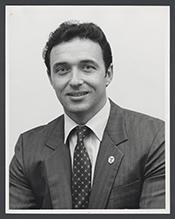
Historical · U.S. House · California · District 3
Daniel Lungren
Former U.S. Representative · California District 3 · 1979–2013 · Republican
Daniel Lungren represented California's District 3 in the United States House of Representatives (1979–2013) for the Republican party. The page below collects sourced biographical facts, term history, committee roles, and provenance for Lungren.
Bioguide ID: L000517
Key facts
- Full name
- Daniel Lungren
- State
- California
- District
- District 3
- Party
- Republican
- House service
- 1979–2013
- First House term
- 1979
- Status
- Left office
- Current term ends
- —
- Born
- 1946
- Bioguide ID
- L000517
- Committee assignments
- —
- Dataset version
- 1.20260605
Biographical narrative
837 words · sourced from the Wikipedia REST extract
Daniel E. Lungren is a former U.S. Representative who served California's 3rd congressional district. A member of the Republican Party, Lungren's political career spans several decades, during which he held various significant roles, including serving as California's Attorney General. His tenure in the U.S. House of Representatives began in 1979 and lasted until 1989, after which he transitioned to state-level politics before returning to Congress in 2005. Lungren's legislative focus included crime control, immigration reform, and public safety, reflecting the conservative values of his party during his time in office.
Early life and career
Daniel Edward Lungren was born on September 22, 1946, in Long Beach, California. He was raised in a family of Irish, Swedish, and Scottish descent. His father, John Lungren, was a personal physician to former President Richard Nixon, which likely influenced Lungren's early exposure to politics. Lungren completed his high school education at St. Anthony High School in 1964 before attending the University of Notre Dame, where he earned an A.B. degree with honors in English in 1968.
During his time at Notre Dame, Lungren became politically active, chairing the Youth for Nixon campaign during Richard Nixon's first presidential run. He anticipated serving in the military during the Vietnam War but was deemed ineligible due to a knee injury sustained while playing high school football. After completing his undergraduate studies, Lungren began his legal education at the University of Southern California Law School but later transferred to Georgetown University Law Center, where he obtained his Juris Doctor (J.D.) degree in 1971.
While at Georgetown, Lungren gained experience working for Republican U.S. Senators George Murphy of California and Bill Brock of Tennessee. Following his graduation, he served as a Special Assistant to the co-chair of the Republican National Committee from 1971 to 1972. Upon returning to Long Beach, he joined a law firm and practiced civil law briefly before making his first attempt at a congressional seat in 1976, which was unsuccessful. However, Lungren's political aspirations were realized in 1978 when he won election to the U.S. House of Representatives.
House tenure
Lungren's initial tenure in the U.S. House of Representatives spanned from 1979 to 1989, during which he represented portions of Long Beach and Orange County. His political influence grew significantly following the election of Ronald Reagan in 1980, as he became a prominent figure among conservatives and a supporter of the tough-on-crime movement. Lungren was a founding member of the Conservative Opportunity Society and served on the House Judiciary Committee, where he advocated for stringent crime legislation.
One of Lungren's notable legislative efforts was the sponsorship of the Comprehensive Crime Control Act in 1984, which was one of the most extensive anti-crime measures in U.S. history at that time. He also championed asset forfeiture laws as part of the war on drugs, emphasizing the need to penalize businesses that engaged with drug dealers. His stance on immigration included supporting sanctions against employers who hired illegal immigrants while also advocating for a temporary guest-worker program. Lungren was a principal cosponsor of the Simpson-Mazzoli immigration bill, which ultimately became the Immigration Reform Act of 1986. Additionally, he proposed his own guest worker legislation aimed at facilitating the importation of temporary labor.
In 1988, Lungren faced a political shift when he was nominated by California Governor George Deukmejian for the position of State Treasurer. Although the state Assembly confirmed his appointment, the state Senate rejected it. Lungren contested this decision in the California Supreme Court, which ultimately ruled that both houses of the legislature needed to confirm such appointments. As a result, Lungren found himself without a position in either Washington, D.C., or Sacramento, leading to his decision not to seek re-election to the House.
Legislative focus and committees
After a hiatus from Congress, Lungren returned to the political arena in 2005, representing California's 3rd congressional district, which encompassed most of Sacramento County and parts of Solano County, as well as Alpine, Amador, and Calaveras Counties. His legislative priorities during this period remained consistent with his earlier focus on crime, public safety, and immigration reform.
Throughout his time in the House, Lungren served on various committees, where he continued to advocate for conservative policies. His work included efforts to strengthen laws related to crime and public safety, reflecting his long-standing commitment to these issues. Lungren's legislative agenda also involved addressing immigration challenges, balancing the need for security with the complexities of labor demands in the state.
In 2012, due to redistricting, Lungren sought re-election in California's 7th congressional district. However, he was defeated by Democrat Ami Bera, marking the end of his congressional career. Lungren's legislative legacy includes his contributions to crime legislation and immigration policy, as well as his role in shaping conservative discourse during a transformative period in American politics.
Following his departure from Congress, Lungren transitioned into a career as a lawyer and lobbyist, continuing to engage in public affairs. His extensive experience in both state and federal government positions him as a notable figure in California's political landscape.
Notable legislation
Sponsored and co-sponsored legislation for Daniel Lungren is pending operator curation. The biographical narrative above carries the same provenance trail until per-bill rows are written.
Sources
- [1]https://en.wikipedia.org/wiki/Dan_LungrenWikipedia · retrieved 2026-06-05
Notable quotes
Sourced quotes for Daniel Lungren are pending operator curation. Narrative-scope provenance remains attached below.
Sources
- [1]https://en.wikipedia.org/wiki/Dan_LungrenWikipedia · retrieved 2026-06-05
Key positions
Curated policy positions for Daniel Lungren are pending operator review. The biographical narrative above carries the same provenance trail until per-topic positions are written.
Sources
- [1]https://en.wikipedia.org/wiki/Dan_LungrenWikipedia · retrieved 2026-06-05
Terms served
- 1979–1981U.S. House · Term 1 · Republican
- 1981–1983U.S. House · Term 2 · Republican
- 1983–1985U.S. House · Term 3 · Republican
- 1985–1987U.S. House · Term 4 · Republican
- 1987–1989U.S. House · Term 5 · Republican
- 2005–2007U.S. House · Term 6 · Republican
- 2007–2009U.S. House · Term 7 · Republican
- 2009–2011U.S. House · Term 8 · Republican
- 2011–2013U.S. House · Term 9 · Republican
Sources & provenance
Every attributable claim above carries a per-section [N] marker that resolves to the corresponding URL below. Each entry records the upstream provider, the canonical URL, and the timestamp at which the source was retrieved by the ingest pipeline.
Key facts
- https://bioguide.congress.gov/search/bio/L000517bioguide · retrieved 2026-06-05
- http://www.lungren.house.govhouse.gov · retrieved 2026-06-05
Biographical narrative
- https://en.wikipedia.org/wiki/Dan_Lungrenwikipedia · retrieved 2026-06-05
Find your representative
Every U.S. state elects representatives by district. Browse California’s delegation, the full former-representative roster, or explore the role and term length.
Related on The Candidate
- Preceded by John MossEarlier holder of the California District 3 House seat · Democratic.Open
- Barclay HenleyFormer U.S. Representative · California District 1 · DemocraticOpen
- Charles ClaytonFormer U.S. Representative · California District 1 · RepublicanOpen
- Clarence LeaFormer U.S. Representative · California District 1 · DemocraticOpen
- Clement MillerFormer U.S. Representative · California District 1 · DemocraticOpen
- Republican PartyFederal candidates and office holders on the Republican line.Open