
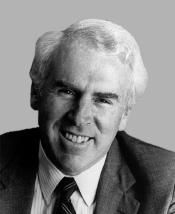
Historical · U.S. House · California · District 3
Victor Fazio Jr.
Former U.S. Representative · California District 3 · 1979–1999 · Democratic
Victor Fazio Jr. represented California's District 3 in the United States House of Representatives (1979–1999) for the Democratic party. The page below collects sourced biographical facts, term history, committee roles, and provenance for Jr..
Bioguide ID: F000053
Key facts
- Full name
- Victor Fazio Jr.
- State
- California
- District
- District 3
- Party
- Democratic
- House service
- 1979–1999
- First House term
- 1979
- Status
- Left office
- Current term ends
- —
- Born
- 1942
- Bioguide ID
- F000053
- Committee assignments
- —
- Dataset version
- 1.20260605
Biographical narrative
939 words · sourced from the Wikipedia REST extract
Vic Fazio was an American politician who served as a member of the United States House of Representatives for California from 1979 to 1999. A member of the Democratic Party, Fazio represented California's 4th congressional district until 1993, after which he served California's 3rd congressional district until the end of his tenure in Congress. Throughout his political career, he was known for his advocacy on environmental issues, particularly in relation to wildlife conservation.
Early life and career
Vic Fazio was born on October 11, 1942, in Winchester, Massachusetts. He was the son of Betty Virginia Freeman and V. Herbert Fazio, and he had a diverse heritage that included both Italian and New England Yankee ancestry. Fazio completed his secondary education at Madison High School in Madison, New Jersey, graduating in 1960. He furthered his education at Williston Academy in Easthampton, Massachusetts, in 1961. He earned a Bachelor of Arts degree from Union College in Schenectady, New York, in 1965. Following his undergraduate studies, Fazio engaged in graduate work at California State University, Sacramento, from 1969 to 1972. Additionally, he was a Coro Foundation Fellow in Los Angeles from 1965 to 1966, which provided him with early exposure to public policy and civic engagement.
Fazio's entry into politics began in the mid-1960s when he worked as a congressional and legislative consultant from 1966 to 1975. During this time, he co-founded California Journal magazine in 1970, which focused on state politics and policy. His involvement in local governance included serving on the Sacramento County Charter Commission from 1972 to 1974 and the Sacramento County Planning Commission in 1975. Fazio's political career advanced when he was elected to the California State Assembly, where he served from 1975 until 1978. His participation in the Democratic Party was marked by his role as a delegate to state Democratic conventions in 1976 and 1978, as well as to multiple Democratic National Conventions from 1976 through 1996.
House tenure
Vic Fazio was elected to the United States House of Representatives in 1978, taking office on January 3, 1979, as a member of the 96th Congress. He was re-elected to nine consecutive terms, serving until January 3, 1999. Initially, he represented California's 4th congressional district, which he held until redistricting in 1993, after which he represented California's 3rd congressional district until the conclusion of his congressional career.
During his tenure in Congress, Fazio was known for his efforts to promote environmental conservation, particularly in relation to wildlife protection. One of his notable achievements was his advocacy for the establishment of the Vic Fazio Yolo Wildlife Area, which was dedicated in 1997 by President Bill Clinton. This area, located in Yolo County, is recognized for its seasonal wetlands that provide critical habitat for various species of waterfowl and shorebirds, serving as an important stopover along the Pacific Flyway during migratory seasons. Fazio's commitment to environmental issues was a defining aspect of his legislative agenda.
Fazio's electoral success in his early years was significant, as he won his first seven terms with relative ease. However, the political landscape shifted after the redistricting process in the early 1990s, making his district more rural and leaning Republican. This change led to increased electoral challenges. In the 1992 election, he faced a competitive race, securing only 51 percent of the vote against a former state senator. His political fortunes fluctuated in subsequent elections; in 1994, he narrowly won re-election by a margin of three percentage points. In 1996, he rebounded to win by a more comfortable margin of 54 percent. Ultimately, Fazio announced in 1997 that he would not seek re-election in 1998, concluding a decade-long career in the House of Representatives.
Legislative focus and committees
Throughout his time in Congress, Vic Fazio served on various committees that aligned with his interests and expertise. His legislative focus included environmental issues, fiscal responsibility, and social policies. He was known for his ability to navigate complex legislative matters, advocating for policies that would benefit his constituents and the broader community.
After leaving Congress, Fazio continued to engage in public policy and political reform. He joined Akin Gump Strauss Hauer & Feld as a senior advisor, where he contributed his insights and experience to various initiatives. In addition, he served on the board of Northrop Grumman and co-chaired the Information Technology and Innovation Foundation, a think tank focused on policy issues related to technology and innovation. Fazio was also involved with the Council on American Politics, which aimed to address challenges facing political management and governance.
Fazio's commitment to political reform was evident in his later years, as he collaborated with other former members of Congress to advocate for changes within the legislative process. He was a member of the ReFormers Caucus of Issue One, which sought to promote transparency and accountability in government. His involvement in these initiatives reflected his ongoing dedication to improving the political landscape in the United States.
In his personal life, Fazio experienced significant changes, including the loss of his first wife, Joella Mason, from whom he divorced, and later, his second wife, Judy Kern, who passed away in 2015. He remarried Kathy Sawyer, a retired journalist, in 2017. Fazio had two daughters from his first marriage and two step-children from his second marriage. His family life was marked by both joy and tragedy, including the loss of his daughter Anne to leukemia in 1995.
Vic Fazio passed away on March 16, 2022, at the age of 79, due to melanoma. His legacy includes his contributions to environmental conservation, his service in the House of Representatives, and his ongoing efforts to promote political reform and civic engagement.
Notable legislation
Sponsored and co-sponsored legislation for Victor Fazio Jr. is pending operator curation. The biographical narrative above carries the same provenance trail until per-bill rows are written.
Sources
- [1]https://en.wikipedia.org/wiki/Vic_FazioWikipedia · retrieved 2026-06-05
Notable quotes
Sourced quotes for Victor Fazio Jr. are pending operator curation. Narrative-scope provenance remains attached below.
Sources
- [1]https://en.wikipedia.org/wiki/Vic_FazioWikipedia · retrieved 2026-06-05
Key positions
Curated policy positions for Victor Fazio Jr. are pending operator review. The biographical narrative above carries the same provenance trail until per-topic positions are written.
Sources
- [1]https://en.wikipedia.org/wiki/Vic_FazioWikipedia · retrieved 2026-06-05
Terms served
- 1979–1981U.S. House · Term 1 · Democratic
- 1981–1983U.S. House · Term 2 · Democratic
- 1983–1985U.S. House · Term 3 · Democratic
- 1985–1987U.S. House · Term 4 · Democratic
- 1987–1989U.S. House · Term 5 · Democratic
- 1989–1991U.S. House · Term 6 · Democratic
- 1991–1993U.S. House · Term 7 · Democratic
- 1993–1995U.S. House · Term 8 · Democratic
- 1995–1997U.S. House · Term 9 · Democratic
- 1997–1999U.S. House · Term 10 · Democratic
Sources & provenance
Every attributable claim above carries a per-section [N] marker that resolves to the corresponding URL below. Each entry records the upstream provider, the canonical URL, and the timestamp at which the source was retrieved by the ingest pipeline.
Key facts
- https://bioguide.congress.gov/search/bio/F000053bioguide · retrieved 2026-06-05
- https://www.govtrack.us/congress/members/404013govtrack · retrieved 2026-06-05
Biographical narrative
- https://en.wikipedia.org/wiki/Vic_Faziowikipedia · retrieved 2026-06-05
Find your representative
Every U.S. state elects representatives by district. Browse California’s delegation, the full former-representative roster, or explore the role and term length.
Related on The Candidate
- Preceded by John MossEarlier holder of the California District 3 House seat · Democratic.Open
- Succeeded by Doug OseLater holder of the California District 3 House seat · Republican.Open
- Barclay HenleyFormer U.S. Representative · California District 1 · DemocraticOpen
- Charles ClaytonFormer U.S. Representative · California District 1 · RepublicanOpen
- Clarence LeaFormer U.S. Representative · California District 1 · DemocraticOpen
- Clement MillerFormer U.S. Representative · California District 1 · DemocraticOpen