
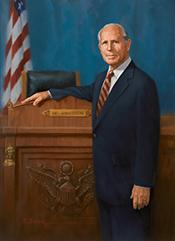
Historical · U.S. House · California · District 32
Glenn Anderson
Former U.S. Representative · California District 32 · 1969–1993 · Democratic
Glenn Anderson represented California's District 32 in the United States House of Representatives (1969–1993) for the Democratic party. The page below collects sourced biographical facts, term history, committee roles, and provenance for Anderson.
Bioguide ID: A000189
Key facts
- Full name
- Glenn Anderson
- State
- California
- District
- District 32
- Party
- Democratic
- House service
- 1969–1993
- First House term
- 1969
- Status
- Left office
- Current term ends
- —
- Born
- 1913
- Bioguide ID
- A000189
- Committee assignments
- —
- Dataset version
- 1.20260605
Biographical narrative
910 words · sourced from the Wikipedia REST extract
Glenn M. Anderson was an American politician who served as a U.S. Representative for California's 32nd congressional district from 1969 until 1993. A member of the Democratic Party, Anderson had a lengthy political career that included serving as the 37th lieutenant governor of California and holding various local and state offices. His tenure in the U.S. House of Representatives was marked by his involvement in transportation and public works legislation, reflecting his background as a real estate developer.
Early life and career
Glenn Malcolm Anderson was born on February 21, 1913, in Hawthorne, California. He pursued higher education at the University of California, Los Angeles, where he earned a Bachelor of Arts degree in 1936. Following his graduation, Anderson entered the real estate sector, where he worked as a developer. His career was interrupted by World War II, during which he served in the United States Army as an infantry sergeant. This military service contributed to his leadership skills and public service ethos.
Anderson's political career began at the local level when he was elected mayor of Hawthorne, serving from 1940 to 1943. His early political involvement laid the groundwork for his subsequent election to the California State Assembly, where he represented the 46th district from 1943 to 1951. During his time in the Assembly, Anderson gained valuable experience in legislative processes and developed a network of political connections that would serve him well in his future endeavors.
In 1959, Anderson was elected as the lieutenant governor of California, a position he held until 1967. His time in this role was particularly notable for his response to the 1965 Watts riots. When Governor Pat Brown was out of the country during the riots, Anderson acted as the governor. His decision-making during this crisis, particularly the delay in approving state support to quell the unrest, led to significant controversy and criticism. This incident would later impact his political career, contributing to his defeat in the 1966 election for lieutenant governor against Republican Robert Finch.
House tenure
Glenn Anderson's congressional career began when he was elected to the U.S. House of Representatives in 1968, taking office in January 1969. He represented California's 32nd congressional district, which included areas in Southern Los Angeles County such as Carson, San Pedro, and Long Beach. Over the course of his twelve terms in office, Anderson became known for his focus on infrastructure and transportation issues, leveraging his background in real estate to inform his legislative priorities.
As a member of the House, Anderson sought a position on the Committee on Public Works and Transportation, where he was able to exert significant influence over legislation related to infrastructure development. His expertise in real estate and urban planning allowed him to contribute meaningfully to discussions on public works projects, and he eventually became the chair of the committee in 1988. This role positioned him at the forefront of key legislative initiatives concerning transportation and infrastructure, which were critical to the development of California and the nation.
Despite his long tenure and experience, Anderson's later years in Congress were marked by challenges. Some of his colleagues noted a decline in his effectiveness as he aged, leading to concerns about his ability to fulfill the responsibilities of his position. In the early 1990s, state Democratic leaders even considered a reapportionment plan that would have altered the boundaries of his district, reflecting growing concerns about his political viability. After serving for over two decades, Anderson chose not to seek re-election in 1992, concluding his congressional career on January 3, 1993.
Legislative focus and committees
Throughout his time in the U.S. House of Representatives, Glenn Anderson was particularly focused on issues related to public works and transportation. His background as a real estate developer informed his legislative priorities, allowing him to advocate effectively for infrastructure improvements that would benefit his constituents and the broader region. As chair of the Committee on Public Works and Transportation, he played a pivotal role in shaping policies that addressed the needs of urban development, transportation systems, and public infrastructure.
Anderson's legislative work included efforts to secure funding for transportation projects, improve public transit systems, and enhance infrastructure in Southern California. His experience and knowledge in real estate provided him with insights into the complexities of urban planning and development, which he applied to his work in Congress. He was involved in various initiatives aimed at addressing the challenges of urbanization, including the need for improved roads, bridges, and public transportation options.
Despite facing criticism regarding his effectiveness in the late 1980s, Anderson's contributions to transportation policy and public works were significant during his tenure. His leadership on the committee allowed him to influence key legislation that impacted the infrastructure landscape of California and the nation. However, his time in Congress ended in 1993, marking the conclusion of a lengthy and varied political career.
After leaving office, Anderson continued to be recognized for his contributions to public service. He underwent multiple heart bypass surgeries in 1988 and faced health challenges in his later years. He passed away on December 13, 1994, due to complications related to Alzheimer's disease, at the age of 81. Anderson is interred at Green Hills Memorial Park in Rancho Palos Verdes, California. His legacy includes the naming of the Los Angeles Harbor ship channel in his honor, as well as the Glenn M. Anderson Freeway, which serves as a testament to his impact on transportation and infrastructure in the region.
Notable legislation
Sponsored and co-sponsored legislation for Glenn Anderson is pending operator curation. The biographical narrative above carries the same provenance trail until per-bill rows are written.
Sources
- [1]https://en.wikipedia.org/wiki/Glenn_M._AndersonWikipedia · retrieved 2026-06-05
Notable quotes
Sourced quotes for Glenn Anderson are pending operator curation. Narrative-scope provenance remains attached below.
Sources
- [1]https://en.wikipedia.org/wiki/Glenn_M._AndersonWikipedia · retrieved 2026-06-05
Key positions
Curated policy positions for Glenn Anderson are pending operator review. The biographical narrative above carries the same provenance trail until per-topic positions are written.
Sources
- [1]https://en.wikipedia.org/wiki/Glenn_M._AndersonWikipedia · retrieved 2026-06-05
Terms served
- 1969–1971U.S. House · Term 1 · Democratic
- 1971–1973U.S. House · Term 2 · Democratic
- 1973–1975U.S. House · Term 3 · Democratic
- 1975–1977U.S. House · Term 4 · Democratic
- 1977–1979U.S. House · Term 5 · Democratic
- 1979–1981U.S. House · Term 6 · Democratic
- 1981–1983U.S. House · Term 7 · Democratic
- 1983–1985U.S. House · Term 8 · Democratic
- 1985–1987U.S. House · Term 9 · Democratic
- 1987–1989U.S. House · Term 10 · Democratic
- 1989–1991U.S. House · Term 11 · Democratic
- 1991–1993U.S. House · Term 12 · Democratic
Sources & provenance
Every attributable claim above carries a per-section [N] marker that resolves to the corresponding URL below. Each entry records the upstream provider, the canonical URL, and the timestamp at which the source was retrieved by the ingest pipeline.
Key facts
- https://bioguide.congress.gov/search/bio/A000189bioguide · retrieved 2026-06-05
- https://www.govtrack.us/congress/members/400844govtrack · retrieved 2026-06-05
Biographical narrative
- https://en.wikipedia.org/wiki/Glenn_M._Andersonwikipedia · retrieved 2026-06-05
Find your representative
Every U.S. state elects representatives by district. Browse California’s delegation, the full former-representative roster, or explore the role and term length.
Related on The Candidate
- Succeeded by Hilda SolisLater holder of the California District 32 House seat · Democratic.Open
- Barclay HenleyFormer U.S. Representative · California District 1 · DemocraticOpen
- Charles ClaytonFormer U.S. Representative · California District 1 · RepublicanOpen
- Clarence LeaFormer U.S. Representative · California District 1 · DemocraticOpen
- Clement MillerFormer U.S. Representative · California District 1 · DemocraticOpen
- Democratic PartyFederal candidates and office holders on the Democratic line.Open