
Historical · U.S. House · California · District 33
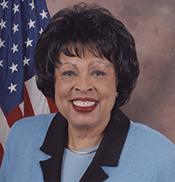
Diane Watson
Former U.S. Representative · California District 33 · 2001–2011 · Democratic
Diane Watson represented California's District 33 in the United States House of Representatives (2001–2011) for the Democratic party. The page below collects sourced biographical facts, term history, committee roles, and provenance for Watson.
Bioguide ID: W000794
Key facts
- Full name
- Diane Watson
- State
- California
- District
- District 33
- Party
- Democratic
- House service
- 2001–2011
- First House term
- 2001
- Status
- Left office
- Current term ends
- —
- Born
- 1933
- Bioguide ID
- W000794
- Committee assignments
- —
- Dataset version
- 1.20260605
Biographical narrative
974 words · sourced from the Wikipedia REST extract
Diane E. Watson is a former U.S. Representative who served California's 33rd congressional district from 2003 until 2011, following her initial election to the 32nd District in a special election in 2001. A member of the Democratic Party, Watson's political career spanned several decades, during which she was known for her advocacy on issues related to health care, education, and civil rights. Prior to her congressional tenure, she held various roles in education and public service, including serving as a state senator and U.S. Ambassador to Micronesia.
Early life and career
Diane E. Watson was born on November 12, 1933, in Los Angeles, California. Raised in a Catholic family, she is the daughter of William Allen Louis Watson and Dorothy Elizabeth O’Neal Watson. Her educational journey began at Dorsey High School, followed by attendance at Los Angeles City College. She later enrolled at the University of California, Los Angeles (UCLA), where she earned a Bachelor of Arts degree in Education in 1956. During her time at UCLA, she became a member of the Alpha Kappa Alpha sorority, which is known for its commitment to community service and leadership.
Watson continued her education by obtaining a Master of Science degree in School Psychology from California State University, Los Angeles, in 1967. She further advanced her academic credentials by earning a PhD in Educational Administration from Claremont Graduate University in 1987. Additionally, she attended the Harvard Kennedy School, which provided her with further insights into public policy and governance.
In her professional career, Watson initially worked as an elementary school teacher and later served as a school psychologist within the Los Angeles public school system. Her expertise in education also led her to lecture at California State University, Long Beach, and California State University, Los Angeles. Furthermore, she held a position as a health occupation specialist with the California Department of Education's Bureau of Industrial Education. Her commitment to education and public service was evident during her tenure on the Los Angeles Unified School District Board of Education from 1975 to 1978.
Watson's early political career began when she was elected to the California State Senate, where she served from 1978 until 1998. As the first African American woman in the California State Senate, she held the position of chair of the Health and Human Services Committee, where she became known for her advocacy for health care access for the poor and children. After reaching her term limit, she was succeeded by Kevin Murray.
In 1992, Watson made an unsuccessful bid for the Los Angeles County Board of Supervisors, losing a closely contested race to former Supervisor Yvonne Burke. Following her state senate career, she was appointed by President Bill Clinton as the United States Ambassador to Micronesia, a role she held from 1999 to 2000. After stepping down from this position, she ran in the April 2001 Democratic primary election to fill the vacancy left by the late Congressman Julian C. Dixon. Watson won the primary with a plurality of the votes and subsequently secured a significant victory in the special election held in June 2001.
House tenure
Watson's tenure in the U.S. House of Representatives began when she was sworn in to fill the vacancy in California's 32nd District in 2001. Following her initial election, she was re-elected four times, ultimately serving until January 3, 2011. During her time in Congress, Watson represented a district that encompassed much of Central Los Angeles, including affluent neighborhoods such as Los Feliz.
Throughout her congressional career, Watson was a vocal advocate for various social justice issues, particularly those related to racism and xenophobia. She was known for her support of reparations for descendants of American slaves and for reforms aimed at improving the educational system. Watson also championed health care subsidies for families without adequate access to medical services and called for a comprehensive overhaul of the criminal justice system. Her advocacy extended to addressing incidents of violence and discrimination against Arab Americans, particularly in the aftermath of the September 11, 2001, terrorist attacks.
In 2004, Watson was one of 31 House Democrats who voted against counting the electoral votes from Ohio during the presidential election, citing concerns over the integrity of the electoral process. She was also critical of various policies put forth by the administration of President George W. Bush, including the war in Iraq, media consolidation, and the proposed privatization of Social Security. Watson expressed her opposition to the Bush tax cuts, arguing that they were financially unsustainable.
Legislative focus and committees
During her time in the House, Watson served on several committees that aligned with her legislative priorities. Her focus on health care issues was evident in her committee assignments, where she worked on legislation aimed at expanding access to health services for underserved populations. She was particularly concerned with the needs of children and families, advocating for policies that would provide necessary support to those lacking adequate health care coverage.
Watson's legislative efforts also included a strong emphasis on civil rights and social justice. She was actively involved in discussions surrounding the rights of marginalized communities, including her opposition to the Cherokee Nation's decision to limit citizenship based on ancestry. In response to this issue, she introduced legislation aimed at severing U.S. relations with the Cherokee Nation unless they restored citizenship rights to descendants of Cherokee freedmen.
Throughout her congressional career, Watson maintained a commitment to addressing systemic inequalities and advocating for the rights of all Americans. Her tenure in the House of Representatives was marked by her dedication to public service and her efforts to bring attention to critical issues affecting her constituents and the broader society. After completing her final term in January 2011, Watson retired from public office, leaving behind a legacy of advocacy and leadership in the realms of education, health care, and civil rights.
Notable legislation
Sponsored and co-sponsored legislation for Diane Watson is pending operator curation. The biographical narrative above carries the same provenance trail until per-bill rows are written.
Sources
- [1]https://en.wikipedia.org/wiki/Diane_WatsonWikipedia · retrieved 2026-06-05
Notable quotes
Sourced quotes for Diane Watson are pending operator curation. Narrative-scope provenance remains attached below.
Sources
- [1]https://en.wikipedia.org/wiki/Diane_WatsonWikipedia · retrieved 2026-06-05
Key positions
Curated policy positions for Diane Watson are pending operator review. The biographical narrative above carries the same provenance trail until per-topic positions are written.
Sources
- [1]https://en.wikipedia.org/wiki/Diane_WatsonWikipedia · retrieved 2026-06-05
Terms served
- 2001–2003U.S. House · Term 1 · Democratic
- 2003–2005U.S. House · Term 2 · Democratic
- 2005–2007U.S. House · Term 3 · Democratic
- 2007–2009U.S. House · Term 4 · Democratic
- 2009–2011U.S. House · Term 5 · Democratic
Sources & provenance
Every attributable claim above carries a per-section [N] marker that resolves to the corresponding URL below. Each entry records the upstream provider, the canonical URL, and the timestamp at which the source was retrieved by the ingest pipeline.
Key facts
- https://bioguide.congress.gov/search/bio/W000794bioguide · retrieved 2026-06-05
- http://www.house.gov/watsonhouse.gov · retrieved 2026-06-05
Biographical narrative
- https://en.wikipedia.org/wiki/Diane_Watsonwikipedia · retrieved 2026-06-05
Find your representative
Every U.S. state elects representatives by district. Browse California’s delegation, the full former-representative roster, or explore the role and term length.
Related on The Candidate
- Preceded by Wayne GrishamEarlier holder of the California District 33 House seat · Republican.Open
- Barclay HenleyFormer U.S. Representative · California District 1 · DemocraticOpen
- Charles ClaytonFormer U.S. Representative · California District 1 · RepublicanOpen
- Clarence LeaFormer U.S. Representative · California District 1 · DemocraticOpen
- Clement MillerFormer U.S. Representative · California District 1 · DemocraticOpen
- Democratic PartyFederal candidates and office holders on the Democratic line.Open