
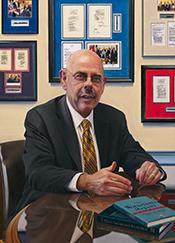
Historical · U.S. House · California · District 33
Henry Waxman
Former U.S. Representative · California District 33 · 1975–2015 · Democratic
Henry Waxman represented California's District 33 in the United States House of Representatives (1975–2015) for the Democratic party. The page below collects sourced biographical facts, term history, committee roles, and provenance for Waxman.
Bioguide ID: W000215
Key facts
- Full name
- Henry Waxman
- State
- California
- District
- District 33
- Party
- Democratic
- House service
- 1975–2015
- First House term
- 1975
- Status
- Left office
- Current term ends
- —
- Born
- 1939
- Bioguide ID
- W000215
- Committee assignments
- —
- Dataset version
- 1.20260605
Biographical narrative
916 words · sourced from the Wikipedia REST extract
Henry A. Waxman is a former U.S. Representative from California who served in the House of Representatives for four decades, from 1975 until 2015. A member of the Democratic Party, Waxman represented several congressional districts in the western part of Los Angeles, including areas such as West Hollywood, Santa Monica, and Beverly Hills. Throughout his tenure, he was known for his influential role in shaping health and environmental policy, as well as for his commitment to various progressive causes.
Early life and career
Henry Arnold Waxman was born on September 12, 1939, in Los Angeles, California, into a Jewish family. His father, Ralph Louis Waxman, was originally from Montreal, Canada, while his mother, Esther Waxman (née Silverman), hailed from Pennsylvania. Waxman's grandparents were Jewish immigrants from Russia, which contributed to his upbringing in a culturally rich environment.
Waxman pursued higher education at the University of California, Los Angeles (UCLA), where he earned a bachelor's degree in political science in 1961. He continued his studies at UCLA's School of Law, obtaining a Juris Doctor (J.D.) degree in 1964. Following his graduation, Waxman began his professional career as a lawyer. His political journey commenced in 1968 when he was elected to the California State Assembly, where he served three terms. During this time, he co-founded the Los Angeles County Young Democrats alongside Howard Berman, a fellow UCLA alumnus and future U.S. Representative.
House tenure
In 1974, Waxman decided to run for the U.S. House of Representatives after the retirement of long-serving Democratic Congressman Chet Holifield. This transition required him to relinquish his state assembly seat. Waxman successfully secured the Democratic nomination for the newly re-numbered 24th congressional district and subsequently won the general election, which was largely seen as a formality in this heavily Democratic area. Over the course of his career, Waxman was re-elected 17 times, facing minimal opposition in most elections. Notably, he encountered no major-party challengers in 1986 and was unopposed in 2008.
Throughout his time in Congress, Waxman's district underwent several changes due to redistricting following the decennial census. His district was numbered the 24th from 1975 to 1993, the 29th from 1993 to 2003, the 30th from 2003 to 2013, and finally the 33rd from 2013 until his retirement in 2015. At the time of his departure from Congress, he was one of the last remaining members from the significant Democratic freshman class of 1975, alongside fellow Californian George Miller.
Waxman's congressional district encompassed a diverse range of communities, including Santa Monica, Beverly Hills, Malibu, and various neighborhoods in western Los Angeles. His representation was characterized by a focus on urban issues, health care, and environmental concerns, reflecting the priorities of his constituents.
Legislative focus and committees
Throughout his tenure in the House, Waxman emerged as a prominent figure in legislative matters, particularly in health and environmental policy. He served as the chair of the Energy and Commerce Subcommittee on Health and the Environment from 1979, where he conducted investigations into various pressing issues, including universal health insurance, Medicare and Medicaid coverage, AIDS, and pollution control. His commitment to public health was evident in his efforts to address the dangers associated with tobacco use. In 1994, he famously compelled the chief executives of major tobacco companies to testify under oath regarding the addictive nature of nicotine.
Waxman's legislative priorities encompassed a wide array of health and environmental issues. He advocated for universal health insurance, improvements to Medicare and Medicaid, and stringent air and water quality standards. His work also focused on women's health research, reproductive rights, and the availability and affordability of prescription drugs. He was particularly vocal about the need for communities to have access to information regarding pollution levels in their environments.
In 2006, following the Democratic Party's success in the midterm elections, Waxman became the chairman of the House Oversight and Government Reform Committee, which is responsible for investigating matters related to federal policy. Prior to this role, he served as the ranking Democrat on the committee from 1997 to 2007. During his time as chairman, he established a "Special Investigations Division" to address issues he believed were being overlooked by the full committee. This division had the authority to investigate a broad range of matters, even those that fell under the jurisdiction of other committees.
Waxman's commitment to oversight extended to his criticism of the Republican Party's approach to government accountability. He frequently emphasized the importance of conducting thorough investigations and holding the government accountable for its actions. His efforts included the publication of a comprehensive report detailing misleading statements made by the Bush administration regarding the Iraq War.
In addition to his legislative work, Waxman played a significant role in the passage of numerous important laws during his time in Congress. These included the Infant Formula Act of 1980, the Orphan Drug Act of 1983, the Drug Price Competition and Patent Term Restoration Act of 1984, the Clean Air Act of 1990, and the Patient Protection and Affordable Care Act of 2010, among others. His influence on health and environmental legislation has left a lasting impact on U.S. policy.
After retiring from Congress in 2015, Waxman transitioned to a career in lobbying and public policy. He currently serves as chairman of Waxman Strategies, a lobbying firm based in Washington, D.C. Additionally, he holds positions as a Regent Lecturer at UCLA and as a lecturer at the Johns Hopkins Bloomberg School of Public Health, where he continues to engage in discussions surrounding public health and policy.
Notable legislation
Sponsored and co-sponsored legislation for Henry Waxman is pending operator curation. The biographical narrative above carries the same provenance trail until per-bill rows are written.
Sources
- [1]https://en.wikipedia.org/wiki/Henry_WaxmanWikipedia · retrieved 2026-06-05
Notable quotes
Sourced quotes for Henry Waxman are pending operator curation. Narrative-scope provenance remains attached below.
Sources
- [1]https://en.wikipedia.org/wiki/Henry_WaxmanWikipedia · retrieved 2026-06-05
Key positions
Curated policy positions for Henry Waxman are pending operator review. The biographical narrative above carries the same provenance trail until per-topic positions are written.
Sources
- [1]https://en.wikipedia.org/wiki/Henry_WaxmanWikipedia · retrieved 2026-06-05
Terms served
- 1975–1977U.S. House · Term 1 · Democratic
- 1977–1979U.S. House · Term 2 · Democratic
- 1979–1981U.S. House · Term 3 · Democratic
- 1981–1983U.S. House · Term 4 · Democratic
- 1983–1985U.S. House · Term 5 · Democratic
- 1985–1987U.S. House · Term 6 · Democratic
- 1987–1989U.S. House · Term 7 · Democratic
- 1989–1991U.S. House · Term 8 · Democratic
- 1991–1993U.S. House · Term 9 · Democratic
- 1993–1995U.S. House · Term 10 · Democratic
- 1995–1997U.S. House · Term 11 · Democratic
- 1997–1999U.S. House · Term 12 · Democratic
- 1999–2001U.S. House · Term 13 · Democratic
- 2001–2003U.S. House · Term 14 · Democratic
- 2003–2005U.S. House · Term 15 · Democratic
- 2005–2007U.S. House · Term 16 · Democratic
- 2007–2009U.S. House · Term 17 · Democratic
- 2009–2011U.S. House · Term 18 · Democratic
- 2011–2013U.S. House · Term 19 · Democratic
- 2013–2015U.S. House · Term 20 · Democratic
Sources & provenance
Every attributable claim above carries a per-section [N] marker that resolves to the corresponding URL below. Each entry records the upstream provider, the canonical URL, and the timestamp at which the source was retrieved by the ingest pipeline.
Key facts
- https://bioguide.congress.gov/search/bio/W000215bioguide · retrieved 2026-06-05
- http://waxman.house.govhouse.gov · retrieved 2026-06-05
Biographical narrative
- https://en.wikipedia.org/wiki/Henry_Waxmanwikipedia · retrieved 2026-06-05
Find your representative
Every U.S. state elects representatives by district. Browse California’s delegation, the full former-representative roster, or explore the role and term length.
Related on The Candidate
- Preceded by Kenneth DyalEarlier holder of the California District 33 House seat · Democratic.Open
- Barclay HenleyFormer U.S. Representative · California District 1 · DemocraticOpen
- Charles ClaytonFormer U.S. Representative · California District 1 · RepublicanOpen
- Clarence LeaFormer U.S. Representative · California District 1 · DemocraticOpen
- Clement MillerFormer U.S. Representative · California District 1 · DemocraticOpen
- Democratic PartyFederal candidates and office holders on the Democratic line.Open