
Historical · U.S. House · California · District 37
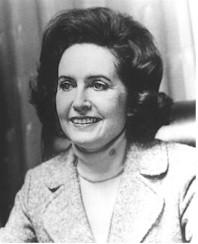
Shirley Pettis
Former U.S. Representative · California District 37 · 1975–1979 · Republican
Shirley Pettis represented California's District 37 in the United States House of Representatives (1975–1979) for the Republican party. The page below collects sourced biographical facts, term history, committee roles, and provenance for Pettis.
Bioguide ID: P000273
Key facts
- Full name
- Shirley Pettis
- State
- California
- District
- District 37
- Party
- Republican
- House service
- 1975–1979
- First House term
- 1975
- Status
- Left office
- Current term ends
- —
- Born
- 1924
- Bioguide ID
- P000273
- Committee assignments
- —
- Dataset version
- 1.20260605
Biographical narrative
1,040 words · sourced from the Wikipedia REST extract
Shirley N. Pettis was an American journalist and politician who served as a U.S. Representative for California's 37th congressional district from 1975 to 1979. A member of the Republican Party, she was elected to Congress following the death of her husband, Jerry Pettis, who previously held the same seat. During her time in office, Pettis focused on issues related to the environment and foreign affairs, contributing to significant legislation that aimed to protect California's natural resources. After her congressional tenure, she continued to engage in public service through various roles in organizations and commissions.
Early life and career
Shirley Neil McCumber was born on July 12, 1924, in Mountain View, California. Her early education took place in several locations, reflecting her family's movements during her childhood. From 1931 to 1932, she attended elementary schools in Berkeley, California, before moving to Berrien Springs, Michigan, where she continued her education from 1933 to 1937. This diverse educational background likely influenced her perspectives and interests in journalism and public service.
Pettis graduated from Andrews Academy in 1942, which marked a significant milestone in her early academic journey. Following her high school education, she pursued higher education at Andrews University from 1942 to 1943, and later attended the University of California, Berkeley, from 1944 to 1945. These institutions provided her with a solid foundation in education, which she would later apply in her professional endeavors.
In the early stages of her career, Pettis co-founded and managed the Audio-Digest Foundation from 1950 to 1953. This organization focused on providing audio recordings of medical lectures for healthcare professionals, showcasing her commitment to education and information dissemination. Following her work with the foundation, she transitioned into journalism, serving as a newspaper columnist for the Sun-Telegram in San Bernardino, California, from 1967 to 1970. Her experience in journalism not only honed her writing skills but also deepened her understanding of public issues, which would later inform her political career.
In addition to her professional pursuits, Pettis was active in political circles. In 1975, she served as vice president of the Republican Congressional Wives Club, a role that likely provided her with insights into the workings of Congress and the political landscape of the time. This involvement in political organizations laid the groundwork for her subsequent election to the House of Representatives.
House tenure
Shirley Pettis was elected to the U.S. House of Representatives as a Republican in a special election held to fill the vacancy left by her husband, Jerry Pettis, who passed away while in office. Her election to the Ninety-fourth Congress marked the beginning of her congressional career, which commenced on April 29, 1975. She was subsequently re-elected to the Ninety-fifth Congress, serving until January 3, 1979. During her time in office, Pettis did not seek renomination in 1978, concluding her congressional tenure after two terms.
Throughout her time in Congress, Pettis was involved in various legislative activities and committee assignments. Initially, she served on the House Interior Committee, where she focused on issues related to land management, natural resources, and environmental protection. Her commitment to these issues was evident in her efforts to secure the passage of significant legislation, including the California Desert Protection Act, which aimed to safeguard the unique desert landscapes of California.
Later in her congressional career, Pettis transitioned to the House Foreign Affairs Committee, where she engaged with international issues and foreign policy matters. This shift in focus allowed her to contribute to discussions and decisions that had implications beyond the borders of the United States. Her work on both committees reflected her dedication to addressing both domestic and international concerns, showcasing her versatility as a legislator.
Pettis's legislative accomplishments included the Joshua Tree Wilderness Act, which aimed to protect the Joshua Tree National Park and its surrounding areas. These legislative efforts underscored her commitment to environmental conservation and her recognition of the importance of preserving natural resources for future generations. Her work in Congress contributed to the ongoing dialogue about environmental protection, a topic that remains relevant in contemporary political discourse.
Legislative focus and committees
During her tenure in the U.S. House of Representatives, Shirley Pettis was known for her focus on environmental issues and foreign affairs. Her involvement in the House Interior Committee allowed her to advocate for policies that aimed to protect California's diverse ecosystems and promote responsible land management. This committee work was crucial in shaping legislation that addressed the environmental challenges facing the state and the nation.
Pettis's role on the House Foreign Affairs Committee further expanded her legislative focus, enabling her to engage with complex international issues. This committee is responsible for overseeing foreign policy and international relations, and Pettis's participation in it demonstrated her commitment to understanding and addressing global challenges. Her work in this area contributed to the broader discussions about U.S. foreign policy during a time of significant geopolitical change.
In addition to her committee assignments, Pettis's legislative achievements included the successful passage of key environmental legislation. The California Desert Protection Act and the Joshua Tree Wilderness Act were notable examples of her efforts to protect natural resources and promote conservation. These legislative initiatives not only reflected her priorities as a representative but also highlighted the growing awareness of environmental issues during the 1970s.
After leaving Congress, Pettis continued to engage in public service through various roles. She served as vice president of the Women's Research and Education Institute in Washington, D.C., from 1980 to 1981, further demonstrating her commitment to advancing women's issues and education. Additionally, she was a member of the Arms Control and Disarmament Commission from 1981 to 1983, where she contributed to discussions on arms control and international security.
Pettis's involvement in the Commission on Presidential Scholars from 1990 to 1992 showcased her dedication to education and youth development. Her service on the board of directors for Kemper National Insurance Companies from 1979 to 1997 further exemplified her continued engagement in leadership roles beyond her congressional career.
Shirley N. Pettis passed away on December 30, 2016, in Rancho Mirage, California, at the age of 92. Her legacy as a journalist and politician is marked by her contributions to environmental legislation and her commitment to public service, reflecting the evolving role of women in American politics.
Notable legislation
Sponsored and co-sponsored legislation for Shirley Pettis is pending operator curation. The biographical narrative above carries the same provenance trail until per-bill rows are written.
Sources
- [1]https://en.wikipedia.org/wiki/Shirley_Neil_PettisWikipedia · retrieved 2026-06-05
Notable quotes
Sourced quotes for Shirley Pettis are pending operator curation. Narrative-scope provenance remains attached below.
Sources
- [1]https://en.wikipedia.org/wiki/Shirley_Neil_PettisWikipedia · retrieved 2026-06-05
Key positions
Curated policy positions for Shirley Pettis are pending operator review. The biographical narrative above carries the same provenance trail until per-topic positions are written.
Sources
- [1]https://en.wikipedia.org/wiki/Shirley_Neil_PettisWikipedia · retrieved 2026-06-05
Terms served
- 1975–1977U.S. House · Term 1 · Republican
- 1977–1979U.S. House · Term 2 · Republican
Sources & provenance
Every attributable claim above carries a per-section [N] marker that resolves to the corresponding URL below. Each entry records the upstream provider, the canonical URL, and the timestamp at which the source was retrieved by the ingest pipeline.
Key facts
- https://bioguide.congress.gov/search/bio/P000273bioguide · retrieved 2026-06-05
- https://www.govtrack.us/congress/members/408673govtrack · retrieved 2026-06-05
Biographical narrative
- https://en.wikipedia.org/wiki/Shirley_Neil_Pettiswikipedia · retrieved 2026-06-05
Find your representative
Every U.S. state elects representatives by district. Browse California’s delegation, the full former-representative roster, or explore the role and term length.
Related on The Candidate
- Preceded by Jerry PettisEarlier holder of the California District 37 House seat · Republican.Open
- Succeeded by Walter Tucker IIILater holder of the California District 37 House seat · Democratic.Open
- Barclay HenleyFormer U.S. Representative · California District 1 · DemocraticOpen
- Charles ClaytonFormer U.S. Representative · California District 1 · RepublicanOpen
- Clarence LeaFormer U.S. Representative · California District 1 · DemocraticOpen
- Clement MillerFormer U.S. Representative · California District 1 · DemocraticOpen