
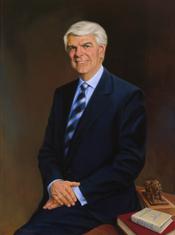
Historical · U.S. House · California · District 41
Jerry Lewis
Former U.S. Representative · California District 41 · 1979–2013 · Republican
Jerry Lewis represented California's District 41 in the United States House of Representatives (1979–2013) for the Republican party. The page below collects sourced biographical facts, term history, committee roles, and provenance for Lewis.
Bioguide ID: L000274
Key facts
- Full name
- Jerry Lewis
- State
- California
- District
- District 41
- Party
- Republican
- House service
- 1979–2013
- First House term
- 1979
- Status
- Left office
- Current term ends
- —
- Born
- 1934
- Bioguide ID
- L000274
- Committee assignments
- —
- Dataset version
- 1.20260605
Biographical narrative
983 words · sourced from the Wikipedia REST extract
Charles Jeremy Lewis was a prominent American politician who served as a U.S. Representative for California's 41st congressional district. A member of the Republican Party, Lewis had a long and distinguished career in the U.S. House of Representatives, spanning 17 terms from 1979 until his retirement in 2013. During his tenure, he held significant leadership positions, including chairman of the House Appropriations Committee. Known for his legislative focus on various issues, Lewis played a crucial role in securing federal funding for numerous projects in his district and beyond. His career was marked by both achievements and controversies, reflecting the complexities of political life in Washington, D.C.
Early life and career
Jerry Lewis was born on October 21, 1934, in Seattle, Washington. He moved to California during his youth, where he completed his high school education at San Bernardino High School in 1952. While in high school, he demonstrated leadership skills by captaining the swim team. Following his graduation, Lewis pursued higher education at the University of California, Los Angeles (UCLA), where he earned a Bachelor of Arts degree in 1956. His early career included a fellowship with the Coro Foundation in San Francisco, which provided him with insights into public service and governance.
Before entering the U.S. Congress, Lewis was involved in local politics and education. He served on the San Bernardino City Unified School District Board from 1964 to 1968, where he contributed to educational policy and administration. In 1966, he worked as a staff member for Congressman Jerry Pettis, gaining valuable experience in the legislative process. Subsequently, Lewis was elected to the California State Assembly, where he served from 1969 until 1978. His time in the state assembly was marked by various legislative initiatives, including a notable campaign for the California State Senate in 1974, which he lost to Democrat Ruben Ayala.
House tenure
Lewis's entry into the U.S. House of Representatives began with his election in November 1978, when he won a seat in the 96th Congress, representing what was then the 37th Congressional district. He secured his position with a substantial majority, receiving 61% of the vote. Over the course of his political career, Lewis was re-elected 16 times, consistently achieving significant electoral support. His lowest re-election percentage was 61%, and he only dipped below 65% on a few occasions, indicating a strong base of support within his district.
Throughout his tenure, Lewis faced various electoral challenges, including a notable contest in 2008 against Democratic candidate Tim Prince. This election marked one of the most competitive races of his career, prompting Lewis to invest considerable resources to retain his seat. Ultimately, he won the election with 62% of the vote. In January 2012, Lewis announced his decision not to seek re-election, concluding his congressional career on January 3, 2013.
During his time in the House, Lewis employed his wife, Arlene Willis, as his chief of staff. Willis had been a key aide to Lewis since he first arrived in Washington, D.C., and their professional partnership contributed to the effectiveness of his congressional office.
Legislative focus and committees
Lewis's legislative focus encompassed a range of issues, particularly those affecting his constituents in California. As a member of the House Appropriations Committee, he played a pivotal role in shaping federal funding priorities. He was appointed chairman of the VA-HUD and Independent Agencies Subcommittee in 1994, where he worked to enhance oversight of federal housing programs and reduce wasteful spending. His efforts in this role were aimed at uncovering fraud and ensuring that taxpayer dollars were used effectively.
One of Lewis's significant achievements was securing federal funding for various infrastructure projects in his district. He was instrumental in the planning and construction of the Seven Oaks Dam near Highland, California, which aimed to address flood control and water management issues. Additionally, he was a key advocate for Loma Linda University's Proton Beam treatment center, which received start-up funding during his tenure. This initiative contributed to the establishment of similar cancer treatment facilities across the United States.
Lewis was also proactive in addressing environmental concerns. He successfully included provisions in appropriations bills that allocated nearly $100 million to the U.S. Forest Service and state agencies for the removal of trees affected by drought and bark beetle infestations in the San Bernardino National Forest. Collaborating with U.S. Senator Dianne Feinstein, he secured additional funding to mitigate fire risks in the San Bernardino Mountains and Southern California.
In addition to his work on infrastructure and environmental issues, Lewis championed programs aimed at assisting low-income families. He obtained $15 million for a pilot initiative to refurbish houses repossessed by the Department of Housing and Urban Development, providing these homes to qualified families in need.
Throughout his congressional career, Lewis's political positions reflected a blend of conservative values and pragmatic approaches to governance. He was a member of the Republican Main Street Partnership and expressed support for stem-cell research. While he identified as pro-life and opposed most public funding for abortions, he also advocated for family planning initiatives. Lewis's voting record indicated a complex stance on gun control, emphasizing the need for strict penalties for repeat offenders while remaining open to safety measures for law-abiding gun owners.
Despite his long and impactful career, Lewis faced scrutiny and controversy. He was named one of the most corrupt members of Congress by Citizens for Responsibility and Ethics in Washington in 2009, with allegations of misusing his position to direct earmarks to family and friends in exchange for campaign contributions. Although the U.S. Department of Justice closed the case without filing charges, the allegations highlighted the challenges and ethical considerations faced by public officials.
Jerry Lewis passed away on July 15, 2021, in Redlands, California, at the age of 86. His legacy as a long-serving member of the U.S. House of Representatives continues to influence discussions on federal funding, infrastructure, and public policy in California and beyond.
Notable legislation
Sponsored and co-sponsored legislation for Jerry Lewis is pending operator curation. The biographical narrative above carries the same provenance trail until per-bill rows are written.
Sources
- [1]https://en.wikipedia.org/wiki/Jerry_Lewis_(California_politician)Wikipedia · retrieved 2026-06-05
Notable quotes
Sourced quotes for Jerry Lewis are pending operator curation. Narrative-scope provenance remains attached below.
Sources
- [1]https://en.wikipedia.org/wiki/Jerry_Lewis_(California_politician)Wikipedia · retrieved 2026-06-05
Key positions
Curated policy positions for Jerry Lewis are pending operator review. The biographical narrative above carries the same provenance trail until per-topic positions are written.
Sources
- [1]https://en.wikipedia.org/wiki/Jerry_Lewis_(California_politician)Wikipedia · retrieved 2026-06-05
Terms served
- 1979–1981U.S. House · Term 1 · Republican
- 1981–1983U.S. House · Term 2 · Republican
- 1983–1985U.S. House · Term 3 · Republican
- 1985–1987U.S. House · Term 4 · Republican
- 1987–1989U.S. House · Term 5 · Republican
- 1989–1991U.S. House · Term 6 · Republican
- 1991–1993U.S. House · Term 7 · Republican
- 1993–1995U.S. House · Term 8 · Republican
- 1995–1997U.S. House · Term 9 · Republican
- 1997–1999U.S. House · Term 10 · Republican
- 1999–2001U.S. House · Term 11 · Republican
- 2001–2003U.S. House · Term 12 · Republican
- 2003–2005U.S. House · Term 13 · Republican
- 2005–2007U.S. House · Term 14 · Republican
- 2007–2009U.S. House · Term 15 · Republican
- 2009–2011U.S. House · Term 16 · Republican
- 2011–2013U.S. House · Term 17 · Republican
Sources & provenance
Every attributable claim above carries a per-section [N] marker that resolves to the corresponding URL below. Each entry records the upstream provider, the canonical URL, and the timestamp at which the source was retrieved by the ingest pipeline.
Key facts
- https://bioguide.congress.gov/search/bio/L000274bioguide · retrieved 2026-06-05
- http://www.house.gov/jerrylewishouse.gov · retrieved 2026-06-05
Biographical narrative
- https://en.wikipedia.org/wiki/Jerry_Lewis_(California_politician)wikipedia · retrieved 2026-06-05
Find your representative
Every U.S. state elects representatives by district. Browse California’s delegation, the full former-representative roster, or explore the role and term length.
Related on The Candidate
- Barclay HenleyFormer U.S. Representative · California District 1 · DemocraticOpen
- Charles ClaytonFormer U.S. Representative · California District 1 · RepublicanOpen
- Clarence LeaFormer U.S. Representative · California District 1 · DemocraticOpen
- Clement MillerFormer U.S. Representative · California District 1 · DemocraticOpen
- Republican PartyFederal candidates and office holders on the Republican line.Open
- Representatives from CaliforniaEvery former U.S. Representative who has represented California.Open