
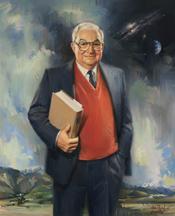
Historical · U.S. House · California · District 42
George Brown Jr.
Former U.S. Representative · California District 42 · 1963–1999 · Democratic
George Brown Jr. represented California's District 42 in the United States House of Representatives (1963–1999) for the Democratic party. The page below collects sourced biographical facts, term history, committee roles, and provenance for Jr..
Bioguide ID: B000918
Key facts
- Full name
- George Brown Jr.
- State
- California
- District
- District 42
- Party
- Democratic
- House service
- 1963–1999
- First House term
- 1963
- Status
- Left office
- Current term ends
- —
- Born
- 1920
- Bioguide ID
- B000918
- Committee assignments
- —
- Dataset version
- 1.20260605
Biographical narrative
1,129 words · sourced from the Wikipedia REST extract
George E. Brown, Jr. was an American politician who served as a Democratic member of the United States House of Representatives from California. His congressional career spanned from 1963 until 1999, with a brief hiatus after an unsuccessful bid for the U.S. Senate in 1970. Brown was a prominent figure in California politics, known for his advocacy on civil rights, environmental issues, and opposition to the Vietnam War. He represented both suburban areas of Los Angeles County and parts of the Inland Empire during his lengthy tenure in Congress.
Early life and career
George E. Brown, Jr. was born on March 6, 1920, in Holtville, California. He was the son of George Edward Brown and Bird Alma Kilgore and was one of four children in his family. Brown completed his high school education at Holtville Union High School in 1935 before pursuing higher education. He attended Central Junior College, now known as Imperial Valley College, in 1938 and later transferred to the University of California, Los Angeles (UCLA). At UCLA, Brown became actively involved in student housing issues, serving as head of the UCLA Student Housing Association and co-founding the University Cooperative Housing Association (UCHA) in 1938. This initiative aimed to provide housing for African American students, who faced discrimination in the Westwood neighborhood of Los Angeles at the time. Brown's commitment to social justice was evident early in his life, as he took an African American roommate in a pioneering interracial housing arrangement.
The onset of World War II interrupted Brown's education. Following the attack on Pearl Harbor, he was deeply affected by the internment of Japanese Americans and participated in protests against this injustice in 1942. Initially registering as a conscientious objector due to his Quaker beliefs, Brown later rescinded this status and enlisted in the United States Army in 1944. He served as an instructor during the war and achieved the rank of lieutenant by the time of his discharge in 1946. After the war, Brown returned to UCLA, where he completed his education, earning a Bachelor of Science degree in Industrial Physics in 1946.
Following his graduation, Brown worked for the city of Los Angeles in the Department of Water and Power, where he held positions in engineering and personnel for twelve years. In 1958, he transitioned to a career as a management consultant. His political engagement continued as he revitalized the Monterey Park Democratic Club. Brown's political career began in earnest when he was elected to the city council of Monterey Park in 1954, serving until 1958. He also held the position of mayor of Monterey Park during this period. His tenure as mayor was marked by his commitment to civil rights, exemplified by his actions to protect an African American family from racist protests when they moved into the city.
In 1959, Brown was elected to the California State Assembly, where he served until 1963. His time in the state legislature was characterized by innovative legislative proposals, including the George Brown Act of 1961, which was one of the first comprehensive public employee labor relations laws in the United States. He also introduced significant environmental legislation, including measures to ban lead in gasoline and the pesticide DDT, as well as a proposal to ban the internal combustion engine.
House tenure
Brown's congressional career began when he was elected to the United States House of Representatives in 1962, officially taking office in 1963. He represented California's 42nd congressional district, which included suburban areas of Los Angeles County and later parts of the Inland Empire. His early years in Congress coincided with the escalation of the Vietnam War, during which he emerged as a vocal opponent of U.S. military involvement. Brown's dissenting votes on key appropriations bills related to the war were notable; he was often the only member of Congress to oppose funding for military operations in Vietnam.
Brown's opposition to the Vietnam War was not only reflected in his votes but also in his participation in protests. He joined a Quaker demonstration on the steps of the Capitol in 1965, where he publicly challenged the government's military policies. His consistent stance against the war earned him recognition as a steadfast advocate for peace during a tumultuous period in American history. His dissenting votes included the Fiscal Year 1966 Department of Defense Appropriations Bill, which passed with overwhelming support, and other significant funding measures for Vietnam.
In addition to his anti-war activism, Brown played a crucial role in advocating for civil rights. He was an early supporter of the Civil Rights Act and was present at its signing. His commitment to social justice extended to labor rights, where he actively supported the organizing efforts of farmworkers led by Cesar Chavez during the mid-1960s, including participation in the grape boycott.
Brown's congressional career was interrupted in 1970 when he ran for the United States Senate. His campaign was marked by a contentious primary against fellow Democrat John V. Tunney, who was seen as a charismatic candidate appealing to younger voters. Despite a grassroots campaign and a strong anti-war message, Brown was ultimately unsuccessful in securing the nomination. Following this defeat, he returned to the House of Representatives, where he continued to serve until his death in 1999.
Legislative focus and committees
Throughout his tenure in the House, Brown was involved in various legislative initiatives and served on several committees. His focus on civil rights, environmental protection, and labor issues defined his legislative agenda. He was known for his advocacy on behalf of public employees and played a significant role in labor relations legislation. The George Brown Act, which he championed during his time in the California State Assembly, laid the groundwork for public employee rights and labor negotiations.
Brown's environmental advocacy included efforts to address pollution and promote sustainable practices. His legislative proposals aimed at banning harmful substances, such as lead and DDT, reflected his commitment to public health and environmental integrity. He was also known for his innovative and sometimes unconventional approaches to legislation, which garnered attention and support from various constituencies.
In addition to his work on civil rights and environmental issues, Brown was active in committees that addressed national security and defense matters. His opposition to military funding during the Vietnam War was a defining aspect of his congressional career, and he consistently sought to redirect resources toward social programs and domestic initiatives.
Brown's long service in the House of Representatives, spanning nearly four decades, left a lasting impact on California politics and national policy. His commitment to social justice, environmental stewardship, and opposition to war shaped his legacy as a dedicated public servant. Brown passed away on July 15, 1999, leaving behind a record of advocacy and legislative achievements that reflected his values and priorities throughout his life.
Notable legislation
Sponsored and co-sponsored legislation for George Brown Jr. is pending operator curation. The biographical narrative above carries the same provenance trail until per-bill rows are written.
Sources
- [1]https://en.wikipedia.org/wiki/George_Brown_Jr.Wikipedia · retrieved 2026-06-05
Notable quotes
Sourced quotes for George Brown Jr. are pending operator curation. Narrative-scope provenance remains attached below.
Sources
- [1]https://en.wikipedia.org/wiki/George_Brown_Jr.Wikipedia · retrieved 2026-06-05
Key positions
Curated policy positions for George Brown Jr. are pending operator review. The biographical narrative above carries the same provenance trail until per-topic positions are written.
Sources
- [1]https://en.wikipedia.org/wiki/George_Brown_Jr.Wikipedia · retrieved 2026-06-05
Terms served
- 1963–1965U.S. House · Term 1 · Democratic
- 1965–1967U.S. House · Term 2 · Democratic
- 1967–1969U.S. House · Term 3 · Democratic
- 1969–1971U.S. House · Term 4 · Democratic
- 1973–1975U.S. House · Term 5 · Democratic
- 1975–1977U.S. House · Term 6 · Democratic
- 1977–1979U.S. House · Term 7 · Democratic
- 1979–1981U.S. House · Term 8 · Democratic
- 1981–1983U.S. House · Term 9 · Democratic
- 1983–1985U.S. House · Term 10 · Democratic
- 1985–1987U.S. House · Term 11 · Democratic
- 1987–1989U.S. House · Term 12 · Democratic
- 1989–1991U.S. House · Term 13 · Democratic
- 1991–1993U.S. House · Term 14 · Democratic
- 1993–1995U.S. House · Term 15 · Democratic
- 1995–1997U.S. House · Term 16 · Democratic
- 1997–1999U.S. House · Term 17 · Democratic
- 1999–1999U.S. House · Term 18 · Democratic
Sources & provenance
Every attributable claim above carries a per-section [N] marker that resolves to the corresponding URL below. Each entry records the upstream provider, the canonical URL, and the timestamp at which the source was retrieved by the ingest pipeline.
Key facts
- https://bioguide.congress.gov/search/bio/B000918bioguide · retrieved 2026-06-05
- https://www.govtrack.us/congress/members/400572govtrack · retrieved 2026-06-05
Biographical narrative
- https://en.wikipedia.org/wiki/George_Brown_Jr.wikipedia · retrieved 2026-06-05
Find your representative
Every U.S. state elects representatives by district. Browse California’s delegation, the full former-representative roster, or explore the role and term length.
Related on The Candidate
- Barclay HenleyFormer U.S. Representative · California District 1 · DemocraticOpen
- Charles ClaytonFormer U.S. Representative · California District 1 · RepublicanOpen
- Clarence LeaFormer U.S. Representative · California District 1 · DemocraticOpen
- Clement MillerFormer U.S. Representative · California District 1 · DemocraticOpen
- Democratic PartyFederal candidates and office holders on the Democratic line.Open
- Representatives from CaliforniaEvery former U.S. Representative who has represented California.Open