
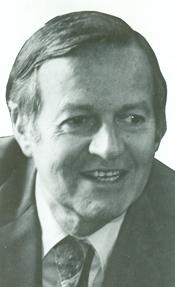
Historical · U.S. House · California · District 42
Lionel Van Deerlin
Former U.S. Representative · California District 42 · 1963–1981 · Democratic
Lionel Van Deerlin represented California's District 42 in the United States House of Representatives (1963–1981) for the Democratic party. The page below collects sourced biographical facts, term history, committee roles, and provenance for Deerlin.
Bioguide ID: V000024
Key facts
- Full name
- Lionel Van Deerlin
- State
- California
- District
- District 42
- Party
- Democratic
- House service
- 1963–1981
- First House term
- 1963
- Status
- Left office
- Current term ends
- —
- Born
- 1914
- Bioguide ID
- V000024
- Committee assignments
- —
- Dataset version
- 1.20260605
Biographical narrative
893 words · sourced from the Wikipedia REST extract
Lionel Van Deerlin was an American journalist and politician who served as a Democratic United States Representative for California's 42nd congressional district from 1963 until 1981. He was notable for his long tenure in Congress, during which he was a proponent of telecommunications reform and an advocate for First Amendment rights. Van Deerlin's career in public service was preceded by a background in journalism, and he was recognized for his contributions to both fields.
Early life and career
Lionel Lathrop Van Deerlin was born on July 25, 1914, in Los Angeles, California. He completed his secondary education at Oceanside High School in Oceanside, California, graduating in 1933. Following high school, he pursued higher education at the University of Southern California, where he earned a Bachelor of Arts degree in journalism in 1937. During his time at USC, he served as the editor of the university's student newspaper, the Daily Trojan, which provided him with early experience in journalism and media.
Van Deerlin's career was interrupted by World War II, during which he served in the United States Army for four years. He was a member of the Field Artillery and worked on the staff of the Stars and Stripes newspaper in the Mediterranean theater. His military service included overseas deployment in Italy, where he held the rank of staff sergeant. After the war, he transitioned back into journalism, working in various capacities in Minneapolis, Minnesota, and Baltimore, Maryland.
In the early 1950s, Van Deerlin relocated to San Diego, California, where he began to establish himself in the local media landscape. He initially ran for Congress in 1952 but was unsuccessful in that bid. He then took on the role of city editor for the San Diego Daily Journal, a newspaper founded by Clinton D. McKinnon. His career in broadcasting continued as he became the news director for XETV, which was San Diego's ABC affiliate at the time. He later worked with KFSD-AM-FM-TV, an NBC affiliate, before making another attempt at a congressional seat in 1958, which also did not succeed. Following this second attempt, he returned to XETV as a newscaster and news director, further solidifying his presence in the San Diego media community.
House tenure
Van Deerlin's political career took a significant turn when he was elected to the United States House of Representatives in 1962, representing California's newly established 37th congressional district. His election marked a historic moment as he became the first Democrat to represent a San Diego-based congressional district since Clinton D. McKinnon left office in 1953. Over the course of his political career, Van Deerlin was re-elected eight times, reflecting his sustained support within his constituency.
Throughout his tenure, the congressional district he represented underwent several changes in numbering. It was renumbered to the 41st district in 1972 and then to the 42nd district in 1974. Van Deerlin's legislative work was characterized by his role as chairman of the House Subcommittee on Communications. In this capacity, he was instrumental in advocating for competition within the telecommunications industry. His efforts included conducting hearings that contributed to the breakup of AT&T, a significant event in the history of telecommunications regulation in the United States. Additionally, he was a strong supporter of a broad interpretation of First Amendment rights for broadcasters, emphasizing the importance of free speech in the media.
Van Deerlin's congressional career came to an end following the 1980 election, where he faced Republican challenger Duncan Hunter. Initially perceived as a longshot, Hunter's campaign gained momentum as he portrayed Van Deerlin as weak on defense, a narrative that resonated in the military-oriented economy of the San Diego area. Van Deerlin's late response to the challenge and his lack of recent campaign experience contributed to his defeat, marking a significant shift in the political landscape of the district. After his loss, the district underwent further redistricting, and Democrats faced challenges in maintaining competitiveness in subsequent elections.
Legislative focus and committees
During his time in Congress, Van Deerlin focused on several key issues, particularly those related to telecommunications and media regulation. As chairman of the House Subcommittee on Communications, he played a pivotal role in shaping policies that encouraged competition in the telecommunications sector. His leadership in conducting hearings and discussions on the subject was influential in leading to the breakup of AT&T, which had a lasting impact on the telecommunications industry in the United States.
Van Deerlin's commitment to First Amendment rights was another cornerstone of his legislative focus. He advocated for a broad interpretation of these rights, particularly as they pertained to broadcasters. His efforts in this area underscored his belief in the importance of free speech and the role of media in a democratic society.
After leaving Congress, Van Deerlin continued to contribute to public discourse through his work as a professor emeritus at San Diego State University. He also engaged with the community through a weekly column in The San Diego Union-Tribune, where he shared his insights on various issues. In recognition of his contributions to the field of communications, the Lionel Van Deerlin Endowed Chair in Communications was established at San Diego State University.
Lionel Van Deerlin passed away on May 17, 2008, at the age of 93, at his home in San Diego. His legacy includes not only his political achievements but also his influence on journalism and education in the region.
Notable legislation
Sponsored and co-sponsored legislation for Lionel Van Deerlin is pending operator curation. The biographical narrative above carries the same provenance trail until per-bill rows are written.
Sources
- [1]https://en.wikipedia.org/wiki/Lionel_Van_DeerlinWikipedia · retrieved 2026-06-05
Notable quotes
Sourced quotes for Lionel Van Deerlin are pending operator curation. Narrative-scope provenance remains attached below.
Sources
- [1]https://en.wikipedia.org/wiki/Lionel_Van_DeerlinWikipedia · retrieved 2026-06-05
Key positions
Curated policy positions for Lionel Van Deerlin are pending operator review. The biographical narrative above carries the same provenance trail until per-topic positions are written.
Sources
- [1]https://en.wikipedia.org/wiki/Lionel_Van_DeerlinWikipedia · retrieved 2026-06-05
Terms served
- 1963–1965U.S. House · Term 1 · Democratic
- 1965–1967U.S. House · Term 2 · Democratic
- 1967–1969U.S. House · Term 3 · Democratic
- 1969–1971U.S. House · Term 4 · Democratic
- 1971–1973U.S. House · Term 5 · Democratic
- 1973–1975U.S. House · Term 6 · Democratic
- 1975–1977U.S. House · Term 7 · Democratic
- 1977–1979U.S. House · Term 8 · Democratic
- 1979–1981U.S. House · Term 9 · Democratic
Sources & provenance
Every attributable claim above carries a per-section [N] marker that resolves to the corresponding URL below. Each entry records the upstream provider, the canonical URL, and the timestamp at which the source was retrieved by the ingest pipeline.
Key facts
- https://bioguide.congress.gov/search/bio/V000024bioguide · retrieved 2026-06-05
- https://www.govtrack.us/congress/members/411077govtrack · retrieved 2026-06-05
Biographical narrative
- https://en.wikipedia.org/wiki/Lionel_Van_Deerlinwikipedia · retrieved 2026-06-05
Find your representative
Every U.S. state elects representatives by district. Browse California’s delegation, the full former-representative roster, or explore the role and term length.
Related on The Candidate
- Barclay HenleyFormer U.S. Representative · California District 1 · DemocraticOpen
- Charles ClaytonFormer U.S. Representative · California District 1 · RepublicanOpen
- Clarence LeaFormer U.S. Representative · California District 1 · DemocraticOpen
- Clement MillerFormer U.S. Representative · California District 1 · DemocraticOpen
- Democratic PartyFederal candidates and office holders on the Democratic line.Open
- Representatives from CaliforniaEvery former U.S. Representative who has represented California.Open