
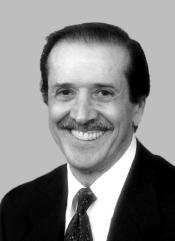
Historical · U.S. House · California · District 44
Sonny Bono
Former U.S. Representative · California District 44 · 1995–1998 · Republican
Sonny Bono represented California's District 44 in the United States House of Representatives (1995–1998) for the Republican party. The page below collects sourced biographical facts, term history, committee roles, and provenance for Bono.
Bioguide ID: B000622
Key facts
- Full name
- Sonny Bono
- State
- California
- District
- District 44
- Party
- Republican
- House service
- 1995–1998
- First House term
- 1995
- Status
- Left office
- Current term ends
- —
- Born
- 1935
- Bioguide ID
- B000622
- Committee assignments
- —
- Dataset version
- 1.20260605
Biographical narrative
978 words · sourced from the Wikipedia REST extract
Salvatore Phillip "Sonny" Bono was an American singer, songwriter, actor, and politician, best known for his work in the entertainment industry as part of the duo Sonny & Cher. He transitioned into politics, serving as the U.S. Representative for California's 44th congressional district from 1995 until his death in 1998. A member of the Republican Party, Bono's political career followed his tenure as the 16th mayor of Palm Springs, California, from 1988 to 1992. His contributions to both music and politics have left a lasting legacy, including the posthumous naming of the Sonny Bono Copyright Term Extension Act in his honor.
Early life and career
Sonny Bono was born on February 16, 1935, in Detroit, Michigan, to Zena "Jean" and Santo Bono. His father was of Italian descent, having immigrated from Montelepre, Palermo, Italy, while his mother also had Italian roots. Bono was the youngest of three siblings, with two older sisters, Fran and Betty. When he was seven years old, the family relocated to Inglewood, California, shortly after which his parents divorced. This early life experience shaped Bono's determination to pursue a career in the music industry.
From a young age, Bono showed an inclination towards music and began writing songs as a teenager. One of his early compositions, "Koko Joe," was recorded by the duo Don and Dewey in 1958 and later covered by several artists, including the Righteous Brothers. Although he attended Inglewood High School, he did not graduate, opting instead to leave school to focus on his aspirations in music. During this time, he took on various jobs, including working as a waiter, truck driver, construction laborer, and butcher's helper, all while trying to make a name for himself in the music business.
Bono's music career began to take shape when he started working as a songwriter at Specialty Records, where he penned "Things You Do to Me," which was recorded by Sam Cooke. He later joined the production team of Phil Spector in the early 1960s, where he contributed as a promotion man, percussionist, and assistant. His collaboration with Jack Nitzsche led to the co-writing of "Needles and Pins," which became a hit for the Searchers. Bono's partnership with his second wife, Cher, marked a significant turning point in his career, as they formed the iconic duo Sonny & Cher in 1965. The duo achieved considerable success with hits like "I Got You Babe" and "The Beat Goes On," with Bono playing a crucial role in writing, arranging, and producing their music.
In addition to his work with Cher, Bono had a brief solo career, with his single "Laugh at Me" reaching the top ten on the Billboard Hot 100. He also released a solo album titled "Inner Views" in 1967. Throughout the 1970s, Bono continued to work in television, starring in various shows, including "The Sonny & Cher Comedy Hour," which aired on CBS from 1971 to 1974. His popularity in entertainment extended to acting, where he appeared in several television series and films, showcasing his versatility beyond music.
House tenure
Bono's political career began in earnest after he became frustrated with local government processes while attempting to open a restaurant in Palm Springs, California. This experience motivated him to enter politics, leading to his successful election as the mayor of Palm Springs in 1988. He served in this role until 1992, during which time he gained recognition for his leadership and engagement with the community.
In 1994, Bono transitioned from local to national politics, successfully running for the U.S. House of Representatives as a Republican candidate for California's 44th congressional district. He was first elected to the House in 1995 and served until his death in 1998. During his time in Congress, Bono focused on various issues pertinent to his constituents and the broader national landscape, leveraging his celebrity status to bring attention to legislative matters.
Bono's tenure in the House was marked by his commitment to serving the interests of his district, which included parts of Riverside County and the Coachella Valley. He was involved in a range of legislative activities and was known for his approachable demeanor, which resonated with many of his constituents. His dual background in entertainment and politics allowed him to connect with a diverse audience, bridging the gap between celebrity culture and public service.
Legislative focus and committees
During his time in the House of Representatives, Sonny Bono served on several committees and was involved in various legislative initiatives. His work often reflected his interests and the needs of his constituents, particularly in areas related to copyright law, tourism, and local economic development. Bono's experience in the entertainment industry informed his legislative focus, especially regarding intellectual property rights.
One of the significant pieces of legislation associated with Bono was the Sonny Bono Copyright Term Extension Act, which aimed to extend copyright terms by an additional 20 years. This act was passed by Congress posthumously, nine months after his death, and was sponsored by his widow, Mary Bono, who succeeded him in Congress. The act underscored Bono's commitment to protecting the rights of creators and artists, reflecting his background in music and entertainment.
In addition to his work on copyright issues, Bono was involved in various initiatives aimed at promoting tourism and economic growth in his district. His efforts were often geared toward enhancing the quality of life for residents and supporting local businesses. Bono's unique blend of entertainment experience and political acumen allowed him to advocate effectively for policies that benefited his constituents.
Bono's legacy in Congress continues to be remembered, particularly through the legislation that bears his name, which highlights his contributions to the protection of intellectual property rights. His transition from a successful entertainment career to a political role exemplifies the diverse paths individuals can take in public service, leaving a lasting impact on both the arts and legislative processes.
Notable legislation
Sponsored and co-sponsored legislation for Sonny Bono is pending operator curation. The biographical narrative above carries the same provenance trail until per-bill rows are written.
Sources
- [1]https://en.wikipedia.org/wiki/Sonny_BonoWikipedia · retrieved 2026-06-05
Notable quotes
Sourced quotes for Sonny Bono are pending operator curation. Narrative-scope provenance remains attached below.
Sources
- [1]https://en.wikipedia.org/wiki/Sonny_BonoWikipedia · retrieved 2026-06-05
Key positions
Curated policy positions for Sonny Bono are pending operator review. The biographical narrative above carries the same provenance trail until per-topic positions are written.
Sources
- [1]https://en.wikipedia.org/wiki/Sonny_BonoWikipedia · retrieved 2026-06-05
Terms served
- 1995–1997U.S. House · Term 1 · Republican
- 1997–1998U.S. House · Term 2 · Republican
Sources & provenance
Every attributable claim above carries a per-section [N] marker that resolves to the corresponding URL below. Each entry records the upstream provider, the canonical URL, and the timestamp at which the source was retrieved by the ingest pipeline.
Key facts
- https://bioguide.congress.gov/search/bio/B000622bioguide · retrieved 2026-06-05
- https://www.govtrack.us/congress/members/401587govtrack · retrieved 2026-06-05
Biographical narrative
- https://en.wikipedia.org/wiki/Sonny_Bonowikipedia · retrieved 2026-06-05
Find your representative
Every U.S. state elects representatives by district. Browse California’s delegation, the full former-representative roster, or explore the role and term length.
Related on The Candidate
- Preceded by Alfred McCandlessEarlier holder of the California District 44 House seat · Republican.Open
- Succeeded by Janice HahnLater holder of the California District 44 House seat · Democratic.Open
- Barclay HenleyFormer U.S. Representative · California District 1 · DemocraticOpen
- Charles ClaytonFormer U.S. Representative · California District 1 · RepublicanOpen
- Clarence LeaFormer U.S. Representative · California District 1 · DemocraticOpen
- Clement MillerFormer U.S. Representative · California District 1 · DemocraticOpen