
Historical · U.S. House · California · District 46
Robert Dornan
Former U.S. Representative · California District 46 · 1977–1997 · Republican
Robert Dornan represented California's District 46 in the United States House of Representatives (1977–1997) for the Republican party. The page below collects sourced biographical facts, term history, committee roles, and provenance for Dornan.
Bioguide ID: D000435
Key facts
- Full name
- Robert Dornan
- State
- California
- District
- District 46
- Party
- Republican
- House service
- 1977–1997
- First House term
- 1977
- Status
- Left office
- Current term ends
- —
- Born
- 1933
- Bioguide ID
- D000435
- Committee assignments
- —
- Dataset version
- 1.20260605
Biographical narrative
1,049 words · sourced from the Wikipedia REST extract
Robert K. Dornan is a former U.S. Representative from California who served in the House of Representatives for nearly two decades, representing two different congressional districts. A member of the Republican Party, Dornan was known for his outspoken conservative views and became a prominent figure in the party during his time in office. His career spanned from 1977 to 1997, during which he gained attention for his dramatic speaking style and controversial statements. In addition to his political career, Dornan was also an actor and a radio talk show host, leveraging his entertainment background to engage with the public and his constituents.
Early life and career
Robert Kenneth Dornan was born on April 3, 1933, in New York City. He was the son of Gertrude McFadden Dornan, a former vaudeville performer and Ziegfeld Follies showgirl, and Harry Joseph Dornan, who owned a haberdashery and later became a real estate entrepreneur in California. Dornan's early exposure to the entertainment industry through his mother likely influenced his later career in acting and broadcasting. After moving to California, he took advantage of his family's connections in the entertainment world to pursue a career in acting and media.
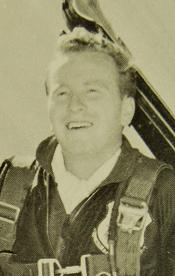
Dornan attended Loyola University of Los Angeles from 1950 to 1953, where he began to develop his public persona. At the age of 19, he joined the United States Air Force, where he served as a fighter pilot. His military service included notable experiences such as surviving two emergency parachute ejections and two forced landings. He achieved the rank of captain and remained on active duty until 1958, later serving in the California Air National Guard and the Air Force Reserve until his retirement in 1975. Dornan's military background also included service as a combat journalist and photographer during the Vietnam War, where he participated in missions in Vietnam, Laos, and Cambodia, as well as flying relief missions into Biafra.
In addition to his military service, Dornan pursued a career in entertainment. He appeared in various television shows and films, including a role as an Air Force pilot in the film "The Starfighters." He also had a recurring role in the television series "12 O'Clock High" and made guest appearances on popular shows such as "Bewitched" and "I Dream of Jeannie." Dornan was recognized for his work as a television talk show host, winning an Emmy for his program "Tempo" and later hosting "The Robert K. Dornan Show" from 1967 to 1973.
Dornan's political aspirations began in the early 1970s when he became involved with the Citizens for Decency Through Law advocacy group. He made an unsuccessful bid for the mayoralty of Los Angeles in 1973. His political career gained momentum when he was elected to the U.S. House of Representatives in 1976, representing California's 27th congressional district. He was re-elected twice during his initial term, establishing himself as a vocal advocate for conservative policies, particularly in support of military initiatives like the B-1 bomber program.
House tenure
Dornan's tenure in the U.S. House of Representatives began in 1977 and lasted until 1997, during which he served a total of nine terms. His initial term was marked by his strong advocacy for defense spending and military readiness, which earned him the nickname "B-1 Bob" due to his staunch support for the B-1 bomber program. He became known for his fiery speeches and willingness to engage in confrontations with colleagues, which contributed to his reputation as a "firebrand" within the Republican Party.
After the 1980 census, California's congressional districts were redrawn, resulting in a more Democratic-leaning district for Dornan. Anticipating a challenging re-election campaign, he opted to run for the U.S. Senate in 1982 but did not secure the nomination. Subsequently, he moved to Garden Grove, California, which was in a more Republican area, and in 1984, he successfully ran for the 38th congressional district. His election came during a period of significant Republican success nationally, as he defeated a long-serving Democratic incumbent.
Dornan's subsequent elections were characterized by competitive races, including a notable victory in 1986 over Democratic state Assemblyman Richard Robinson. Throughout his time in Congress, he maintained a focus on conservative issues and was a member of the House Intelligence Committee, where he participated in discussions related to national security and intelligence matters.
Dornan's tenure was not without controversy. He made headlines for confrontations on the House floor, including a notable incident in 1985 where he clashed with Democratic Representative Thomas Downey over comments Dornan made regarding Downey's draft status during the Vietnam War. Such incidents highlighted his confrontational style and willingness to engage in public disputes.
Legislative focus and committees
During his time in the House of Representatives, Dornan was known for his strong conservative stance on various issues. He was particularly vocal about military and defense matters, advocating for increased defense spending and supporting military initiatives. His commitment to these issues resonated with constituents who valued a strong national defense.
Dornan served on several committees during his congressional career, including the House Intelligence Committee, where he was involved in discussions and decisions related to national security and intelligence operations. His role on this committee allowed him to engage with critical issues affecting the United States during a time of heightened global tensions.
In addition to defense and military issues, Dornan was also active in social and cultural debates. He was known for his conservative views on social issues, which he often articulated during his speeches and public appearances. His outspoken nature and willingness to address controversial topics garnered both support and criticism from various segments of the public and his colleagues in Congress.
Throughout his legislative career, Dornan's approach was characterized by a blend of theatricality and fervent advocacy for his beliefs. He became a recognizable figure in American politics, known for his participation in televised "special orders" speeches, where he would address the House and the public on issues he deemed important. His dramatic style and willingness to tackle contentious subjects contributed to his notoriety as one of the more colorful personalities in the House.
Dornan's congressional career came to an end in January 1997, after serving nine terms in office. His legacy is marked by his commitment to conservative principles, his advocacy for military readiness, and his distinctive presence in the political landscape of his time.
Notable legislation
Sponsored and co-sponsored legislation for Robert Dornan is pending operator curation. The biographical narrative above carries the same provenance trail until per-bill rows are written.
Sources
- [1]https://en.wikipedia.org/wiki/Bob_DornanWikipedia · retrieved 2026-06-05
Notable quotes
Sourced quotes for Robert Dornan are pending operator curation. Narrative-scope provenance remains attached below.
Sources
- [1]https://en.wikipedia.org/wiki/Bob_DornanWikipedia · retrieved 2026-06-05
Key positions
Curated policy positions for Robert Dornan are pending operator review. The biographical narrative above carries the same provenance trail until per-topic positions are written.
Sources
- [1]https://en.wikipedia.org/wiki/Bob_DornanWikipedia · retrieved 2026-06-05
Terms served
- 1977–1979U.S. House · Term 1 · Republican
- 1979–1981U.S. House · Term 2 · Republican
- 1981–1983U.S. House · Term 3 · Republican
- 1985–1987U.S. House · Term 4 · Republican
- 1987–1989U.S. House · Term 5 · Republican
- 1989–1991U.S. House · Term 6 · Republican
- 1991–1993U.S. House · Term 7 · Republican
- 1993–1995U.S. House · Term 8 · Republican
- 1995–1997U.S. House · Term 9 · Republican
Sources & provenance
Every attributable claim above carries a per-section [N] marker that resolves to the corresponding URL below. Each entry records the upstream provider, the canonical URL, and the timestamp at which the source was retrieved by the ingest pipeline.
Key facts
- https://bioguide.congress.gov/search/bio/D000435bioguide · retrieved 2026-06-05
- https://www.govtrack.us/congress/members/403545govtrack · retrieved 2026-06-05
Biographical narrative
- https://en.wikipedia.org/wiki/Bob_Dornanwikipedia · retrieved 2026-06-05
Find your representative
Every U.S. state elects representatives by district. Browse California’s delegation, the full former-representative roster, or explore the role and term length.
Related on The Candidate
- Succeeded by Loretta SanchezLater holder of the California District 46 House seat · Democratic.Open
- Barclay HenleyFormer U.S. Representative · California District 1 · DemocraticOpen
- Charles ClaytonFormer U.S. Representative · California District 1 · RepublicanOpen
- Clarence LeaFormer U.S. Representative · California District 1 · DemocraticOpen
- Clement MillerFormer U.S. Representative · California District 1 · DemocraticOpen
- Republican PartyFederal candidates and office holders on the Republican line.Open