
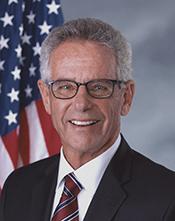
Historical · U.S. House · California · District 47
Alan Lowenthal
Former U.S. Representative · California District 47 · 2013–2023 · Democratic
Alan Lowenthal represented California's District 47 in the United States House of Representatives (2013–2023) for the Democratic party. The page below collects sourced biographical facts, term history, committee roles, and provenance for Lowenthal.
Bioguide ID: L000579
Key facts
- Full name
- Alan Lowenthal
- State
- California
- District
- District 47
- Party
- Democratic
- House service
- 2013–2023
- First House term
- 2013
- Status
- Left office
- Current term ends
- —
- Born
- 1941
- Bioguide ID
- L000579
- Committee assignments
- —
- Dataset version
- 1.20260604
Biographical narrative
868 words · sourced from the Wikipedia REST extract
Alan S. Lowenthal is a former U.S. Representative who served California's 47th congressional district from 2013 until the end of his term in January 2023. A member of the Democratic Party, he has a long history of public service, having previously held positions in both the California State Assembly and the California State Senate. Lowenthal's political career has been characterized by his advocacy for various social issues, including gun control, environmental protection, and support for minority communities. His tenure in Congress marked a significant representation of traditionally Republican areas in Orange County, California, as he became the first non-Hispanic Democrat to represent a substantial portion of the region in Congress since the mid-1980s.
Early life and career
Alan Lowenthal was born on March 8, 1941, in Queens, New York City. He grew up in a Jewish family and was raised in an environment that valued education and community involvement. Lowenthal pursued higher education, earning a Bachelor of Arts degree from Hobart College. He continued his academic journey at Ohio State University, where he obtained a Ph.D. in community psychology. His academic background laid the foundation for his later career in public service and community advocacy.
In 1969, Lowenthal relocated to Long Beach, California, where he began his professional career as a professor of community psychology at California State University, Long Beach. His academic work focused on community issues and social justice, which would later inform his political agenda. In 1992, he took a leave of absence from his teaching position to serve as a member of the Long Beach City Council. This marked the beginning of his formal political career, and he remained on leave from his academic role until he retired from teaching in 1998.
House tenure
Lowenthal's political career at the state level began when he was elected to the California State Assembly in 1998, representing the 54th district. He won his first election by defeating the Republican nominee, Julie Alban, and subsequently secured re-election in 2000 and 2002. During his time in the Assembly, he became known for his legislative efforts in areas such as gun control and local government advocacy. He was instrumental in establishing California's first Bipartisan Citizens Redistricting Commission and received accolades for his work on behalf of firefighters and local governments.
In 2004, Lowenthal transitioned to the California State Senate, where he represented the 27th district. He was re-elected in 2008, further solidifying his influence in California politics. His legislative accomplishments during this period included initiatives aimed at reducing diesel emissions and promoting electric vehicle adoption. Lowenthal's tenure in the state legislature was marked by a commitment to environmental issues and community welfare.
In 2012, Lowenthal ran for the newly created 47th congressional district and won the election, defeating Republican Gary DeLong. His victory was notable as he garnered significant support in the Los Angeles County portion of the district, which outweighed the Republican stronghold in Orange County. Lowenthal took office on January 3, 2013, and was re-elected three times during his congressional career, serving a total of five terms in the U.S. House of Representatives.
Throughout his time in Congress, Lowenthal was recognized as a member of the Congressional Progressive Caucus, aligning himself with progressive policies and initiatives. His representation of the 47th district, which includes diverse communities in both Los Angeles and Orange County, allowed him to address a wide range of issues affecting his constituents.
Legislative focus and committees
During his tenure in the U.S. House of Representatives, Lowenthal focused on various legislative priorities that reflected his commitment to social justice, environmental protection, and public welfare. He was a vocal supporter of Israel and addressed issues related to international relations, particularly concerning human rights and minority communities. His stance on foreign policy included criticism of leaders whose agendas posed threats to marginalized groups, as evidenced by his remarks regarding Brazil's president Jair Bolsonaro.
Lowenthal's committee assignments in Congress included significant roles on the House Committee on Transportation and Infrastructure, where he served on several subcommittees, including those focused on highways, water resources, and maritime transportation. His involvement in these committees allowed him to advocate for infrastructure improvements and environmental sustainability, particularly in relation to California's unique geographical and ecological challenges.
In addition to his work on transportation and infrastructure, Lowenthal was a member of the Committee on Natural Resources, where he participated in discussions and legislation concerning energy, wildlife, and water management. His legislative efforts often aimed to balance economic development with environmental stewardship, reflecting his background in community psychology and public policy.
Throughout his congressional career, Lowenthal maintained active participation in various caucuses, including the Congressional Asian Pacific American Caucus, which focused on issues relevant to Asian American and Pacific Islander communities. His engagement in these groups underscored his commitment to diversity and inclusion in policymaking.
In December 2021, Lowenthal announced that he would not seek re-election, concluding a decade of service in the U.S. House of Representatives. His decision marked the end of a significant chapter in his political career, during which he had a lasting impact on both state and national levels. Lowenthal's legacy includes his advocacy for progressive policies, environmental initiatives, and his role in representing a diverse constituency in California.
Notable legislation
Sponsored and co-sponsored legislation for Alan Lowenthal is pending operator curation. The biographical narrative above carries the same provenance trail until per-bill rows are written.
Sources
- [1]https://en.wikipedia.org/wiki/Alan_LowenthalWikipedia · retrieved 2026-06-04
Notable quotes
Sourced quotes for Alan Lowenthal are pending operator curation. Narrative-scope provenance remains attached below.
Sources
- [1]https://en.wikipedia.org/wiki/Alan_LowenthalWikipedia · retrieved 2026-06-04
Key positions
Curated policy positions for Alan Lowenthal are pending operator review. The biographical narrative above carries the same provenance trail until per-topic positions are written.
Sources
- [1]https://en.wikipedia.org/wiki/Alan_LowenthalWikipedia · retrieved 2026-06-04
Terms served
- 2013–2015U.S. House · Term 1 · Democratic
- 2015–2017U.S. House · Term 2 · Democratic
- 2017–2019U.S. House · Term 3 · Democratic
- 2019–2021U.S. House · Term 4 · Democratic
- 2021–2023U.S. House · Term 5 · Democratic
Sources & provenance
Every attributable claim above carries a per-section [N] marker that resolves to the corresponding URL below. Each entry records the upstream provider, the canonical URL, and the timestamp at which the source was retrieved by the ingest pipeline.
Key facts
- https://bioguide.congress.gov/search/bio/L000579bioguide · retrieved 2026-06-04
- https://lowenthal.house.govhouse.gov · retrieved 2026-06-04
Biographical narrative
- https://en.wikipedia.org/wiki/Alan_Lowenthalwikipedia · retrieved 2026-06-04
Find your representative
Every U.S. state elects representatives by district. Browse California’s delegation, the full former-representative roster, or explore the role and term length.
Related on The Candidate
- Barclay HenleyFormer U.S. Representative · California District 1 · DemocraticOpen
- Charles ClaytonFormer U.S. Representative · California District 1 · RepublicanOpen
- Clarence LeaFormer U.S. Representative · California District 1 · DemocraticOpen
- Clement MillerFormer U.S. Representative · California District 1 · DemocraticOpen
- Democratic PartyFederal candidates and office holders on the Democratic line.Open
- Representatives from CaliforniaEvery former U.S. Representative who has represented California.Open