
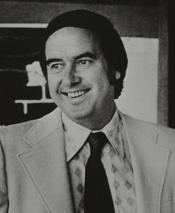
Historical · U.S. House · California · District 5
John Burton
Former U.S. Representative · California District 5 · 1973–1983 · Democratic
John Burton represented California's District 5 in the United States House of Representatives (1973–1983) for the Democratic party. The page below collects sourced biographical facts, term history, committee roles, and provenance for Burton.
Bioguide ID: B001153
Key facts
- Full name
- John Burton
- State
- California
- District
- District 5
- Party
- Democratic
- House service
- 1973–1983
- First House term
- 1973
- Status
- Left office
- Current term ends
- —
- Born
- 1932
- Bioguide ID
- B001153
- Committee assignments
- —
- Dataset version
- 1.20260605
Biographical narrative
880 words · sourced from the Wikipedia REST extract
John Burton was a prominent American politician who served as a U.S. Representative for California's 5th congressional district from 1973 until 1983. A member of the Democratic Party, Burton was known for his advocacy on civil rights, environmental protection, and healthcare reform. His political career spanned several decades, during which he held various significant positions, including serving in both houses of the California State Legislature and chairing the California Democratic Party. Burton's legislative efforts and public service left a lasting impact on California politics and policy.
Early life and career
John Burton was born on December 15, 1932, in Cincinnati, Ohio, to Mildred Leonard and Thomas Burton, a salesman and physician. He grew up in San Francisco, California, alongside his brother Phillip. After completing his secondary education at Abraham Lincoln High School in 1950, Burton pursued higher education at San Francisco State University, where he earned a Bachelor of Arts degree in social science in 1954. Following his undergraduate studies, he enlisted in the United States Army, serving from 1954 to 1956.
Upon completing his military service, Burton returned to academia and obtained a Juris Doctor degree from the University of San Francisco School of Law in 1960. He was admitted to the California bar in 1961 and began his career as an attorney in San Francisco. In addition to his legal practice, Burton worked as a lobbyist for Pacific Gas and Electric Company (PG&E). His early political engagement included protests against the Vietnam War, reflecting his growing interest in social issues.
Burton's political career began in earnest when he was elected to the California State Assembly in 1964, succeeding his brother Phillip, who had previously held the position. He represented a San Francisco-based district and served in the Assembly until 1974. During this time, he also held the position of chair of the California Democratic Party from 1973 to 1974, further establishing his influence within the party.
House tenure
Burton's tenure in the U.S. House of Representatives began in 1973 when he was elected in a special election to fill the vacancy left by the resignation of Rep. William S. Mailliard. His election followed the release of the 1970 Census, which led to redistricting efforts in California. Burton's congressional career was marked by his strong advocacy for civil rights, environmental issues, and healthcare reform. He was particularly noted for his efforts to impose economic sanctions on South Africa in response to its apartheid policies.
During his time in Congress, Burton was involved in various legislative initiatives that aimed to address social injustices and promote environmental sustainability. His commitment to these causes garnered him recognition as a progressive voice within the House. However, his congressional career was not without personal challenges. Burton retired from Congress in 1982, citing struggles with addiction to crack cocaine and nitrous oxide. Following his departure, he was succeeded by his brother Phillip, who also served in Congress until his untimely death in 1983.
Legislative focus and committees
Throughout his legislative career, Burton was known for his unwavering commitment to progressive causes. His advocacy for civil rights included efforts to protect marginalized communities and promote equality. He played a significant role in environmental protection, supporting policies aimed at preserving natural resources and addressing climate change. Healthcare reform was another area of focus for Burton, as he sought to expand access to healthcare services for all Californians.
In addition to his work in the U.S. House of Representatives, Burton returned to the California State Assembly in 1988 after a brief hiatus from elected office. He was elected to succeed Art Agnos, who had become the Mayor of San Francisco. Burton won a full term in the Assembly and continued to serve until he reached term limits in 1996. He then transitioned to the California State Senate, where he served until 2004. During his time in the Senate, Burton held the position of president pro tempore from 1998 to 2004, further solidifying his leadership role within the California Legislature.
As a state legislator, Burton championed several progressive initiatives, including the expansion of the Cal Grant scholarship program, which aimed to increase access to higher education for low-income students. He also proposed legislation that would have required California businesses to provide health coverage for their employees, although this measure was ultimately defeated in a referendum. His tenure in the California Legislature was characterized by a strong advocacy for social services, labor rights, and environmental protections.
After leaving the Senate, Burton continued his involvement in politics and advocacy. He founded the John Burton Foundation in 2005, which focused on improving the lives of homeless children in California and developing policy solutions to prevent homelessness. His commitment to public service extended beyond his legislative career, as he remained active in various civic and political organizations.
Burton's legacy is marked by his dedication to progressive values and his efforts to create a more equitable society. His work in the California State Legislature and the U.S. House of Representatives reflects a lifelong commitment to public service and advocacy for those in need. Throughout his career, Burton received numerous awards and honors in recognition of his contributions to social justice and community development. His influence on California politics and policy continues to be felt long after his retirement from public office.
Notable legislation
Sponsored and co-sponsored legislation for John Burton is pending operator curation. The biographical narrative above carries the same provenance trail until per-bill rows are written.
Sources
- [1]https://en.wikipedia.org/wiki/John_Burton_(American_politician)Wikipedia · retrieved 2026-06-05
Notable quotes
Sourced quotes for John Burton are pending operator curation. Narrative-scope provenance remains attached below.
Sources
- [1]https://en.wikipedia.org/wiki/John_Burton_(American_politician)Wikipedia · retrieved 2026-06-05
Key positions
Curated policy positions for John Burton are pending operator review. The biographical narrative above carries the same provenance trail until per-topic positions are written.
Sources
- [1]https://en.wikipedia.org/wiki/John_Burton_(American_politician)Wikipedia · retrieved 2026-06-05
Terms served
- 1973–1975U.S. House · Term 1 · Democratic
- 1975–1977U.S. House · Term 2 · Democratic
- 1977–1979U.S. House · Term 3 · Democratic
- 1979–1981U.S. House · Term 4 · Democratic
- 1981–1983U.S. House · Term 5 · Democratic
Sources & provenance
Every attributable claim above carries a per-section [N] marker that resolves to the corresponding URL below. Each entry records the upstream provider, the canonical URL, and the timestamp at which the source was retrieved by the ingest pipeline.
Key facts
- https://bioguide.congress.gov/search/bio/B001153bioguide · retrieved 2026-06-05
- https://www.govtrack.us/congress/members/402095govtrack · retrieved 2026-06-05
Biographical narrative
- https://en.wikipedia.org/wiki/John_Burton_(American_politician)wikipedia · retrieved 2026-06-05
Find your representative
Every U.S. state elects representatives by district. Browse California’s delegation, the full former-representative roster, or explore the role and term length.
Related on The Candidate
- Preceded by John ShelleyEarlier holder of the California District 5 House seat · Democratic.Open
- Succeeded by Sala BurtonLater holder of the California District 5 House seat · Democratic.Open
- Barclay HenleyFormer U.S. Representative · California District 1 · DemocraticOpen
- Charles ClaytonFormer U.S. Representative · California District 1 · RepublicanOpen
- Clarence LeaFormer U.S. Representative · California District 1 · DemocraticOpen
- Clement MillerFormer U.S. Representative · California District 1 · DemocraticOpen