
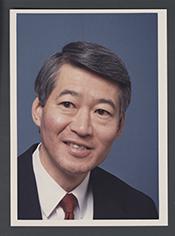
Historical · U.S. House · California · District 5
Robert Matsui
Former U.S. Representative · California District 5 · 1979–2005 · Democratic
Robert Matsui represented California's District 5 in the United States House of Representatives (1979–2005) for the Democratic party. The page below collects sourced biographical facts, term history, committee roles, and provenance for Matsui.
Bioguide ID: M000249
Key facts
- Full name
- Robert Matsui
- State
- California
- District
- District 5
- Party
- Democratic
- House service
- 1979–2005
- First House term
- 1979
- Status
- Left office
- Current term ends
- —
- Born
- 1941
- Bioguide ID
- M000249
- Committee assignments
- —
- Dataset version
- 1.20260605
Biographical narrative
1,047 words · sourced from the Wikipedia REST extract
Robert T. Matsui was a prominent American politician who served as a U.S. Representative for California's 5th congressional district from 1979 until his death in 2005. A member of the Democratic Party, Matsui was known for his long tenure in Congress, during which he was involved in significant legislative efforts, particularly those addressing civil rights and social welfare. His legacy includes the establishment of the Robert T. Matsui United States Courthouse in Sacramento, named in his honor.
Early life and career
Robert Takeo Matsui was born on September 17, 1941, in Sacramento, California. He was a third-generation Japanese American, and his early life was marked by the challenges faced by Japanese Americans during World War II. When Matsui was just six months old, he and his family were forcibly relocated to the Tule Lake War Relocation Center, a government internment camp, due to the wartime policies that targeted individuals of Japanese descent. This experience would later influence his political career and advocacy for civil rights.
Matsui pursued higher education at the University of California, Berkeley, where he earned a Bachelor of Arts degree in political science in 1963. He continued his education at Hastings College of Law, graduating with a law degree in 1966. Following his legal education, Matsui established a law practice in Sacramento in 1967, where he began to build a reputation in the community.
His political career began in local government when he was elected to the Sacramento City Council in 1971. Matsui's leadership skills and commitment to public service were recognized when he was re-elected in 1975 and subsequently served as vice mayor of Sacramento in 1977. His local political experience laid the groundwork for his future endeavors at the federal level.
In 1978, Matsui sought the Democratic nomination for California's 3rd congressional district after the retirement of long-serving incumbent John E. Moss. He won a competitive five-way primary with 36 percent of the vote, defeating notable opponents, including State Assemblyman Eugene Gualco and Sacramento Mayor Phil Isenberg. In the general election, Matsui secured victory against Republican candidate Sandy Smoley, garnering 53 percent of the vote. This election marked the beginning of his extensive congressional career.
House tenure
Matsui's congressional career spanned 13 terms, beginning in 1979 and concluding with his death in 2005. Throughout his time in office, he represented a district that has historically leaned Democratic, which contributed to his electoral success. After his initial election, Matsui faced little opposition, often winning by significant margins. He was re-elected multiple times, consistently receiving a substantial percentage of the vote, with his lowest showing being 68 percent in subsequent elections.
One of the notable aspects of Matsui's tenure was his role in significant legislative initiatives. In 1988, he played a crucial part in the passage of the Civil Liberties Act, which provided an official apology from the federal government for the internment of Japanese Americans during World War II and offered compensation to the survivors. His advocacy extended to the designation of the Manzanar internment camp as a national historic site, as well as efforts to secure land in Washington, D.C., for a memorial honoring Japanese American patriotism during the war.
Matsui's influence in Congress was further highlighted by his leadership roles. He served as the chairman of the Democratic Congressional Campaign Committee and held the position of ranking member on the House Committee on Ways and Means. He was recognized as the third-ranking Democrat on this influential committee, which plays a critical role in shaping fiscal policy and social programs.
Throughout his legislative career, Matsui maintained a liberal voting record, opposing measures such as the Defense of Marriage Act and the ban on partial-birth abortions. He was also a vocal opponent of the privatization of Social Security, reflecting his commitment to protecting social welfare programs. His legislative focus often aligned with the interests of his constituents, emphasizing civil rights, social justice, and economic equity.
In the 2004 election, Matsui faced Republican candidate Mike Dugas in what would be his final campaign. He won re-election decisively, capturing 71.4 percent of the vote, while Dugas received 23.4 percent. This victory underscored Matsui's strong support within his district, even as he faced health challenges that would ultimately lead to his passing.
Legislative focus and committees
During his time in the U.S. House of Representatives, Matsui's legislative focus encompassed a range of issues, particularly those affecting marginalized communities and social justice. His work on the Civil Liberties Act of 1988 was a significant achievement, as it addressed historical injustices faced by Japanese Americans during World War II. This legislation not only acknowledged the wrongs of the past but also sought to provide reparations to those affected by the internment policies.
Matsui's role on the House Committee on Ways and Means placed him at the forefront of discussions regarding taxation, healthcare, and social security. His position allowed him to influence key legislation that shaped the economic landscape of the nation. He was particularly noted for his opposition to efforts aimed at privatizing Social Security, advocating instead for the preservation of the program as a vital safety net for American families.
Throughout his congressional career, Matsui maintained a commitment to civil rights and social equity. He was involved in various initiatives aimed at improving the lives of his constituents, particularly those from diverse backgrounds. His legislative actions reflected a broader commitment to addressing issues such as healthcare access, education, and economic opportunity.
Matsui's impact extended beyond his legislative achievements; he was also recognized for his leadership within the Democratic Party. His tenure as chairman of the Democratic Congressional Campaign Committee demonstrated his ability to strategize and mobilize support for Democratic candidates across the country. This role was critical in shaping the party's electoral strategies during a time of significant political change.
In summary, Robert T. Matsui's career in the U.S. House of Representatives was marked by a dedication to civil rights, social justice, and economic equity. His legislative achievements and leadership roles within Congress left a lasting legacy, influencing both his constituents in California and the broader national discourse on important social issues. Matsui's contributions continue to be recognized, particularly through the naming of the Robert T. Matsui United States Courthouse in Sacramento, which serves as a testament to his enduring impact on American politics.
Notable legislation
Sponsored and co-sponsored legislation for Robert Matsui is pending operator curation. The biographical narrative above carries the same provenance trail until per-bill rows are written.
Sources
- [1]https://en.wikipedia.org/wiki/Bob_MatsuiWikipedia · retrieved 2026-06-05
Notable quotes
Sourced quotes for Robert Matsui are pending operator curation. Narrative-scope provenance remains attached below.
Sources
- [1]https://en.wikipedia.org/wiki/Bob_MatsuiWikipedia · retrieved 2026-06-05
Key positions
Curated policy positions for Robert Matsui are pending operator review. The biographical narrative above carries the same provenance trail until per-topic positions are written.
Sources
- [1]https://en.wikipedia.org/wiki/Bob_MatsuiWikipedia · retrieved 2026-06-05
Terms served
- 1979–1981U.S. House · Term 1 · Democratic
- 1981–1983U.S. House · Term 2 · Democratic
- 1983–1985U.S. House · Term 3 · Democratic
- 1985–1987U.S. House · Term 4 · Democratic
- 1987–1989U.S. House · Term 5 · Democratic
- 1989–1991U.S. House · Term 6 · Democratic
- 1991–1993U.S. House · Term 7 · Democratic
- 1993–1995U.S. House · Term 8 · Democratic
- 1995–1997U.S. House · Term 9 · Democratic
- 1997–1999U.S. House · Term 10 · Democratic
- 1999–2001U.S. House · Term 11 · Democratic
- 2001–2003U.S. House · Term 12 · Democratic
- 2003–2005U.S. House · Term 13 · Democratic
Sources & provenance
Every attributable claim above carries a per-section [N] marker that resolves to the corresponding URL below. Each entry records the upstream provider, the canonical URL, and the timestamp at which the source was retrieved by the ingest pipeline.
Key facts
- https://bioguide.congress.gov/search/bio/M000249bioguide · retrieved 2026-06-05
- http://www.house.gov/matsuihouse.gov · retrieved 2026-06-05
Biographical narrative
- https://en.wikipedia.org/wiki/Bob_Matsuiwikipedia · retrieved 2026-06-05
Find your representative
Every U.S. state elects representatives by district. Browse California’s delegation, the full former-representative roster, or explore the role and term length.
Related on The Candidate
- Preceded by John ShelleyEarlier holder of the California District 5 House seat · Democratic.Open
- Barclay HenleyFormer U.S. Representative · California District 1 · DemocraticOpen
- Charles ClaytonFormer U.S. Representative · California District 1 · RepublicanOpen
- Clarence LeaFormer U.S. Representative · California District 1 · DemocraticOpen
- Clement MillerFormer U.S. Representative · California District 1 · DemocraticOpen
- Democratic PartyFederal candidates and office holders on the Democratic line.Open