
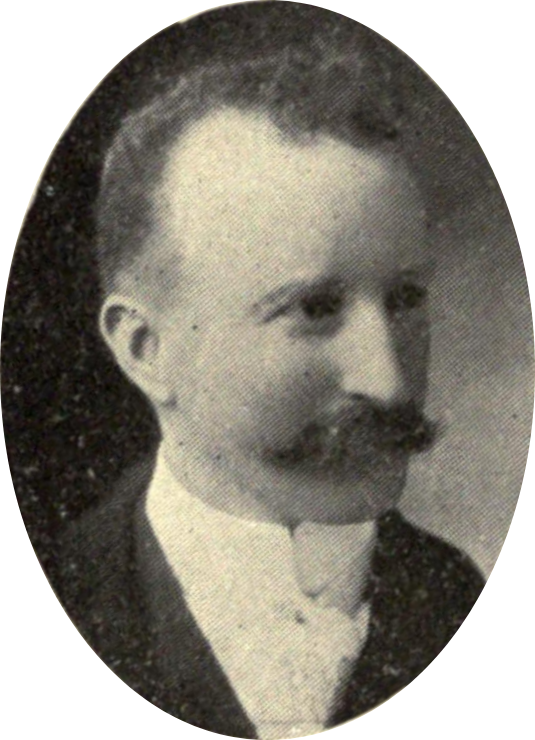
Historical · U.S. House · California · District 5
William Wynn
Former U.S. Representative · California District 5 · 1903–1905 · Democratic
William Wynn represented California's District 5 in the United States House of Representatives (1903–1905) for the Democratic party. The page below collects sourced biographical facts, term history, committee roles, and provenance for Wynn.
Bioguide ID: W000785
Key facts
- Full name
- William Wynn
- State
- California
- District
- District 5
- Party
- Democratic
- House service
- 1903–1905
- First House term
- 1903
- Status
- Left office
- Current term ends
- —
- Born
- 1860
- Bioguide ID
- W000785
- Committee assignments
- —
- Dataset version
- 1.20260606
Biographical narrative
901 words · sourced from the Wikipedia REST extract
William Wynn was an American politician and machinist who served as a U.S. Representative from California's 5th congressional district from 1903 to 1905. A member of the Democratic Party, Wynn's political career was marked by his involvement in local governance and his subsequent election to the federal legislature. His tenure in Congress was characterized by his alignment with the Union Labor movement, although it was also marked by challenges within his party. After leaving Congress, he continued to work in the insurance industry until his passing in 1935.
Early life and career
William Wynn was born on June 12, 1860, in San Francisco, California, to Irish immigrant parents. Growing up in a city that was rapidly developing during the latter half of the 19th century, Wynn received his education in the public schools of San Francisco. His early life was shaped by the cultural and economic dynamics of the city, which was a hub for immigrants and burgeoning industries.
After completing his education, Wynn pursued a career in the machinist trade, where he became an apprentice. This hands-on experience allowed him to gain valuable skills and knowledge in manufacturing, which was a significant sector in San Francisco at the time. He worked in various prominent manufacturing establishments in the city, contributing to the industrial growth that characterized the region during this period.
Wynn's involvement in local politics began in earnest when he was elected to the San Francisco Board of Supervisors. He served on the board from January 8, 1902, until March 4, 1903. This role provided him with a platform to engage with the community and address the issues facing San Francisco residents. His tenure on the Board of Supervisors likely helped him build a network of political connections and gain experience in governance, which would later serve him in his congressional career.
House tenure
In 1903, William Wynn was elected to the United States House of Representatives, representing California's 5th congressional district. He was elected as a Union Labor Democrat, a political alignment that reflected the interests of labor unions and workers' rights during a time when such movements were gaining momentum in the United States. His election to the 58th Congress marked a significant step in his political career, as he transitioned from local governance to the national stage.
During his time in Congress, which lasted from 1903 to 1905, Wynn was involved in various legislative activities and discussions pertinent to the era. His alignment with the Union Labor movement positioned him as a representative of labor interests, which were increasingly important in American politics at the time. However, his tenure was not without challenges. Wynn faced opposition from within his party, particularly from influential figures such as Abe Ruef, who was a prominent labor leader and political boss in San Francisco. This internal conflict ultimately affected his political standing and prospects for re-election.
In 1904, Wynn sought renomination for his congressional seat but was unsuccessful in securing the party's endorsement due to the political dynamics within the Democratic Party and the influence of Ruef. Despite still being able to run on the Democratic ballot line, he lost the election to Republican candidate Everis A. Hayes. This defeat marked the end of his congressional career, as he did not return to the House after his term ended on March 3, 1905.
Legislative focus and committees
During his time in the House of Representatives, William Wynn's legislative focus was primarily aligned with the interests of labor and working-class constituents. As a member of the Union Labor movement, he advocated for policies that supported workers' rights and aimed to improve labor conditions. The early 20th century was a period of significant labor unrest and activism in the United States, and Wynn's position allowed him to contribute to discussions surrounding these critical issues.
Although specific details regarding the committees he served on during his congressional tenure are not provided, it can be inferred that his background as a machinist and his commitment to labor issues would have influenced his participation in relevant legislative discussions. Members of Congress often align themselves with committees that reflect their professional backgrounds and the interests of their constituents, suggesting that Wynn would have been involved in matters related to labor, manufacturing, and possibly economic policy.
After leaving Congress, Wynn transitioned to a career in the insurance business in San Francisco. This shift marked a departure from his political career, but it allowed him to remain active in the community and continue contributing to the local economy. His work in insurance likely involved engaging with a diverse clientele and navigating the complexities of the financial sector.
William Wynn passed away on January 4, 1935. He is interred at Holy Cross Cemetery in Colma, California. His legacy includes his contributions to local governance and his brief but notable role in the U.S. Congress. Additionally, Wynn was an active member of the Native Sons of the Golden West, an organization that celebrates California's history and heritage, further indicating his commitment to his community and state.
In summary, William Wynn's life and career reflect the experiences of many individuals who navigated the intersections of labor, politics, and community service during a transformative period in American history. His journey from a machinist to a U.S. Representative illustrates the potential for individuals from working-class backgrounds to engage in the political process and advocate for the interests of their peers.
Notable legislation
Sponsored and co-sponsored legislation for William Wynn is pending operator curation. The biographical narrative above carries the same provenance trail until per-bill rows are written.
Sources
- [1]https://en.wikipedia.org/wiki/William_J._WynnWikipedia · retrieved 2026-06-06
Notable quotes
Sourced quotes for William Wynn are pending operator curation. Narrative-scope provenance remains attached below.
Sources
- [1]https://en.wikipedia.org/wiki/William_J._WynnWikipedia · retrieved 2026-06-06
Key positions
Curated policy positions for William Wynn are pending operator review. The biographical narrative above carries the same provenance trail until per-topic positions are written.
Sources
- [1]https://en.wikipedia.org/wiki/William_J._WynnWikipedia · retrieved 2026-06-06
Terms served
- 1903–1905U.S. House · Term 1 · Democratic
Sources & provenance
Every attributable claim above carries a per-section [N] marker that resolves to the corresponding URL below. Each entry records the upstream provider, the canonical URL, and the timestamp at which the source was retrieved by the ingest pipeline.
Key facts
- https://bioguide.congress.gov/search/bio/W000785bioguide · retrieved 2026-06-06
- https://www.govtrack.us/congress/members/411932govtrack · retrieved 2026-06-06
Biographical narrative
- https://en.wikipedia.org/wiki/William_J._Wynnwikipedia · retrieved 2026-06-06
Find your representative
Every U.S. state elects representatives by district. Browse California’s delegation, the full former-representative roster, or explore the role and term length.
Related on The Candidate
- Preceded by Eugene LoudEarlier holder of the California District 5 House seat · Republican.Open
- Succeeded by John NolanLater holder of the California District 5 House seat · Republican.Open
- Barclay HenleyFormer U.S. Representative · California District 1 · DemocraticOpen
- Charles ClaytonFormer U.S. Representative · California District 1 · RepublicanOpen
- Clarence LeaFormer U.S. Representative · California District 1 · DemocraticOpen
- Clement MillerFormer U.S. Representative · California District 1 · DemocraticOpen