
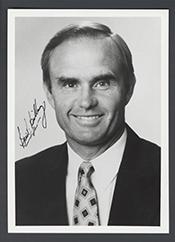
Historical · U.S. House · California · District 50
Brian Bilbray
Former U.S. Representative · California District 50 · 1995–2013 · Republican
Brian Bilbray represented California's District 50 in the United States House of Representatives (1995–2013) for the Republican party. The page below collects sourced biographical facts, term history, committee roles, and provenance for Bilbray.
Bioguide ID: B000461
Key facts
- Full name
- Brian Bilbray
- State
- California
- District
- District 50
- Party
- Republican
- House service
- 1995–2013
- First House term
- 1995
- Status
- Left office
- Current term ends
- —
- Born
- 1951
- Bioguide ID
- B000461
- Committee assignments
- —
- Dataset version
- 1.20260605
Biographical narrative
876 words · sourced from the Wikipedia REST extract
Brian Bilbray is a former American politician who served as a U.S. Representative for California's 50th congressional district. A member of the Republican Party, Bilbray's congressional career spanned two non-consecutive periods from 1995 to 2001 and again from 2006 to 2013. He is known for his involvement in immigration reform and energy policy, having held leadership positions in related caucuses and committees during his tenure in the House of Representatives.
Early life and career
Brian Phillip Bilbray was born on January 28, 1951, in Coronado, California. He grew up in Imperial Beach, California, where he attended Mar Vista High School. During his time in high school, he was active in sports, particularly as a linebacker on the football team. Following his graduation, Bilbray pursued further education at Southwestern College, a community college located in Chula Vista, California. Before entering the political arena, he worked as a tax consultant, which provided him with insights into fiscal matters that would later inform his legislative priorities.
Bilbray's interest in politics was sparked by a proposed extensive program of eminent domain in Imperial Beach. This led him to run for a position on the city council, where he successfully won a seat and served from 1976 to 1978. His political career continued to ascend when he was elected mayor of Imperial Beach, a position he held from 1978 to 1985. During his tenure as mayor, Bilbray attempted to initiate several development projects, including the construction of a yacht marina in the Tijuana Estuary and a breakwater off the beach of Imperial Beach. Both projects faced significant opposition from local surfers and environmentalists, ultimately leading to their cancellation. Following his mayoral term, Bilbray served on the San Diego County Board of Supervisors from 1985 until 1995, further solidifying his political experience and community engagement.
House tenure
Bilbray's congressional career began when he won the Republican nomination for California's 49th congressional district in 1994, which later became known as the 53rd district. He successfully defeated incumbent Democrat Lynn Schenk during a Republican wave election that year. Bilbray was re-elected in 1996 and 1998, demonstrating his ability to maintain support within his district. However, his tenure in the House was interrupted in 2000 when he lost his seat to State Assemblywoman Susan Davis.
After a brief period working as a federal lobbyist, Bilbray returned to politics in 2006. He ran in a special election to fill the vacancy in California's 50th congressional district, which had been created by the resignation of fellow Republican Duke Cunningham. The special election was highly competitive, with numerous Republican candidates vying for the position. Bilbray emerged as the leading Republican candidate in the initial all-party election, ultimately winning the runoff election against Democrat Francine Busby. He was sworn into office on June 13, 2006, marking his return to Congress.
Bilbray faced Busby again in the November 2006 general election, where he won with a significant margin. His campaign focused on his opposition to illegal immigration, a topic that resonated with many constituents. Despite initial predictions favoring his re-election, the political climate shifted, and he faced a strong challenge from Democrat Nick Leibham in the 2008 general election. Bilbray managed to secure victory, albeit with a narrower margin than anticipated.
Throughout his time in Congress, Bilbray served a total of seven terms, with his last term concluding on January 3, 2013. His legislative career was marked by his focus on immigration reform and energy policy, as well as his active participation in various committees.
Legislative focus and committees
During his time in the U.S. House of Representatives, Bilbray was known for his leadership in immigration reform. He served as the Chairman of the House Immigration Reform Caucus, where he advocated for policies aimed at addressing issues related to immigration and border security. His focus on these topics reflected broader national debates and concerns regarding immigration policy during his tenure.
In addition to his work on immigration, Bilbray was a member of the House Energy and Commerce Committee, which plays a crucial role in shaping legislation related to energy, healthcare, telecommunications, and consumer protection. Within this committee, he served on several subcommittees, including Oversight and Investigations, Communication and Technology, and Energy and Power. His involvement in these subcommittees allowed him to engage with a wide range of issues, from regulatory oversight to energy policy development.
Bilbray's legislative activities were informed by his background as a local politician and his experiences in the private sector. His work as a tax consultant and his time as mayor and county supervisor provided him with a unique perspective on the challenges facing local communities, which he sought to address through his congressional initiatives.
After leaving Congress, Bilbray continued to be active in political circles, including registering as a federal lobbyist. His clients included various organizations and entities, reflecting his ongoing engagement with policy issues. He is also a member of the ReFormers Caucus of Issue One, which focuses on promoting reforms in the political system.
Bilbray's career in public service has been characterized by his commitment to addressing the needs of his constituents and engaging with complex legislative issues. His experiences in local government and Congress have contributed to his understanding of the political landscape and the importance of effective governance.
Notable legislation
Sponsored and co-sponsored legislation for Brian Bilbray is pending operator curation. The biographical narrative above carries the same provenance trail until per-bill rows are written.
Sources
- [1]https://en.wikipedia.org/wiki/Brian_BilbrayWikipedia · retrieved 2026-06-05
Notable quotes
Sourced quotes for Brian Bilbray are pending operator curation. Narrative-scope provenance remains attached below.
Sources
- [1]https://en.wikipedia.org/wiki/Brian_BilbrayWikipedia · retrieved 2026-06-05
Key positions
Curated policy positions for Brian Bilbray are pending operator review. The biographical narrative above carries the same provenance trail until per-topic positions are written.
Sources
- [1]https://en.wikipedia.org/wiki/Brian_BilbrayWikipedia · retrieved 2026-06-05
Terms served
- 1995–1997U.S. House · Term 1 · Republican
- 1997–1999U.S. House · Term 2 · Republican
- 1999–2001U.S. House · Term 3 · Republican
- 2006–2007U.S. House · Term 4 · Republican
- 2007–2009U.S. House · Term 5 · Republican
- 2009–2011U.S. House · Term 6 · Republican
- 2011–2013U.S. House · Term 7 · Republican
Sources & provenance
Every attributable claim above carries a per-section [N] marker that resolves to the corresponding URL below. Each entry records the upstream provider, the canonical URL, and the timestamp at which the source was retrieved by the ingest pipeline.
Key facts
- https://bioguide.congress.gov/search/bio/B000461bioguide · retrieved 2026-06-05
- http://www.house.gov/bilbrayhouse.gov · retrieved 2026-06-05
Biographical narrative
- https://en.wikipedia.org/wiki/Brian_Bilbraywikipedia · retrieved 2026-06-05
Find your representative
Every U.S. state elects representatives by district. Browse California’s delegation, the full former-representative roster, or explore the role and term length.
Related on The Candidate
- Barclay HenleyFormer U.S. Representative · California District 1 · DemocraticOpen
- Charles ClaytonFormer U.S. Representative · California District 1 · RepublicanOpen
- Clarence LeaFormer U.S. Representative · California District 1 · DemocraticOpen
- Clement MillerFormer U.S. Representative · California District 1 · DemocraticOpen
- Republican PartyFederal candidates and office holders on the Republican line.Open
- Representatives from CaliforniaEvery former U.S. Representative who has represented California.Open