
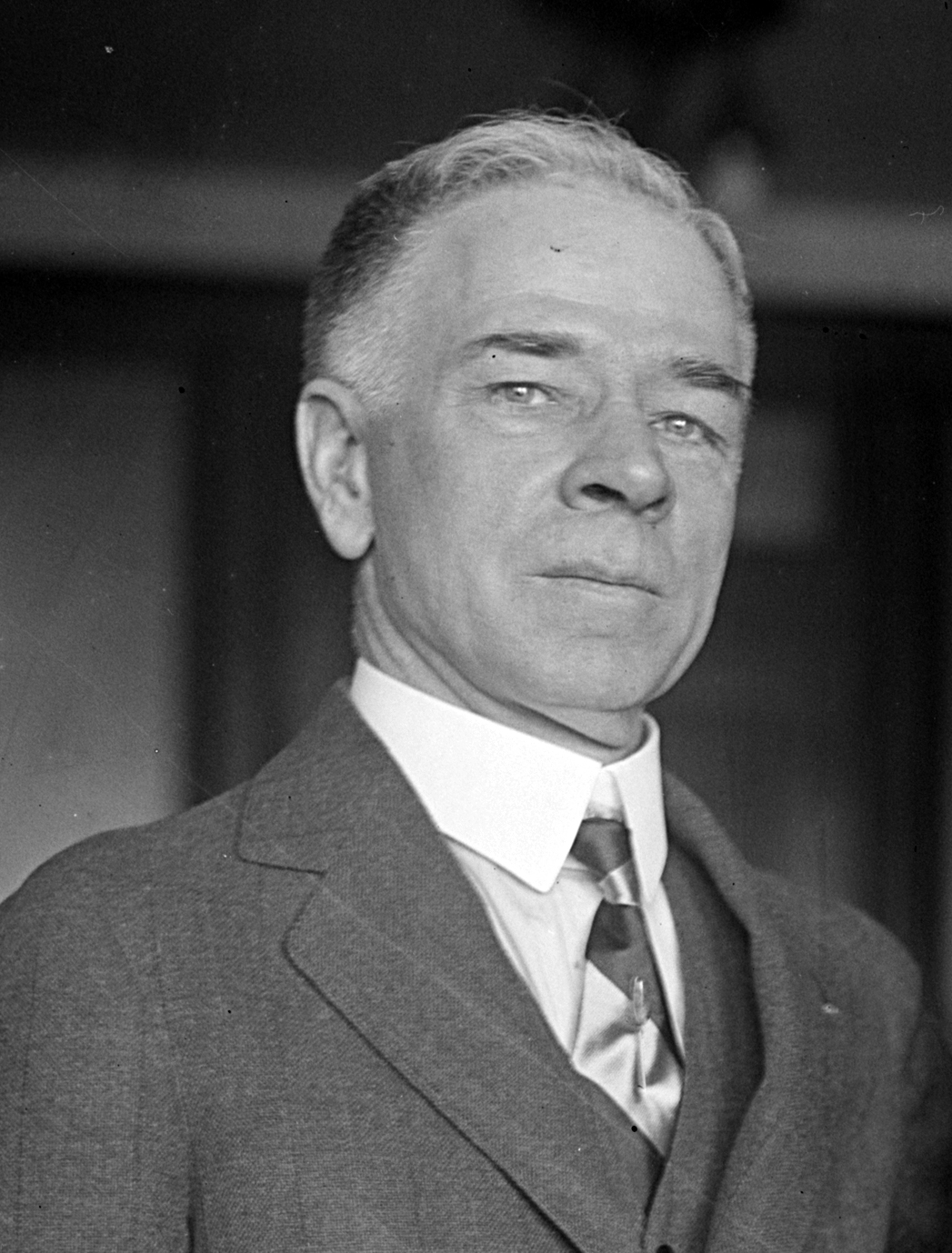
Historical · U.S. House · California · District 6
James MacLafferty
Former U.S. Representative · California District 6 · 1921–1925 · Republican
James MacLafferty represented California's District 6 in the United States House of Representatives (1921–1925) for the Republican party. The page below collects sourced biographical facts, term history, committee roles, and provenance for MacLafferty.
Bioguide ID: M000028
Key facts
- Full name
- James MacLafferty
- State
- California
- District
- District 6
- Party
- Republican
- House service
- 1921–1925
- First House term
- 1921
- Status
- Left office
- Current term ends
- —
- Born
- 1871
- Bioguide ID
- M000028
- Committee assignments
- —
- Dataset version
- 1.20260606
Biographical narrative
874 words · sourced from the Wikipedia REST extract
James MacLafferty was an American businessman and politician who served as a U.S. Representative for California's 6th congressional district from 1922 to 1925. A member of the Republican Party, MacLafferty's political career was marked by his election to Congress following the death of a predecessor. His tenure in the House of Representatives was brief, encompassing two terms, during which he engaged in various legislative activities. After leaving Congress, he continued to contribute to the business sector and held a notable position within the Department of Commerce.
Early life and career
James MacLafferty was born on February 27, 1871, in San Diego, California. His early years were characterized by mobility, as his family relocated several times during his childhood. In 1874, when he was just three years old, his family moved to Oakland, California. This initial move marked the beginning of a series of relocations that would take them to various cities in the Pacific Northwest. In 1880, the MacLafferty family moved to Eugene, Oregon, followed by a move to Astoria, Oregon, in 1883. By 1884, they had settled in Tacoma, Washington.
MacLafferty's education took place in public schools, where he likely received a foundational education that would serve him throughout his life. After completing his schooling, he entered the lumber business in Tacoma, which was a significant industry in the region at the time. He continued in this field until 1889, when he transitioned to the wholesale paper business in Chicago in 1899. This shift marked a significant change in his career trajectory, as he moved from the lumber sector to a different industry that would provide him with diverse experiences in commerce.
In 1900, MacLafferty returned to the Pacific Coast, settling once again in Oakland, California. His return to California allowed him to re-establish connections and pursue business opportunities in a familiar environment. In Oakland, he worked as a traveling salesman, which would have involved extensive travel and interaction with various clients and businesses. This role likely enhanced his understanding of the market and provided him with valuable insights into the needs of consumers and businesses alike.
House tenure
MacLafferty's political career began in earnest when he was elected as a Republican to the Sixty-seventh Congress. He filled a vacancy created by the death of John A. Elston, which allowed him to enter the House of Representatives on November 7, 1922. His election came during a time of significant political change in the United States, as the nation was navigating the aftermath of World War I and the onset of the Roaring Twenties. MacLafferty's tenure in Congress was characterized by his participation in legislative discussions and decisions that would shape the future of the country.
Following his initial election, MacLafferty was reelected to the Sixty-eighth Congress, serving until March 3, 1925. His time in office was marked by engagement in various legislative matters, although specific details regarding the bills he supported or opposed are not documented in the available records. His role as a U.S. Representative would have involved collaborating with fellow lawmakers, participating in committee meetings, and addressing the concerns of his constituents from California's 6th congressional district.
Despite his efforts and contributions during his time in office, MacLafferty faced challenges in securing a continued position in Congress. He was an unsuccessful candidate for reelection in 1924, which marked the end of his congressional career. The competitive nature of elections during this period, combined with the evolving political landscape, contributed to his inability to retain his seat in the Sixty-ninth Congress.
Legislative focus and committees
During his time in the House of Representatives, MacLafferty's legislative focus and committee assignments are not extensively documented in the available records. However, as a member of the Republican Party, he would have aligned with the party's platform and priorities during the early 1920s. This period was characterized by a focus on economic growth, business interests, and a general push for policies that supported the burgeoning prosperity of the decade.
After concluding his congressional service, MacLafferty transitioned to a role within the federal government as an assistant to the Secretary of Commerce. He held this position from March 24, 1925, until August 31, 1927. This role would have involved working closely with the Secretary and contributing to the administration of commerce-related policies and initiatives. His experience in business likely provided him with insights that were valuable in this governmental capacity.
Following his tenure in the Department of Commerce, MacLafferty returned to the private sector, resuming his business activities in Oakland, California. He took on leadership roles, serving as vice president of both the Pacific American Steamship Association and the Shipowners' Association of the Pacific Coast. These positions reflected his continued involvement in the business community and his commitment to the maritime and shipping industries, which were crucial to California's economy.
James MacLafferty passed away on June 9, 1937, in Oakland, California. After his death, his remains were cremated. His life and career reflect the experiences of many individuals who navigated the complexities of business and politics during a transformative period in American history. MacLafferty's contributions to both the legislative and business arenas highlight the interconnectedness of these fields and the impact that individuals can have on their communities and the nation as a whole.
Notable legislation
Sponsored and co-sponsored legislation for James MacLafferty is pending operator curation. The biographical narrative above carries the same provenance trail until per-bill rows are written.
Sources
- [1]https://en.wikipedia.org/wiki/James_H._MacLaffertyWikipedia · retrieved 2026-06-06
Notable quotes
Sourced quotes for James MacLafferty are pending operator curation. Narrative-scope provenance remains attached below.
Sources
- [1]https://en.wikipedia.org/wiki/James_H._MacLaffertyWikipedia · retrieved 2026-06-06
Key positions
Curated policy positions for James MacLafferty are pending operator review. The biographical narrative above carries the same provenance trail until per-topic positions are written.
Sources
- [1]https://en.wikipedia.org/wiki/James_H._MacLaffertyWikipedia · retrieved 2026-06-06
Terms served
- 1921–1923U.S. House · Term 1 · Republican
- 1923–1925U.S. House · Term 2 · Republican
Sources & provenance
Every attributable claim above carries a per-section [N] marker that resolves to the corresponding URL below. Each entry records the upstream provider, the canonical URL, and the timestamp at which the source was retrieved by the ingest pipeline.
Key facts
- https://bioguide.congress.gov/search/bio/M000028bioguide · retrieved 2026-06-06
- https://www.govtrack.us/congress/members/407056govtrack · retrieved 2026-06-06
Biographical narrative
- https://en.wikipedia.org/wiki/James_H._MacLaffertywikipedia · retrieved 2026-06-06
Find your representative
Every U.S. state elects representatives by district. Browse California’s delegation, the full former-representative roster, or explore the role and term length.
Related on The Candidate
- Preceded by Joseph KnowlandEarlier holder of the California District 6 House seat · Republican.Open
- Succeeded by Albert CarterLater holder of the California District 6 House seat · Republican.Open
- Barclay HenleyFormer U.S. Representative · California District 1 · DemocraticOpen
- Charles ClaytonFormer U.S. Representative · California District 1 · RepublicanOpen
- Clarence LeaFormer U.S. Representative · California District 1 · DemocraticOpen
- Clement MillerFormer U.S. Representative · California District 1 · DemocraticOpen