
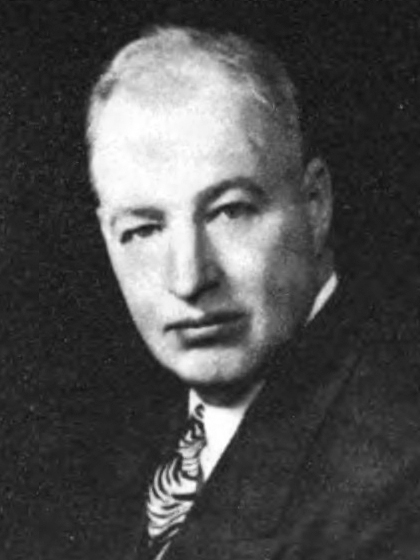
Historical · U.S. House · California · District 7
John Allen Jr.
Former U.S. Representative · California District 7 · 1947–1959 · Republican
John Allen Jr. represented California's District 7 in the United States House of Representatives (1947–1959) for the Republican party. The page below collects sourced biographical facts, term history, committee roles, and provenance for Jr..
Bioguide ID: A000133
Key facts
- Full name
- John Allen Jr.
- State
- California
- District
- District 7
- Party
- Republican
- House service
- 1947–1959
- First House term
- 1947
- Status
- Left office
- Current term ends
- —
- Born
- 1899
- Bioguide ID
- A000133
- Committee assignments
- —
- Dataset version
- 1.20260605
Biographical narrative
917 words · sourced from the Wikipedia REST extract
John Allen Jr. was a prominent American politician who served as a U.S. Representative for California's 7th congressional district from 1947 to 1959. A member of the Republican Party, he is noted for being the last Republican to represent the cities of Oakland and Berkeley in Congress. Following his tenure in the House, he held a significant position as Under Secretary of Commerce for Transportation under President Dwight D. Eisenhower. Allen's career spanned various roles in education, law, and public service, culminating in his later years as mayor of McCall, Idaho.
Early life and career
John Joseph Allen Jr. was born on November 27, 1899, in Oakland, California. He was the son of John J. Allen Sr., who served as a judge in Alameda County. Allen Jr. completed his education in public high schools and pursued higher education at the University of California, Berkeley. His academic journey was interrupted by World War I, during which he enlisted in the United States Navy as an Apprentice Seaman.
After the war, Allen returned to his studies and graduated from the UC Berkeley School of Law in 1922. Following his admission to the California State Bar, he began practicing law. His commitment to public service became evident early in his career, as he was elected to the Oakland Board of Education, where he served multiple terms, including several as president. His leadership extended beyond the local level; he was also the President of the California State School Trustees Association from 1936 to 1938 and participated in the County Republican Central Committee from 1936 to 1944.
During World War II, Allen Jr. rejoined the Navy, this time as a Lieutenant Commander, and served until his discharge in 1945. After his military service, he continued his involvement in education as the vice-chairman of the State Commission on School Districts. His political aspirations took shape when he decided to run for Congress in 1946, following the retirement of Democratic Congressman John H. Tolan. Allen Jr. won the election against Democrat Patrick W. McDonough by a significant margin, marking the beginning of his congressional career.
House tenure
John Allen Jr. began his first term in the U.S. House of Representatives on January 3, 1947. Over the course of his six terms, he established himself as a dedicated legislator focused on various issues, particularly those affecting the maritime industry and fisheries. His legislative efforts included advocating for bills related to the Merchant Marine and Fisheries, which were crucial for the economic interests of California and the Pacific region.
In 1952, Allen achieved a notable political milestone by winning both the Republican and Democratic nominations for the House, reflecting his broad appeal among constituents. During his time in Congress, he was instrumental in passing legislation that aimed to facilitate cooperation among Pacific states concerning fishing rights and practices. One of his significant contributions was his work on an interstate fishing compact, which aimed to regulate fishing activities across state lines. Additionally, he played a role in amending the Ship Mortgage Act of 1920, which was significant for the shipping industry.
Allen Jr. was also involved in civil rights legislation, voting in favor of the Civil Rights Act of 1957, which aimed to address racial discrimination in voting. His tenure in the House was marked by a commitment to both local and national issues, reflecting the interests of his constituents in California's 7th district.
Despite his accomplishments, Allen faced challenges in his political career. After his final term in the House ended on January 3, 1959, he was not re-elected. However, his public service did not conclude with his departure from Congress. Shortly after leaving the House, he was appointed Under Secretary of Commerce for Transportation on January 5, 1959, a role he held until 1961. In this capacity, he played a key role in laying the groundwork for what would eventually become the Department of Transportation, contributing to the development of transportation policy at the federal level.
Legislative focus and committees
Throughout his time in the House of Representatives, John Allen Jr. focused on issues that were critical to his constituents and the broader interests of California. His work on Merchant Marine and Fisheries legislation was particularly notable, as he sought to enhance the economic viability of these sectors, which were vital to the state's economy. His advocacy for an interstate fishing compact among Pacific states demonstrated his commitment to collaborative governance and resource management.
In addition to his work on fisheries, Allen's involvement in civil rights legislation indicated a willingness to engage with the pressing social issues of his time. His vote in favor of the Civil Rights Act of 1957 reflected a recognition of the importance of addressing racial inequality and promoting voting rights, aligning with the broader civil rights movement that was gaining momentum during the 1950s.
Allen's legislative focus was complemented by his participation in various committees, where he contributed to discussions and decisions that shaped national policy. His experience in education and law informed his approach to governance, allowing him to advocate effectively for policies that aligned with his constituents' needs.
After leaving Congress, Allen returned to the practice of law until his retirement in 1969. He later moved to McCall, Idaho, where he continued to engage in public service as mayor from 1988 to 1992, becoming the oldest mayor in the United States at that time. His long-standing commitment to public service and community engagement reflects a career dedicated to the betterment of society at various levels.
Notable legislation
Sponsored and co-sponsored legislation for John Allen Jr. is pending operator curation. The biographical narrative above carries the same provenance trail until per-bill rows are written.
Sources
- [1]https://en.wikipedia.org/wiki/John_J._Allen_Jr.Wikipedia · retrieved 2026-06-05
Notable quotes
Sourced quotes for John Allen Jr. are pending operator curation. Narrative-scope provenance remains attached below.
Sources
- [1]https://en.wikipedia.org/wiki/John_J._Allen_Jr.Wikipedia · retrieved 2026-06-05
Key positions
Curated policy positions for John Allen Jr. are pending operator review. The biographical narrative above carries the same provenance trail until per-topic positions are written.
Sources
- [1]https://en.wikipedia.org/wiki/John_J._Allen_Jr.Wikipedia · retrieved 2026-06-05
Terms served
- 1947–1949U.S. House · Term 1 · Republican
- 1949–1951U.S. House · Term 2 · Republican
- 1951–1953U.S. House · Term 3 · Republican
- 1953–1955U.S. House · Term 4 · Republican
- 1955–1957U.S. House · Term 5 · Republican
- 1957–1959U.S. House · Term 6 · Republican
Sources & provenance
Every attributable claim above carries a per-section [N] marker that resolves to the corresponding URL below. Each entry records the upstream provider, the canonical URL, and the timestamp at which the source was retrieved by the ingest pipeline.
Key facts
- https://bioguide.congress.gov/search/bio/A000133bioguide · retrieved 2026-06-05
- https://www.govtrack.us/congress/members/400789govtrack · retrieved 2026-06-05
Biographical narrative
- https://en.wikipedia.org/wiki/John_J._Allen_Jr.wikipedia · retrieved 2026-06-05
Find your representative
Every U.S. state elects representatives by district. Browse California’s delegation, the full former-representative roster, or explore the role and term length.
Related on The Candidate
- Preceded by John TolanEarlier holder of the California District 7 House seat · Democratic.Open
- Succeeded by Jeffery CohelanLater holder of the California District 7 House seat · Democratic.Open
- Barclay HenleyFormer U.S. Representative · California District 1 · DemocraticOpen
- Charles ClaytonFormer U.S. Representative · California District 1 · RepublicanOpen
- Clarence LeaFormer U.S. Representative · California District 1 · DemocraticOpen
- Clement MillerFormer U.S. Representative · California District 1 · DemocraticOpen