
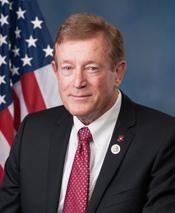
Historical · U.S. House · California · District 8
Paul Cook
Former U.S. Representative · California District 8 · 2013–2020 · Republican
Paul Cook represented California's District 8 in the United States House of Representatives (2013–2020) for the Republican party. The page below collects sourced biographical facts, term history, committee roles, and provenance for Cook.
Bioguide ID: C001094
Key facts
- Full name
- Paul Cook
- State
- California
- District
- District 8
- Party
- Republican
- House service
- 2013–2020
- First House term
- 2013
- Status
- Left office
- Current term ends
- —
- Born
- 1943
- Bioguide ID
- C001094
- Committee assignments
- —
- Dataset version
- 1.20260605
Biographical narrative
887 words · sourced from the Wikipedia REST extract
Paul Cook is a former U.S. Representative who served California's 8th congressional district from 2013 until 2020. A member of the Republican Party, Cook has had a diverse career in public service, including roles as a California State Assembly member and a San Bernardino County Supervisor. His military background as a colonel in the United States Marine Corps, coupled with his experience in local government, has shaped his political career and legislative priorities.
Early life and career
Paul Cook was born on March 3, 1943, in Meriden, Connecticut. He spent his formative years in Meriden before relocating to California after completing his military service. Cook graduated from Southern Connecticut State University in 1966 with a Bachelor of Science degree in teaching. Shortly after graduating, he joined the United States Marine Corps, where he served as an infantry officer during the Vietnam War. His military career spanned 26 years, during which he earned several honors, including the Bronze Star and two Purple Hearts for his service in combat. Cook retired from the Marine Corps in 1992 with the rank of colonel.
Following his retirement, Cook pursued further education, earning a Master of Public Administration from California State University, San Bernardino, in 1996, and a master's degree in political science from the University of California, Riverside, in 2000. His early career included roles in education and local business; he served as the Director of the Yucca Valley Chamber of Commerce from 1993 to 1994 and was a professor at Copper Mountain College from 1998 to 2002. Additionally, Cook taught courses on political violence and terrorism at the University of California, Riverside, starting in 2002.
House tenure
Cook's political career in the California State Assembly began in 2006 when he successfully ran for the 65th Assembly District. He emerged from a competitive Republican primary, securing 29% of the vote, and subsequently defeated his Democratic opponent in the general election with a significant margin. Cook was re-elected in 2008 and 2010, consistently winning against his Democratic challengers. During his time in the Assembly, he represented a diverse district that included several cities and communities across Riverside and San Bernardino counties.
In January 2012, Cook entered the race for the U.S. House of Representatives after the incumbent, Jerry Lewis, announced his retirement. The district had been renumbered from the 41st to the 8th due to redistricting. Cook finished second in the all-party primary, earning 15% of the vote, and subsequently won the general election against fellow Republican Gregg Imus, receiving 58% of the votes cast.
Cook's tenure in the House of Representatives began in January 2013. Throughout his time in office, he was involved in various legislative initiatives and voted on key issues affecting his constituents and the nation. Notably, he co-signed a letter urging President Barack Obama to expedite the approval of the Keystone XL pipeline, emphasizing the potential job creation associated with the project. He also voted in favor of repealing the Affordable Care Act, citing the need for accessible and affordable healthcare for all Americans.
In August 2017, Cook supported legislation to restrict late-term abortions, allowing exceptions only in cases of rape, incest, or threats to the woman's life. He also voted for the Tax Cuts and Jobs Act of 2017, which he believed would provide essential tax relief to middle-class and low-income Americans while simplifying the tax code.
Legislative focus and committees
During his time in Congress, Cook served on several committees that aligned with his interests and expertise. He was a member of the Committee on Armed Services, where he participated in subcommittees focused on tactical air and land forces, as well as seapower and projection forces. His military background informed his contributions to discussions on national defense and veterans' affairs, as he also served on the Committee on Veterans' Affairs, where he was involved in subcommittees addressing disability assistance and memorial affairs.
Cook's legislative work extended to foreign policy matters as a member of the Committee on Foreign Affairs, where he participated in subcommittees that dealt with European and Eurasian issues, as well as terrorism, nonproliferation, and trade. His involvement in these committees allowed him to engage with a wide range of topics, from defense policy to international relations.
In addition to his committee assignments, Cook was a member of several caucuses, including the Congressional Cement Caucus, the House Baltic Caucus, the Republican Main Street Partnership, and the Congressional Western Caucus. These affiliations reflect his interests in various policy areas and his commitment to addressing the concerns of his constituents.
Throughout his congressional career, Cook was recognized for his bipartisan efforts, ranking as one of the more bipartisan members of the House according to the Bipartisan Index. His political positions included opposition to abortion and the Common Core State Standards, which shaped his legislative priorities and engagement with constituents.
In September 2019, Cook announced that he would not seek re-election for a fifth term in the House and instead pursue a position on the San Bernardino County Board of Supervisors. He successfully won the primary election in March 2020, securing an outright majority to avoid a runoff, and subsequently resigned from his congressional seat on December 7, 2020, to assume his new role as a county supervisor. Cook's career reflects a commitment to public service, shaped by his military experience and local governance.
Notable legislation
Sponsored and co-sponsored legislation for Paul Cook is pending operator curation. The biographical narrative above carries the same provenance trail until per-bill rows are written.
Sources
- [1]https://en.wikipedia.org/wiki/Paul_Cook_(politician)Wikipedia · retrieved 2026-06-05
Notable quotes
Sourced quotes for Paul Cook are pending operator curation. Narrative-scope provenance remains attached below.
Sources
- [1]https://en.wikipedia.org/wiki/Paul_Cook_(politician)Wikipedia · retrieved 2026-06-05
Key positions
Curated policy positions for Paul Cook are pending operator review. The biographical narrative above carries the same provenance trail until per-topic positions are written.
Sources
- [1]https://en.wikipedia.org/wiki/Paul_Cook_(politician)Wikipedia · retrieved 2026-06-05
Terms served
- 2013–2015U.S. House · Term 1 · Republican
- 2015–2017U.S. House · Term 2 · Republican
- 2017–2019U.S. House · Term 3 · Republican
- 2019–2020U.S. House · Term 4 · Republican
Sources & provenance
Every attributable claim above carries a per-section [N] marker that resolves to the corresponding URL below. Each entry records the upstream provider, the canonical URL, and the timestamp at which the source was retrieved by the ingest pipeline.
Key facts
- https://bioguide.congress.gov/search/bio/C001094bioguide · retrieved 2026-06-05
- https://cook.house.govhouse.gov · retrieved 2026-06-05
Biographical narrative
- https://en.wikipedia.org/wiki/Paul_Cook_(politician)wikipedia · retrieved 2026-06-05
Find your representative
Every U.S. state elects representatives by district. Browse California’s delegation, the full former-representative roster, or explore the role and term length.
Related on The Candidate
- Preceded by George MillerEarlier holder of the California District 8 House seat · Democratic.Open
- Barclay HenleyFormer U.S. Representative · California District 1 · DemocraticOpen
- Charles ClaytonFormer U.S. Representative · California District 1 · RepublicanOpen
- Clarence LeaFormer U.S. Representative · California District 1 · DemocraticOpen
- Clement MillerFormer U.S. Representative · California District 1 · DemocraticOpen
- Republican PartyFederal candidates and office holders on the Republican line.Open