
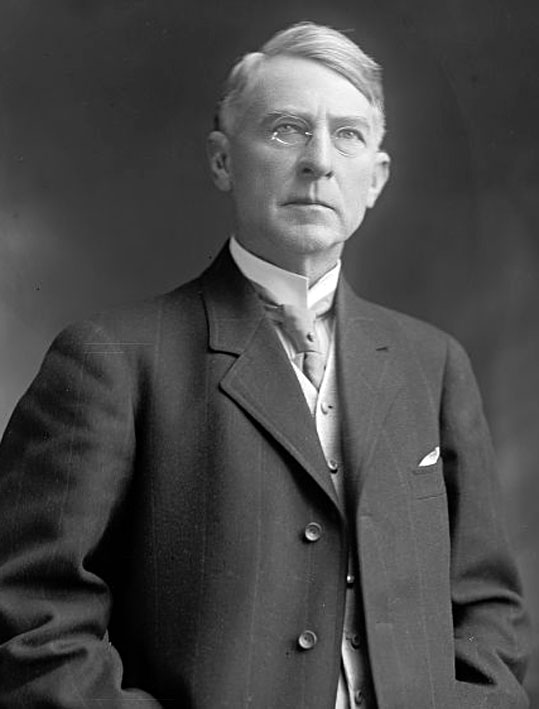
Historical · U.S. House · Colorado · District 1
Atterson Rucker
Former U.S. Representative · Colorado District 1 · 1909–1913 · Democratic
Atterson Rucker represented Colorado's District 1 in the United States House of Representatives (1909–1913) for the Democratic party. The page below collects sourced biographical facts, term history, committee roles, and provenance for Rucker.
Bioguide ID: R000492
Key facts
- Full name
- Atterson Rucker
- State
- Colorado
- District
- District 1
- Party
- Democratic
- House service
- 1909–1913
- First House term
- 1909
- Status
- Left office
- Current term ends
- —
- Born
- 1847
- Bioguide ID
- R000492
- Committee assignments
- —
- Dataset version
- 1.20260606
Biographical narrative
814 words · sourced from the Wikipedia REST extract
Atterson Rucker was an American lawyer, mining executive, and politician who served as a U.S. Representative for Colorado's 1st congressional district from 1909 to 1913. A member of the Democratic Party, Rucker's political career was preceded by military service in the Confederate States Army during the Civil War. His life encompassed various roles in law and mining, reflecting the economic and social dynamics of the American West during the late 19th and early 20th centuries.
Early life and career
Atterson Rucker was born on April 3, 1847, in Harrodsburg, Kentucky. In his early childhood, he relocated with his family to Missouri, where he received his education in the common schools of the area. Rucker's formative years were marked by the tumult of the Civil War, during which he served for four years in the Confederate States Army. This experience would shape his perspectives and future endeavors.
After the war, Rucker pursued a legal career. He studied law and was admitted to the bar in 1868, beginning his legal practice in Lexington, Missouri, the following year. His early career in Missouri laid the groundwork for his later professional pursuits. In 1873, Rucker moved to Baxter Springs, Kansas, where he continued to practice law. His move to Kansas marked a significant transition, as he began to engage more deeply with the evolving economic landscape of the American frontier.
In 1879, Rucker relocated to Leadville, Colorado, a town known for its booming mining industry. Here, he not only continued his legal practice but also became involved in mining ventures, reflecting the dual nature of his professional interests. His involvement in mining was significant, as Leadville was a key site for silver mining during this period. Rucker's legal expertise and business acumen allowed him to navigate the complexities of mining law and contribute to the development of the region's resources.
Rucker's civic engagement extended beyond his legal and business pursuits. He served as the judge of the court of records for Lake County in 1881 and 1882, a role that underscored his commitment to public service and the legal system. In 1885, he moved to Aspen, Colorado, where he continued to invest in mining projects, further solidifying his reputation as a prominent figure in the mining community.
House tenure
Rucker's political career took a significant turn when he was elected to the U.S. House of Representatives as a Democrat. He served in the Sixty-first and Sixty-second Congresses from March 4, 1909, to March 3, 1913. His election to Congress came during a period of significant political and social change in the United States, as the nation grappled with issues such as labor rights, economic reform, and the expansion of federal authority.
During his time in Congress, Rucker was involved in various legislative activities that reflected the interests and concerns of his constituents in Colorado. His tenure coincided with a growing focus on the regulation of industries, including mining, which was central to Colorado's economy. Rucker's background in law and mining likely informed his legislative priorities and approach to governance.
Despite his initial electoral success, Rucker faced challenges in his political career. He was an unsuccessful candidate for renomination in 1912, which marked the end of his congressional tenure. Following his departure from Congress, Rucker returned to Colorado, settling in Denver. He resumed his career in the mining business, continuing to engage with the industry that had been a significant part of his professional life.
Legislative focus and committees
While specific details regarding Rucker's committee assignments and legislative initiatives during his time in Congress are not extensively documented, it can be inferred that his background in law and mining influenced his legislative focus. As a representative from a state with a strong mining economy, Rucker likely advocated for policies that supported the mining industry and addressed the needs of workers in that sector.
The early 20th century was a transformative time for the United States, with increasing attention on labor rights and economic regulation. Rucker's experience as a lawyer and mining executive would have provided him with insights into the legal and economic challenges faced by his constituents. His legislative efforts may have included advocating for fair labor practices and regulations that impacted the mining industry, although specific bills or initiatives are not detailed in the available records.
After his congressional service, Rucker's involvement in the mining sector continued to shape his professional identity. He remained active in the industry, contributing to the development of mining projects in Colorado. His return to the mining business after leaving Congress reflects a commitment to the economic opportunities that the region offered.
Atterson Rucker passed away on July 19, 1924, near Mount Morrison, Colorado. He was interred at Littleton Cemetery in Littleton, Colorado. His life and career encapsulate the complexities of American political and economic life during a pivotal era, highlighting the intersections of law, industry, and public service.
Notable legislation
Sponsored and co-sponsored legislation for Atterson Rucker is pending operator curation. The biographical narrative above carries the same provenance trail until per-bill rows are written.
Sources
- [1]https://en.wikipedia.org/wiki/Atterson_W._RuckerWikipedia · retrieved 2026-06-06
Notable quotes
Sourced quotes for Atterson Rucker are pending operator curation. Narrative-scope provenance remains attached below.
Sources
- [1]https://en.wikipedia.org/wiki/Atterson_W._RuckerWikipedia · retrieved 2026-06-06
Key positions
Curated policy positions for Atterson Rucker are pending operator review. The biographical narrative above carries the same provenance trail until per-topic positions are written.
Sources
- [1]https://en.wikipedia.org/wiki/Atterson_W._RuckerWikipedia · retrieved 2026-06-06
Terms served
- 1909–1911U.S. House · Term 1 · Democratic
- 1911–1913U.S. House · Term 2 · Democratic
Sources & provenance
Every attributable claim above carries a per-section [N] marker that resolves to the corresponding URL below. Each entry records the upstream provider, the canonical URL, and the timestamp at which the source was retrieved by the ingest pipeline.
Key facts
- https://bioguide.congress.gov/search/bio/R000492bioguide · retrieved 2026-06-06
- https://www.govtrack.us/congress/members/409451govtrack · retrieved 2026-06-06
Biographical narrative
- https://en.wikipedia.org/wiki/Atterson_W._Ruckerwikipedia · retrieved 2026-06-06
Find your representative
Every U.S. state elects representatives by district. Browse Colorado’s delegation, the full former-representative roster, or explore the role and term length.
Related on The Candidate
- Preceded by Robert BonyngeEarlier holder of the Colorado District 1 House seat · Republican.Open
- Succeeded by George KindelLater holder of the Colorado District 1 House seat · Democratic.Open
- Benjamin HilliardFormer U.S. Representative · Colorado District 1 · DemocraticOpen
- Byron RogersFormer U.S. Representative · Colorado District 1 · DemocraticOpen
- Dean GillespieFormer U.S. Representative · Colorado District 1 · RepublicanOpen
- Democratic PartyFederal candidates and office holders on the Democratic line.Open