
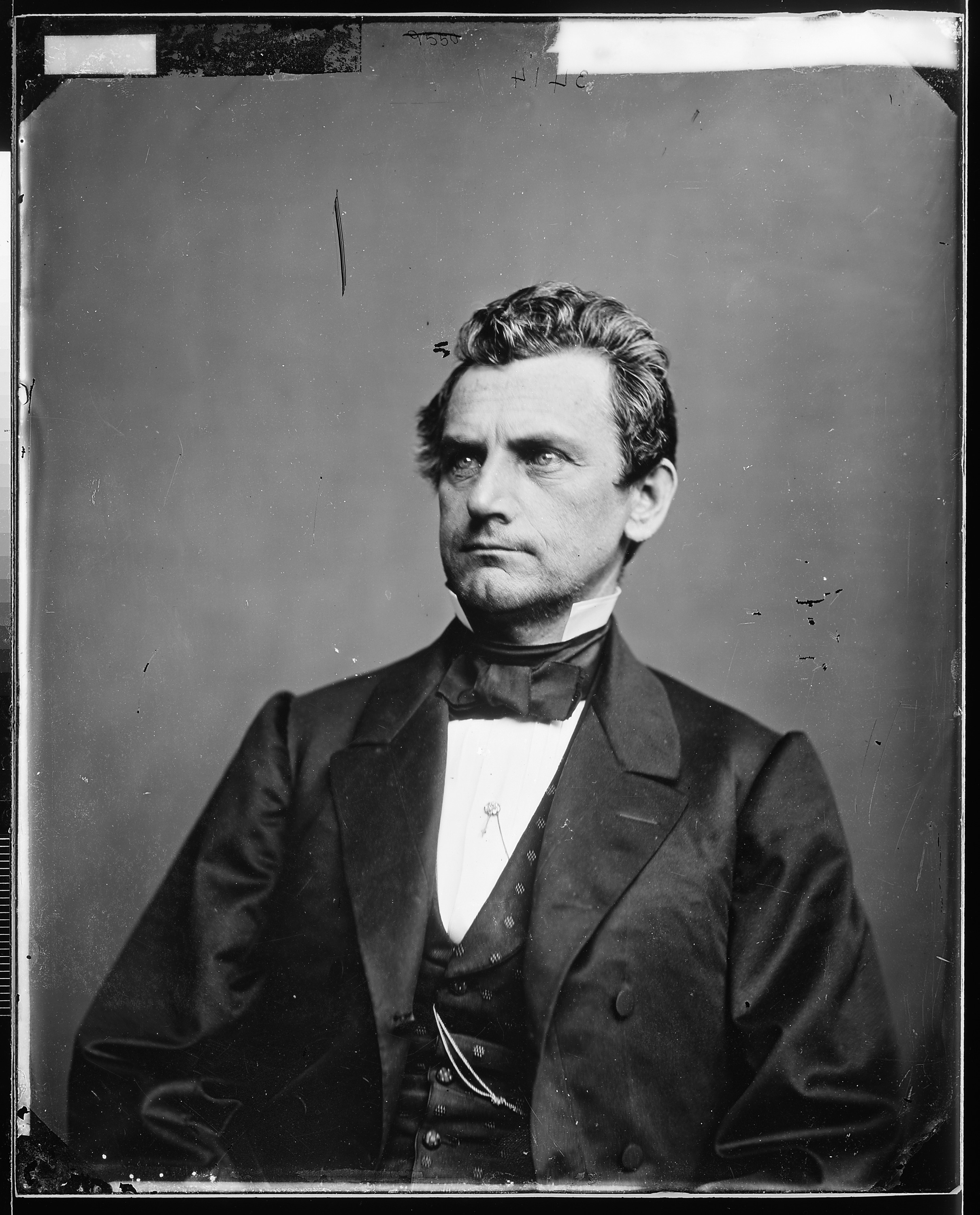
Historical · U.S. House · Delaware · At-Large
George Fisher
Former U.S. Representative · Delaware At-Large · 1861–1863 · Unionist
George Fisher represented Delaware's At-Large in the United States House of Representatives (1861–1863) for the Unionist party. The page below collects sourced biographical facts, term history, committee roles, and provenance for Fisher.
Bioguide ID: F000147
Key facts
- Full name
- George Fisher
- State
- Delaware
- District
- At-Large
- Party
- Unionist
- House service
- 1861–1863
- First House term
- 1861
- Status
- Left office
- Current term ends
- —
- Born
- 1817
- Bioguide ID
- F000147
- Committee assignments
- —
- Dataset version
- 1.20260606
Biographical narrative
891 words · sourced from the Wikipedia REST extract
George Fisher was a notable figure in 19th-century American politics, serving as a U.S. Representative from Delaware during the Civil War era. A member of the Unionist Party, he held office in the House of Representatives from 1861 to 1863. In addition to his congressional service, Fisher had a diverse career in law and public service, including roles as Attorney General of Delaware and as an Associate Justice of the Supreme Court of the District of Columbia. His contributions to both state and federal governance reflect a commitment to public service during a tumultuous period in American history.
Early life and career
George Fisher was born on October 13, 1817, in Milford, Sussex County, Delaware. He received his early education in the public schools of Kent County before attending Mount St. Mary's College in Maryland. He later graduated from Dickinson College in Carlisle, Pennsylvania, in July 1838. Following his graduation, Fisher pursued a legal career, reading law under the mentorship of John M. Clayton, who was then the Chief Justice of the Delaware Supreme Court. He was admitted to the bar in 1841 and began his private law practice in Dover, Delaware, that same year.
Fisher's involvement in public service began shortly after he entered the legal profession. In 1843, he served as clerk for the Delaware Senate, and the following year, he was elected to the Delaware House of Representatives, where he served in 1844. His political career continued to advance when he was appointed Secretary of State of Delaware by Governor Joseph Maull, serving from 1846 to 1847. During this time, he also held the position of Aide-de-camp to Major General Nathaniel Young, the Commander of the Delaware Militia, starting in 1846.
In addition to his state-level roles, Fisher gained experience in federal government. He worked as a confidential clerk to U.S. Secretary of State John M. Clayton from 1849 to 1850, during which he played a role in negotiating the Clayton-Bulwer Treaty with Great Britain. Fisher was also appointed as a Commissioner to settle claims of U.S. citizens against Brazil from 1850 to 1852. His federal service continued as he became the private secretary to President Millard Fillmore in 1852. After returning to Delaware, Fisher served as Attorney General from 1855 to 1860, further solidifying his legal and political credentials.
House tenure
Fisher's congressional career began when he was elected as a Unionist from Delaware's at-large congressional district to the 37th United States Congress. His term in the House of Representatives lasted from March 4, 1861, until March 3, 1863. During his time in Congress, Fisher was involved in legislative discussions and decisions that were critical to the nation, particularly in the context of the Civil War.
One of the significant issues Fisher supported during his congressional tenure was President Abraham Lincoln's proposal for compensated emancipation. This initiative aimed to provide financial compensation to slave owners in exchange for the emancipation of enslaved individuals. However, Fisher faced challenges in garnering support for this proposal within the Delaware General Assembly, as he was unable to find a legislator willing to introduce the measure.
Fisher's time in Congress was marked by the broader national conflict of the Civil War, which influenced many legislative priorities and debates. Despite his efforts and involvement, Fisher was not successful in his bid for reelection in 1862 to the 38th United States Congress, concluding his congressional service in 1863. Following his departure from the House, he took on a military role, serving as a Colonel in the First Delaware Cavalry during the same year.
Legislative focus and committees
During his brief tenure in the House of Representatives, Fisher's legislative focus was shaped by the pressing issues of the time, particularly the Civil War and its implications for the nation. His support for compensated emancipation highlighted his engagement with the critical social and political debates surrounding slavery and civil rights. Although he was unable to advance this particular initiative, his advocacy reflected the complexities of political alignment in a border state like Delaware, which had divided sentiments regarding slavery.
Fisher's congressional service occurred during a period of significant transformation in American society and governance. His involvement in the Unionist Party aligned him with efforts to preserve the Union and address the challenges posed by the war. The Unionist Party, which emerged in response to the sectional tensions of the time, sought to unite individuals who were committed to maintaining the integrity of the United States.
After leaving Congress, Fisher transitioned to a judicial role when he was nominated by President Abraham Lincoln to the Supreme Court of the District of Columbia in 1863. This appointment marked a significant shift in his career from legislative to judicial responsibilities. Fisher's legal expertise and experience in public service positioned him well for this role, where he would continue to influence American law and governance.
In summary, George Fisher's career encompassed a range of public service roles, including his time as a U.S. Representative, Attorney General, and Associate Justice. His legislative focus during his congressional tenure reflected the tumultuous political landscape of the Civil War era, and his subsequent judicial service allowed him to continue contributing to the legal framework of the nation. Fisher's legacy is characterized by his commitment to public service and his involvement in pivotal historical events that shaped the course of American history.
Notable legislation
Sponsored and co-sponsored legislation for George Fisher is pending operator curation. The biographical narrative above carries the same provenance trail until per-bill rows are written.
Sources
- [1]https://en.wikipedia.org/wiki/George_P._FisherWikipedia · retrieved 2026-06-06
Notable quotes
Sourced quotes for George Fisher are pending operator curation. Narrative-scope provenance remains attached below.
Sources
- [1]https://en.wikipedia.org/wiki/George_P._FisherWikipedia · retrieved 2026-06-06
Key positions
Curated policy positions for George Fisher are pending operator review. The biographical narrative above carries the same provenance trail until per-topic positions are written.
Sources
- [1]https://en.wikipedia.org/wiki/George_P._FisherWikipedia · retrieved 2026-06-06
Terms served
- 1861–1863U.S. House · Term 1 · Unionist
Sources & provenance
Every attributable claim above carries a per-section [N] marker that resolves to the corresponding URL below. Each entry records the upstream provider, the canonical URL, and the timestamp at which the source was retrieved by the ingest pipeline.
Key facts
- https://bioguide.congress.gov/search/bio/F000147bioguide · retrieved 2026-06-06
- https://www.govtrack.us/congress/members/404102govtrack · retrieved 2026-06-06
Biographical narrative
- https://en.wikipedia.org/wiki/George_P._Fisherwikipedia · retrieved 2026-06-06
Find your representative
Every U.S. state elects representatives by district. Browse Delaware’s delegation, the full former-representative roster, or explore the role and term length.
Related on The Candidate
- Preceded by William WhiteleyEarlier holder of the Delaware At-Large House seat · Democratic.Open
- Succeeded by Nathaniel SmithersLater holder of the Delaware At-Large House seat · Unconditional Unionist.Open
- Albert PolkFormer U.S. Representative · Delaware At-Large · DemocraticOpen
- Benjamin BiggsFormer U.S. Representative · Delaware At-Large · DemocraticOpen
- Caleb LaytonFormer U.S. Representative · Delaware At-Large · RepublicanOpen
- Charles LoreFormer U.S. Representative · Delaware At-Large · DemocraticOpen