
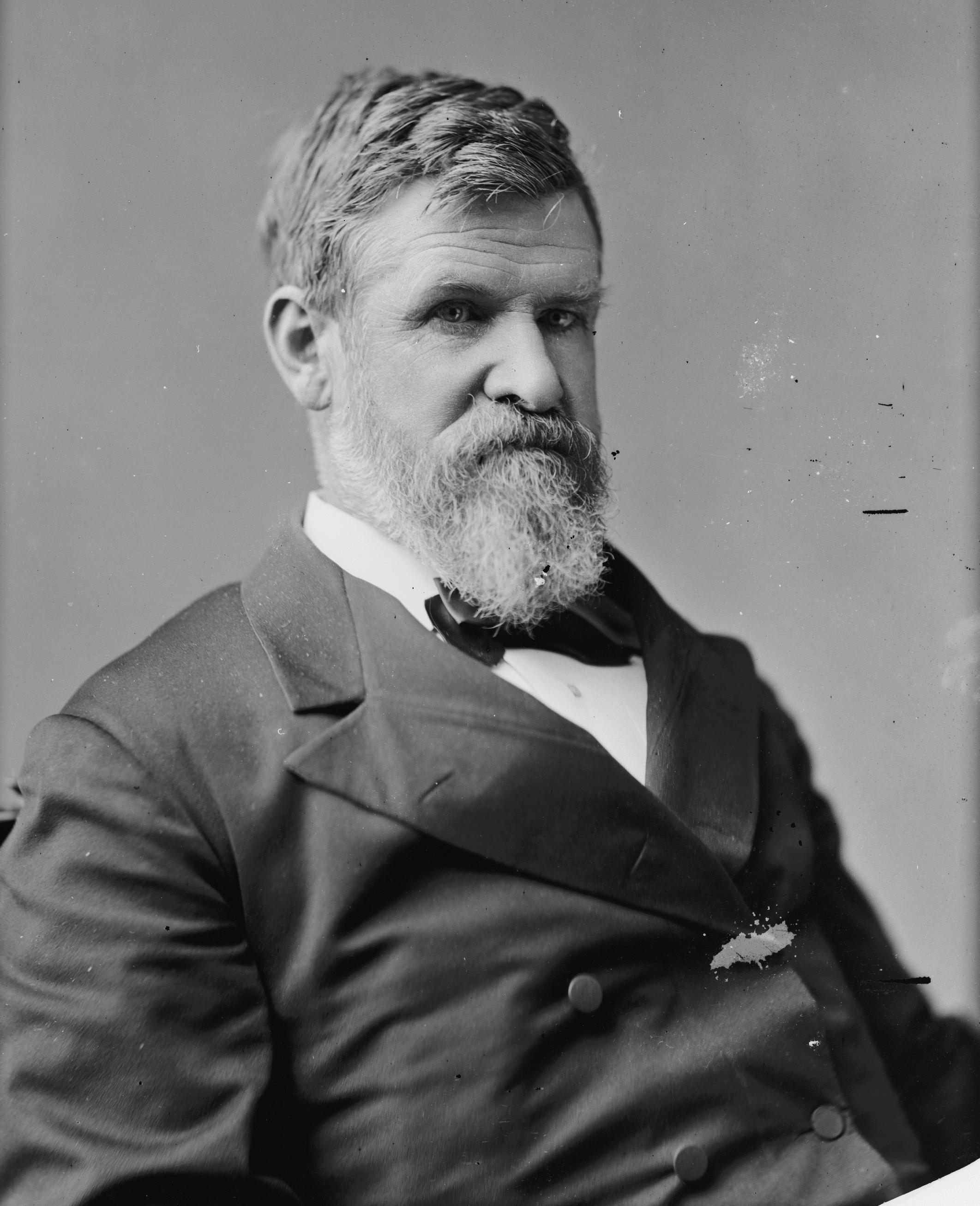
Historical · U.S. House · Delaware · At-Large
James Williams
Former U.S. Representative · Delaware At-Large · 1875–1879 · Democratic
James Williams represented Delaware's At-Large in the United States House of Representatives (1875–1879) for the Democratic party. The page below collects sourced biographical facts, term history, committee roles, and provenance for Williams.
Bioguide ID: W000506
Key facts
- Full name
- James Williams
- State
- Delaware
- District
- At-Large
- Party
- Democratic
- House service
- 1875–1879
- First House term
- 1875
- Status
- Left office
- Current term ends
- —
- Born
- 1825
- Bioguide ID
- W000506
- Committee assignments
- —
- Dataset version
- 1.20260606
Biographical narrative
1,034 words · sourced from the Wikipedia REST extract
James Williams was an American farmer and politician who served as a U.S. Representative for Delaware's at-large congressional district. A member of the Democratic Party, Williams' political career included significant roles in both the Delaware General Assembly and the U.S. House of Representatives. He was born on August 4, 1825, in Philadelphia, Pennsylvania, and his life spanned a period of considerable change in American society and politics. His tenure in the House of Representatives lasted from 1875 until 1879, during which he served under Presidents Ulysses S. Grant and Rutherford B. Hayes. After concluding his congressional service, Williams returned to his agricultural roots, expanding his farming operations and engaging in fertilizer manufacturing until his death on April 12, 1899.
Early life and career
James Williams was born to John and Esther Williams in Philadelphia. His father was a lumber merchant, which provided the family with a stable economic foundation. Williams received his early education through private tutoring, which was common for children of his social standing during the early 19th century. Initially, he pursued a career in carpentry, aspiring to become an architect. This early vocational training likely instilled in him a practical understanding of construction and design, skills that would be beneficial in his later political career.
In 1848, a significant change occurred when his father purchased a large estate in Kent County, Delaware. This acquisition prompted the family to relocate, and young Williams transitioned from urban life in Philadelphia to rural life in Kenton, Delaware. There, he took on the responsibilities of managing the estate and began farming, a profession that would remain central to his identity throughout his life. The move to Delaware marked the beginning of Williams' deep connection to the land and agricultural practices, which would later influence his political perspectives and priorities.
Williams' involvement in politics began as he became active within the Democratic Party. His early political career included service in the Delaware House of Representatives, where he held office during several sessions, including 1857/1858 and 1863/1864. His political engagement during this time laid the groundwork for his future roles in state and national politics. His experience in the Delaware General Assembly provided him with insights into the legislative process and the needs of his constituents.
In addition to his legislative work, Williams was a delegate to the Democratic National Convention in 1872, where he supported the nomination of Horace Greeley for the presidency. This involvement in national politics further solidified his standing within the Democratic Party and expanded his network of political connections.
House tenure
Williams was elected to the United States House of Representatives in 1875, representing Delaware's at-large congressional district. His election marked a significant achievement, as he became the only member of Congress from Delaware during his two terms in office. He served in the 44th and 45th Congresses, which were characterized by a range of national issues, including Reconstruction, economic development, and the evolving role of the federal government in American life.
During his tenure in the House, Williams was part of a legislative body that was navigating the complexities of post-Civil War America. The period was marked by significant political and social challenges, including the integration of formerly enslaved individuals into society and the economic recovery of the Southern states. Williams' role in Congress involved addressing these pressing issues, as well as advocating for the interests of his constituents in Delaware.
Williams' congressional service coincided with the presidencies of Ulysses S. Grant and Rutherford B. Hayes, both of whom faced their own challenges in governance. Grant's administration was marked by efforts to enforce civil rights for African Americans, while Hayes focused on reconciliation following the Civil War. Williams' participation in these discussions and legislative efforts reflected the broader national dialogue about civil rights, economic policy, and the role of government in American life.
After serving two terms in the House, Williams concluded his congressional career on March 3, 1879. His departure from Congress marked the end of a significant chapter in his political life, but it did not signify a retreat from public service. Instead, he returned to his agricultural pursuits, where he continued to influence his community through his work as a farmer and business owner.
Legislative focus and committees
Throughout his time in the House of Representatives, Williams was involved in various legislative initiatives that reflected his background as a farmer and his commitment to the agricultural community. While specific details about the bills he sponsored or supported are not provided, it can be inferred that his experiences as a farmer would have informed his legislative priorities, particularly in areas related to agriculture, land use, and rural development.
Williams' dual role as a farmer and politician allowed him to bring a unique perspective to the legislative process. He understood the challenges faced by agricultural producers and the importance of policies that supported rural economies. His advocacy for agricultural interests likely included efforts to secure funding for infrastructure improvements, such as roads and transportation systems, which were essential for the movement of goods and services in rural areas.
In addition to his focus on agriculture, Williams' legislative work would have involved collaboration with other members of Congress on various committees. While specific committee assignments are not detailed, it is common for representatives to serve on committees that align with their interests and expertise. Williams' background in farming and his political experience would have positioned him to contribute meaningfully to discussions on economic policy, land management, and rural affairs.
After leaving Congress, Williams continued to engage in agricultural pursuits, expanding his farm holdings in Delaware and Maryland. He also ventured into fertilizer manufacturing, indicating a continued commitment to the agricultural sector. His business endeavors allowed him to remain connected to the farming community and contribute to the local economy.
James Williams passed away on April 12, 1899, in Smyrna, Delaware. He was laid to rest at St. Peter's Episcopal Church Cemetery, leaving behind a legacy of public service and dedication to his community. His life and career reflect the intertwining of agriculture and politics during a transformative period in American history, highlighting the important role that individuals like Williams played in shaping the legislative landscape of their time.
Notable legislation
Sponsored and co-sponsored legislation for James Williams is pending operator curation. The biographical narrative above carries the same provenance trail until per-bill rows are written.
Sources
- [1]https://en.wikipedia.org/wiki/James_Williams_(Delaware_politician)Wikipedia · retrieved 2026-06-06
Notable quotes
Sourced quotes for James Williams are pending operator curation. Narrative-scope provenance remains attached below.
Sources
- [1]https://en.wikipedia.org/wiki/James_Williams_(Delaware_politician)Wikipedia · retrieved 2026-06-06
Key positions
Curated policy positions for James Williams are pending operator review. The biographical narrative above carries the same provenance trail until per-topic positions are written.
Sources
- [1]https://en.wikipedia.org/wiki/James_Williams_(Delaware_politician)Wikipedia · retrieved 2026-06-06
Terms served
- 1875–1877U.S. House · Term 1 · Democratic
- 1877–1879U.S. House · Term 2 · Democratic
Sources & provenance
Every attributable claim above carries a per-section [N] marker that resolves to the corresponding URL below. Each entry records the upstream provider, the canonical URL, and the timestamp at which the source was retrieved by the ingest pipeline.
Key facts
- https://bioguide.congress.gov/search/bio/W000506bioguide · retrieved 2026-06-06
- https://www.govtrack.us/congress/members/411663govtrack · retrieved 2026-06-06
Biographical narrative
- https://en.wikipedia.org/wiki/James_Williams_(Delaware_politician)wikipedia · retrieved 2026-06-06
Find your representative
Every U.S. state elects representatives by district. Browse Delaware’s delegation, the full former-representative roster, or explore the role and term length.
Related on The Candidate
- Preceded by James LoflandEarlier holder of the Delaware At-Large House seat · Republican.Open
- Succeeded by Edward MartinLater holder of the Delaware At-Large House seat · Democratic.Open
- Albert PolkFormer U.S. Representative · Delaware At-Large · DemocraticOpen
- Benjamin BiggsFormer U.S. Representative · Delaware At-Large · DemocraticOpen
- Caleb LaytonFormer U.S. Representative · Delaware At-Large · RepublicanOpen
- Charles LoreFormer U.S. Representative · Delaware At-Large · DemocraticOpen