
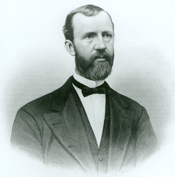
Historical · U.S. House · Delaware · At-Large
John Nicholson
Former U.S. Representative · Delaware At-Large · 1865–1869 · Democratic
John Nicholson represented Delaware's At-Large in the United States House of Representatives (1865–1869) for the Democratic party. The page below collects sourced biographical facts, term history, committee roles, and provenance for Nicholson.
Bioguide ID: N000099
Key facts
- Full name
- John Nicholson
- State
- Delaware
- District
- At-Large
- Party
- Democratic
- House service
- 1865–1869
- First House term
- 1865
- Status
- Left office
- Current term ends
- —
- Born
- 1827
- Bioguide ID
- N000099
- Committee assignments
- —
- Dataset version
- 1.20260606
Biographical narrative
847 words · sourced from the Wikipedia REST extract
John Nicholson was an American lawyer and politician who served as a U.S. Representative for Delaware during the post-Civil War era. A member of the Democratic Party, he held office in the House of Representatives from 1865 to 1869, representing the at-large congressional district of Delaware. Born in 1827, Nicholson's career spanned various roles in education, law, and military service, reflecting a commitment to public service in his home state.
Early life and career
John Nicholson was born on November 17, 1827, in Laurel, Delaware, to Jacob Cannon Nicholson and Susannah Fauntleroy Nicholson. His early education began in Laurel, where he laid the groundwork for his academic pursuits. He later completed his preparatory studies at a seminary in Nelson County, Virginia, which was likely affiliated with the Presbyterian Church. In 1847, he graduated from Dickinson College in Carlisle, Pennsylvania, an institution known for its rigorous academic standards and notable alumni.
Following his graduation, Nicholson entered into a marriage with Angelica Killeen Reed in August 1848. The couple had several children, one of whom was John Reed Nicholson, who would later serve as the Chancellor of Delaware from 1895 to 1909, continuing the family's legacy of public service.
Nicholson's professional journey began in the field of education, where he briefly served as the superintendent of the free schools in Kent County in 1851. This role allowed him to influence the educational landscape of his community. Concurrently, he pursued a legal career by studying law under Martin W. Bates in Dover. Nicholson was admitted to the Delaware Bar in 1850, which enabled him to establish a law practice in Dover, further solidifying his professional reputation.
In addition to his legal career, Nicholson took on a significant role in the military as a brigadier general of militia in Kent County in 1861. This position underscored his commitment to his community and state during a tumultuous period in American history, particularly as the nation was embroiled in the Civil War.
House tenure
Nicholson's political career took a significant turn in 1864 when he successfully ran for a seat in the U.S. House of Representatives. He defeated Nathaniel B. Smithers, a candidate from the Republican and Ultimate Unionist parties, to secure his position as a Democratic representative. Nicholson was elected to the 39th Congress, beginning his term on March 4, 1865. He served a total of two terms in the House, concluding his service on March 3, 1869.
During his first term, Nicholson was appointed to the Committee of Elections, where he participated in discussions and decisions regarding electoral processes and the integrity of elections. His involvement in this committee reflected the importance of electoral integrity during the Reconstruction era, a time when the nation was working to rebuild and redefine its democratic institutions following the Civil War.
In his second term, Nicholson served on the Appropriations Committee, which played a crucial role in determining federal spending and budget allocations. This position allowed him to influence financial decisions that would impact various sectors, including infrastructure, education, and social services, during a critical period of national recovery.
Despite his contributions to Congress, Nicholson chose not to seek renomination in 1868. After completing his two terms, he returned to his law practice in Dover, where he continued to engage with the legal community and serve his constituents in a different capacity.
Legislative focus and committees
Throughout his time in the House of Representatives, John Nicholson's legislative focus was shaped by the pressing issues of his era, particularly those related to the aftermath of the Civil War and the Reconstruction efforts. His participation in the Committee of Elections during his first term underscored his commitment to ensuring fair electoral practices, which were vital for restoring public trust in the democratic process following the conflict.
In his subsequent term on the Appropriations Committee, Nicholson's work would have involved deliberations on budgetary matters that affected various aspects of governance. The post-war period was marked by significant challenges, including the need for economic recovery, the integration of formerly enslaved individuals into society, and the rebuilding of infrastructure. Although specific legislative achievements during his tenure are not detailed, his roles on these committees indicate a focus on foundational issues that would shape the future of the nation.
After leaving Congress, Nicholson returned to his legal practice and continued to contribute to his community. He remained engaged in local affairs and was recognized for his contributions to the state of Delaware. His legacy includes not only his political service but also his family's continued involvement in public service, as evidenced by his son's role as Chancellor of Delaware.
John Nicholson passed away on November 4, 1906, in Dover, where he was laid to rest in the Old Presbyterian Cemetery, located on the grounds of the Delaware State Museum. His home, known as Wheel of Fortune, was added to the National Register of Historic Places in 1973, serving as a testament to his life and contributions to the state. Through his various roles in education, law, and politics, Nicholson left an enduring mark on Delaware's history and governance.
Notable legislation
Sponsored and co-sponsored legislation for John Nicholson is pending operator curation. The biographical narrative above carries the same provenance trail until per-bill rows are written.
Sources
- [1]https://en.wikipedia.org/wiki/John_A._NicholsonWikipedia · retrieved 2026-06-06
Notable quotes
Sourced quotes for John Nicholson are pending operator curation. Narrative-scope provenance remains attached below.
Sources
- [1]https://en.wikipedia.org/wiki/John_A._NicholsonWikipedia · retrieved 2026-06-06
Key positions
Curated policy positions for John Nicholson are pending operator review. The biographical narrative above carries the same provenance trail until per-topic positions are written.
Sources
- [1]https://en.wikipedia.org/wiki/John_A._NicholsonWikipedia · retrieved 2026-06-06
Terms served
- 1865–1867U.S. House · Term 1 · Democratic
- 1867–1869U.S. House · Term 2 · Democratic
Sources & provenance
Every attributable claim above carries a per-section [N] marker that resolves to the corresponding URL below. Each entry records the upstream provider, the canonical URL, and the timestamp at which the source was retrieved by the ingest pipeline.
Key facts
- https://bioguide.congress.gov/search/bio/N000099bioguide · retrieved 2026-06-06
- https://www.govtrack.us/congress/members/408184govtrack · retrieved 2026-06-06
Biographical narrative
- https://en.wikipedia.org/wiki/John_A._Nicholsonwikipedia · retrieved 2026-06-06
Find your representative
Every U.S. state elects representatives by district. Browse Delaware’s delegation, the full former-representative roster, or explore the role and term length.
Related on The Candidate
- Preceded by Nathaniel SmithersEarlier holder of the Delaware At-Large House seat · Unconditional Unionist.Open
- Succeeded by Benjamin BiggsLater holder of the Delaware At-Large House seat · Democratic.Open
- Albert PolkFormer U.S. Representative · Delaware At-Large · DemocraticOpen
- Caleb LaytonFormer U.S. Representative · Delaware At-Large · RepublicanOpen
- Charles LoreFormer U.S. Representative · Delaware At-Large · DemocraticOpen
- Democratic PartyFederal candidates and office holders on the Democratic line.Open