
Historical · U.S. House · Delaware · At-Large
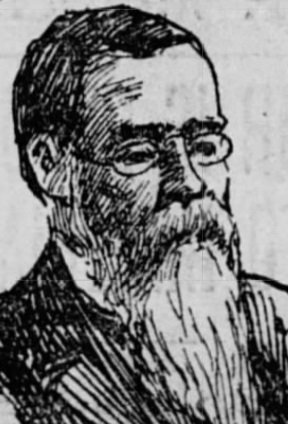
John Penington
Former U.S. Representative · Delaware At-Large · 1887–1891 · Democratic
John Penington represented Delaware's At-Large in the United States House of Representatives (1887–1891) for the Democratic party. The page below collects sourced biographical facts, term history, committee roles, and provenance for Penington.
Bioguide ID: P000209
Key facts
- Full name
- John Penington
- State
- Delaware
- District
- At-Large
- Party
- Democratic
- House service
- 1887–1891
- First House term
- 1887
- Status
- Left office
- Current term ends
- —
- Born
- 1825
- Bioguide ID
- P000209
- Committee assignments
- —
- Dataset version
- 1.20260606
Biographical narrative
988 words · sourced from the Wikipedia REST extract
John Penington was an American lawyer and politician who served as a U.S. Representative for Delaware's at-large congressional district. A member of the Democratic Party, Penington's political career included two terms in the U.S. House of Representatives, as well as significant roles in state government, including serving as Attorney General of Delaware. His life spanned from December 20, 1825, until June 1, 1902, during which he made notable contributions to both the legal and political landscapes of Delaware. Penington's legacy is marked by his involvement in various political roles and the tragic events that affected his family later in his life.
Early life and career
John Penington was born near New Castle, Delaware, on December 20, 1825. He pursued his early education in New Castle and the nearby town of Newark, where he engaged in academic studies that would later serve as a foundation for his career. Penington graduated from Jefferson College, located in Canonsburg, Pennsylvania, which was known for its rigorous academic programs. Following his graduation, he initially ventured into the field of education, teaching in Indiana for several years. This experience in education likely contributed to his understanding of public service and community engagement.
After his time in Indiana, Penington returned to Delaware, where he shifted his focus to the study of law. He was admitted to the Delaware Bar in 1857, marking the beginning of his legal career in Dover, Delaware. His legal practice would later provide him with the expertise and connections necessary for his political endeavors. Penington's early involvement in politics began shortly after he established his law practice. He became a member of the Delaware House of Representatives in 1857, demonstrating his commitment to public service and his interest in legislative processes.
Penington's political career continued to evolve as he took on various roles within the Delaware House of Representatives. He served as the clerk of the House in multiple sessions, specifically in 1859, 1863, and 1871. These positions allowed him to gain further insights into legislative operations and the workings of state government. His political engagement extended to the national level when he was selected as a delegate to the Democratic National Conventions held in Charleston and Baltimore during the 1860 election. This experience provided him with a broader perspective on national issues and party dynamics.
In 1868, Penington was appointed as the United States Attorney for the district of Delaware by President Andrew Johnson, a role he held until 1872. This appointment marked a significant step in his legal career, as it placed him in a prominent position within the federal legal system. Following his tenure as U.S. Attorney, he was appointed Delaware Attorney General by Governor Ponder in 1874, serving in that capacity until 1879. These roles solidified Penington's reputation as a capable and respected legal professional within the state.
House tenure
Penington's congressional career began when he was elected as a Democrat to the 50th Congress, which commenced on March 4, 1887. He served in the U.S. House of Representatives until March 3, 1891, completing two full terms. His election to Congress was part of a broader Democratic resurgence during this period, as the party sought to regain influence in the wake of the Civil War and Reconstruction. Penington's role as a U.S. Representative allowed him to contribute to national discussions and legislative initiatives that were relevant to his constituents in Delaware.
During his time in the House, Penington was involved in various legislative matters, although specific details regarding the bills he supported or opposed are not documented in the provided information. His tenure coincided with a period of significant political and social change in the United States, including issues related to industrialization, labor rights, and economic policy. As a representative from Delaware, Penington would have been expected to advocate for the interests of his state while navigating the complexities of national legislation.
Penington chose not to seek renomination in 1890, concluding his congressional career after two terms. Following his departure from the House, he returned to his legal practice in Dover, where he continued to apply his legal expertise and engage with the community. His decision to step away from politics after two terms reflects a common practice among politicians who seek to balance public service with personal and professional commitments.
Legislative focus and committees
While specific details regarding Penington's legislative focus and committee assignments during his time in the House are not provided, it is reasonable to infer that, as a member of the Democratic Party, he would have aligned with the party's platform and priorities of the time. The late 19th century was characterized by various pressing issues, including economic regulation, labor rights, and civil rights, which were often central to Democratic Party discussions.
Penington's legal background likely influenced his approach to legislative matters, as he would have been equipped with a strong understanding of legal principles and the implications of proposed laws. His experience as a U.S. Attorney and Attorney General would have provided him with insights into the legal system and the importance of effective governance. As a representative, he would have had the opportunity to engage with colleagues on both sides of the aisle, contributing to debates and discussions that shaped the legislative landscape.
In summary, John Penington's career as a U.S. Representative was marked by his commitment to public service and his legal expertise. His tenure in the House of Representatives, while relatively brief, was part of a broader narrative of political engagement in Delaware and the nation during a transformative period in American history. Penington's legacy is further complicated by the personal tragedies he faced later in life, particularly the loss of his daughters, which underscored the challenges he encountered beyond his public service. Penington passed away on June 1, 1902, in Dover, Delaware, where he is buried in the Old Presbyterian Cemetery, leaving behind a complex legacy intertwined with both his professional achievements and personal hardships.
Notable legislation
Sponsored and co-sponsored legislation for John Penington is pending operator curation. The biographical narrative above carries the same provenance trail until per-bill rows are written.
Sources
- [1]https://en.wikipedia.org/wiki/John_B._PeningtonWikipedia · retrieved 2026-06-06
Notable quotes
Sourced quotes for John Penington are pending operator curation. Narrative-scope provenance remains attached below.
Sources
- [1]https://en.wikipedia.org/wiki/John_B._PeningtonWikipedia · retrieved 2026-06-06
Key positions
Curated policy positions for John Penington are pending operator review. The biographical narrative above carries the same provenance trail until per-topic positions are written.
Sources
- [1]https://en.wikipedia.org/wiki/John_B._PeningtonWikipedia · retrieved 2026-06-06
Terms served
- 1887–1889U.S. House · Term 1 · Democratic
- 1889–1891U.S. House · Term 2 · Democratic
Sources & provenance
Every attributable claim above carries a per-section [N] marker that resolves to the corresponding URL below. Each entry records the upstream provider, the canonical URL, and the timestamp at which the source was retrieved by the ingest pipeline.
Key facts
- https://bioguide.congress.gov/search/bio/P000209bioguide · retrieved 2026-06-06
- https://www.govtrack.us/congress/members/408612govtrack · retrieved 2026-06-06
Biographical narrative
- https://en.wikipedia.org/wiki/John_B._Peningtonwikipedia · retrieved 2026-06-06
Find your representative
Every U.S. state elects representatives by district. Browse Delaware’s delegation, the full former-representative roster, or explore the role and term length.
Related on The Candidate
- Preceded by Charles LoreEarlier holder of the Delaware At-Large House seat · Democratic.Open
- Succeeded by John CauseyLater holder of the Delaware At-Large House seat · Democratic.Open
- Albert PolkFormer U.S. Representative · Delaware At-Large · DemocraticOpen
- Benjamin BiggsFormer U.S. Representative · Delaware At-Large · DemocraticOpen
- Caleb LaytonFormer U.S. Representative · Delaware At-Large · RepublicanOpen
- Democratic PartyFederal candidates and office holders on the Democratic line.Open