
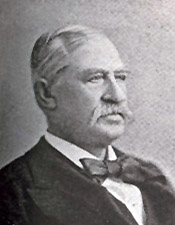
Historical · U.S. House · Delaware · At-Large
Jonathan Willis
Former U.S. Representative · Delaware At-Large · 1895–1897 · Republican
Jonathan Willis represented Delaware's At-Large in the United States House of Representatives (1895–1897) for the Republican party. The page below collects sourced biographical facts, term history, committee roles, and provenance for Willis.
Bioguide ID: W000562
Key facts
- Full name
- Jonathan Willis
- State
- Delaware
- District
- At-Large
- Party
- Republican
- House service
- 1895–1897
- First House term
- 1895
- Status
- Left office
- Current term ends
- —
- Born
- 1830
- Bioguide ID
- W000562
- Committee assignments
- —
- Dataset version
- 1.20260606
Biographical narrative
911 words · sourced from the Wikipedia REST extract
Jonathan Willis was an American politician who served as a U.S. Representative for Delaware's at-large congressional district. A member of the Republican Party, he held office during the 54th Congress from 1895 to 1897. Born in Maryland in 1830, Willis had a diverse career that included teaching, ministry, and agriculture. His political career was marked by a brief tenure in the House of Representatives, after which he returned to his agricultural pursuits until his death in 1903.
Early life and career
Jonathan Willis was born on April 5, 1830, in Oxford, Maryland. His early education took place in local district schools, supplemented by private tutoring, which provided him with a solid foundation for his future endeavors. The educational background he received likely influenced his later career as a teacher. For seven years, Willis taught school, imparting knowledge and skills to students before transitioning into a different vocation.
Following his teaching career, Willis entered the ministry of the Methodist Episcopal Church. This role took him to various locations, including Maryland, Delaware, Philadelphia, New York City, and Stamford, Connecticut. His work in the ministry would have involved not only preaching but also community engagement and leadership within the church. Willis served in this capacity until 1884, when he decided to retire from the ministry. After retiring, he settled on a farm near Milford, Delaware, where he engaged in fruit growing. This shift from ministry to agriculture reflects a significant change in his professional life, indicating his adaptability and willingness to embrace new challenges.
In his personal life, Willis was married twice. His first marriage was to Annie Barratt Townsend, with whom he had one daughter, Elizabeth Townsend Willis. After Annie's passing in 1885, he married Edith Gillespie in 1886. Together, they had a son, Jonathan Spencer Willis Jr. This family life, marked by both joy and loss, likely influenced his perspectives and priorities throughout his life.
House tenure
Willis's political career began in earnest when he sought election to the United States Congress. He initially ran as a Republican candidate for the 53rd Congress in 1892 but was unsuccessful in that bid. However, he persevered and was elected to the 54th Congress, serving from March 4, 1895, to March 3, 1897. His election to the House of Representatives marked a significant achievement in his political journey, as he transitioned from local and state-level engagements to a national platform.
During his time in Congress, Willis was part of a larger Republican majority that was shaping the legislative agenda of the time. The 54th Congress was characterized by various issues, including economic policies, civil service reform, and debates over tariffs. However, specific details regarding Willis's contributions or positions on particular legislation during his tenure are not documented in the available records. His time in office was relatively brief, and he faced challenges in securing re-election. In 1896, he ran for a second term in the 55th Congress but was unsuccessful. Following this defeat, he returned to his agricultural pursuits, focusing on fruit growing and other farming activities.
Willis's congressional career, while short-lived, reflects the political dynamics of the late 19th century in the United States, a period marked by significant change and development. His experience as a farmer and educator may have informed his views on agricultural policies and education, although specific legislative actions or initiatives he championed are not detailed in the records.
Legislative focus and committees
While specific details regarding Jonathan Willis's legislative focus and committee assignments during his time in the House of Representatives are not extensively documented, it is reasonable to infer that his background in education and agriculture likely influenced his interests in legislative matters. As a former teacher and a farmer, he may have had a vested interest in issues related to education reform, agricultural policies, and rural development.
The late 19th century was a time of significant transformation in the United States, with rapid industrialization and urbanization affecting many aspects of life, including agriculture and education. Representatives like Willis, who had firsthand experience in these fields, may have been positioned to advocate for the needs and concerns of their constituents, particularly those in rural areas.
Despite the lack of specific records detailing his committee assignments or legislative initiatives, it is important to recognize the broader context in which he served. The Republican Party during this period was focused on issues such as economic growth, infrastructure development, and the promotion of American industry. Willis's experiences as a farmer and educator could have provided him with unique insights into the challenges faced by his constituents, particularly in Delaware, which had a significant agricultural sector.
After leaving Congress, Willis returned to his agricultural pursuits, indicating a continued commitment to the farming community and the rural lifestyle he had embraced. His decision to focus on fruit growing suggests an ongoing interest in agricultural practices and the economic viability of farming in Delaware.
Jonathan Willis passed away on November 24, 1903, in Milford, Delaware. He was laid to rest in Barratt's Chapel Cemetery, located near Frederica, Delaware. His legacy as a public servant and member of the Republican Party is remembered within the context of Delaware's political history. While his time in Congress was brief, it reflects the experiences and challenges of a man who navigated various roles throughout his life, from educator to minister to politician and farmer. His contributions, though not extensively documented, are part of the broader narrative of American political life in the late 19th century.
Notable legislation
Sponsored and co-sponsored legislation for Jonathan Willis is pending operator curation. The biographical narrative above carries the same provenance trail until per-bill rows are written.
Sources
- [1]https://en.wikipedia.org/wiki/Jonathan_S._WillisWikipedia · retrieved 2026-06-06
Notable quotes
Sourced quotes for Jonathan Willis are pending operator curation. Narrative-scope provenance remains attached below.
Sources
- [1]https://en.wikipedia.org/wiki/Jonathan_S._WillisWikipedia · retrieved 2026-06-06
Key positions
Curated policy positions for Jonathan Willis are pending operator review. The biographical narrative above carries the same provenance trail until per-topic positions are written.
Sources
- [1]https://en.wikipedia.org/wiki/Jonathan_S._WillisWikipedia · retrieved 2026-06-06
Terms served
- 1895–1897U.S. House · Term 1 · Republican
Sources & provenance
Every attributable claim above carries a per-section [N] marker that resolves to the corresponding URL below. Each entry records the upstream provider, the canonical URL, and the timestamp at which the source was retrieved by the ingest pipeline.
Key facts
- https://bioguide.congress.gov/search/bio/W000562bioguide · retrieved 2026-06-06
- https://www.govtrack.us/congress/members/411718govtrack · retrieved 2026-06-06
Biographical narrative
- https://en.wikipedia.org/wiki/Jonathan_S._Williswikipedia · retrieved 2026-06-06
Find your representative
Every U.S. state elects representatives by district. Browse Delaware’s delegation, the full former-representative roster, or explore the role and term length.
Related on The Candidate
- Preceded by John CauseyEarlier holder of the Delaware At-Large House seat · Democratic.Open
- Succeeded by Levin HandyLater holder of the Delaware At-Large House seat · Democratic.Open
- Albert PolkFormer U.S. Representative · Delaware At-Large · DemocraticOpen
- Benjamin BiggsFormer U.S. Representative · Delaware At-Large · DemocraticOpen
- Caleb LaytonFormer U.S. Representative · Delaware At-Large · RepublicanOpen
- Charles LoreFormer U.S. Representative · Delaware At-Large · DemocraticOpen