
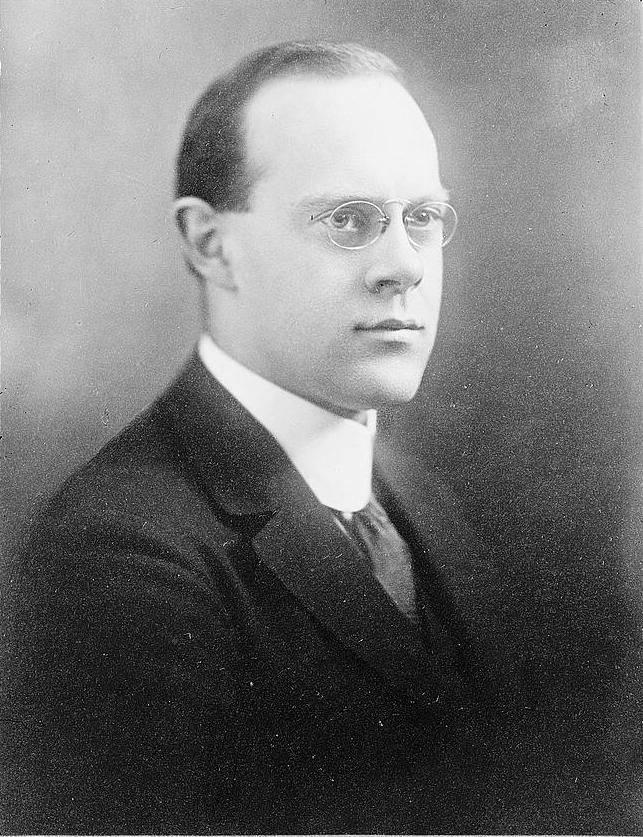
Historical · U.S. House · Delaware · At-Large
Thomas Miller
Former U.S. Representative · Delaware At-Large · 1915–1917 · Republican
Thomas Miller represented Delaware's At-Large in the United States House of Representatives (1915–1917) for the Republican party. The page below collects sourced biographical facts, term history, committee roles, and provenance for Miller.
Bioguide ID: M000758
Key facts
- Full name
- Thomas Miller
- State
- Delaware
- District
- At-Large
- Party
- Republican
- House service
- 1915–1917
- First House term
- 1915
- Status
- Left office
- Current term ends
- —
- Born
- 1886
- Bioguide ID
- M000758
- Committee assignments
- —
- Dataset version
- 1.20260606
Biographical narrative
1,043 words · sourced from the Wikipedia REST extract
Thomas Miller was an American politician who served as a Republican U.S. Representative for Delaware's at-large congressional district from 1915 to 1917. Born into a politically active family, he had a diverse career that spanned military service, state governance, and involvement in veterans' affairs. Miller's political journey was marked by both achievements and challenges, including a notable conviction that impacted his later life. He is remembered for his contributions to public service and his role in the American Legion.
Early life and career
Thomas Woodnutt Miller was born on June 26, 1886, in Wilmington, Delaware. He was the son of Charles R. Miller, who served as the Governor of Delaware, and Abigail Morgan (Woodnutt) Miller. Growing up in a politically engaged family, Miller was exposed to the workings of government and public service from an early age. He attended the Hotchkiss School, a prestigious preparatory institution, before enrolling at Yale University, where he graduated in 1908. Following his graduation, Miller began his professional career as a steel roller at the Bethlehem Steel Company, where he worked for a brief period in 1908 and 1909.
Miller's early career also included a significant role in politics. From 1910 to 1912, he served as secretary to U.S. Representative William H. Heald, which provided him with firsthand experience in legislative processes and the functioning of Congress. During this time, he pursued legal studies in Washington, D.C., further preparing himself for a future in public service. In 1913, he was appointed by his father to serve as Delaware's Secretary of State, a position he held until 1915. This role allowed him to gain valuable experience in state governance and public administration, setting the stage for his subsequent election to the U.S. House of Representatives.
House tenure
In 1914, Miller entered the political arena on a larger scale by running for the United States House of Representatives. He successfully defeated the incumbent Democratic U.S. Representative Franklin Brockson, marking the beginning of his congressional career. Miller took office on March 4, 1915, as a member of the Republican minority in the 64th Congress. His tenure in the House was relatively brief, lasting until March 3, 1917. During this period, he participated in legislative discussions and contributed to the Republican agenda, although specific details of his legislative initiatives are not extensively documented.
Miller sought re-election in 1916 but faced a challenging political landscape. He was defeated by Democrat Albert F. Polk, a lawyer from Georgetown, which ended his time in Congress. His single term in the House was characterized by the complexities of a nation on the brink of entering World War I, as the political climate was heavily influenced by international events and domestic concerns.
Legislative focus and committees
Throughout his time in the House, Miller's legislative focus and committee assignments are not extensively detailed in available records. However, it is known that he served during a pivotal moment in American history, as the United States was on the verge of entering World War I. His experiences and connections likely influenced his perspectives on national defense and veterans' affairs, themes that would later become significant in his post-congressional career.
After his congressional tenure, Miller's life took a dramatic turn with the onset of World War I. In April 1917, as the United States entered the conflict, he enlisted in the Army as a private. He served with the Seventy-Ninth Division in France and participated in the Meuse–Argonne offensive, one of the largest battles in American military history. His service was recognized by General John J. Pershing, who cited him for "especially meritorious and conspicuous service." Miller's contributions during the war earned him the Purple Heart, and he was subsequently promoted to the rank of lieutenant colonel. He remained in military service until his discharge in September 1919.
Miller's post-war involvement in veterans' affairs was significant. He was a founding member of the American Legion and served as the National Legislative Committee chairman, advocating for the rights and benefits of veterans. His commitment to veterans' issues was further demonstrated through his role as Alien Property Custodian from 1921 to 1925 and as a member of the American Battle Monuments Commission from 1923 to 1926. Additionally, he held the position of president of FIDAC (The Interallied Federation of War Veterans Organisations) from 1924 to 1925, reflecting his ongoing dedication to supporting veterans and their families.
However, Miller's career faced a significant setback in 1927 when he was convicted on two counts of conspiring to defraud the U.S. government. This conviction stemmed from his actions during his tenure as Alien Property Custodian, specifically related to efforts by Metallgesellschaft AG of Germany to reclaim its interests in the American Metal Company, which had been confiscated during World War I. Miller served 18 months in prison and was paroled in 1929. He later received a pardon from President Herbert Hoover in 1933, allowing him to reintegrate into society and continue his public service.
Following his release, Miller relocated to Reno, Nevada, where he continued to engage in public service and veterans' affairs. He played a pivotal role in establishing the Nevada state parks system and served as chairman of the Nevada State Park Commission during various terms, including 1935-1936, 1953-1959, and 1967-1973. His commitment to preserving natural spaces and promoting outdoor recreation reflected his dedication to the community and the state of Nevada.
In addition to his work with state parks, Miller served as a staff field representative for the United States Veterans Employment Service from 1945 until 1957, further demonstrating his ongoing commitment to supporting veterans in their transition to civilian life. He remained active in veterans' organizations and continued to advocate for their rights and benefits.
Miller passed away on May 5, 1973, in Reno, Nevada. He was laid to rest in the Masonic Memorial Gardens, leaving behind a legacy of public service and commitment to veterans' affairs. His life and career reflect the complexities of American political life in the early 20th century, marked by both achievements and challenges, as well as a dedication to serving his country and community. His nephew, Clement W. Miller, also pursued a political career, serving as a U.S. Representative from California from 1959 to 1962, indicating a continued family involvement in public service.
Notable legislation
Sponsored and co-sponsored legislation for Thomas Miller is pending operator curation. The biographical narrative above carries the same provenance trail until per-bill rows are written.
Sources
- [1]https://en.wikipedia.org/wiki/Thomas_W._MillerWikipedia · retrieved 2026-06-06
Notable quotes
Sourced quotes for Thomas Miller are pending operator curation. Narrative-scope provenance remains attached below.
Sources
- [1]https://en.wikipedia.org/wiki/Thomas_W._MillerWikipedia · retrieved 2026-06-06
Key positions
Curated policy positions for Thomas Miller are pending operator review. The biographical narrative above carries the same provenance trail until per-topic positions are written.
Sources
- [1]https://en.wikipedia.org/wiki/Thomas_W._MillerWikipedia · retrieved 2026-06-06
Terms served
- 1915–1917U.S. House · Term 1 · Republican
Sources & provenance
Every attributable claim above carries a per-section [N] marker that resolves to the corresponding URL below. Each entry records the upstream provider, the canonical URL, and the timestamp at which the source was retrieved by the ingest pipeline.
Key facts
- https://bioguide.congress.gov/search/bio/M000758bioguide · retrieved 2026-06-06
- https://www.govtrack.us/congress/members/407736govtrack · retrieved 2026-06-06
Biographical narrative
- https://en.wikipedia.org/wiki/Thomas_W._Millerwikipedia · retrieved 2026-06-06
Find your representative
Every U.S. state elects representatives by district. Browse Delaware’s delegation, the full former-representative roster, or explore the role and term length.
Related on The Candidate
- Preceded by Franklin BrocksonEarlier holder of the Delaware At-Large House seat · Democratic.Open
- Succeeded by Albert PolkLater holder of the Delaware At-Large House seat · Democratic.Open
- Benjamin BiggsFormer U.S. Representative · Delaware At-Large · DemocraticOpen
- Caleb LaytonFormer U.S. Representative · Delaware At-Large · RepublicanOpen
- Charles LoreFormer U.S. Representative · Delaware At-Large · DemocraticOpen
- Republican PartyFederal candidates and office holders on the Republican line.Open