
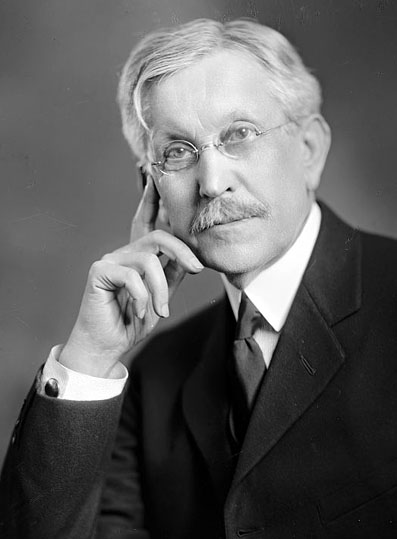
Historical · U.S. House · Delaware · At-Large
William Boyce
Former U.S. Representative · Delaware At-Large · 1923–1925 · Democratic
William Boyce represented Delaware's At-Large in the United States House of Representatives (1923–1925) for the Democratic party. The page below collects sourced biographical facts, term history, committee roles, and provenance for Boyce.
Bioguide ID: B000712
Key facts
- Full name
- William Boyce
- State
- Delaware
- District
- At-Large
- Party
- Democratic
- House service
- 1923–1925
- First House term
- 1923
- Status
- Left office
- Current term ends
- —
- Born
- 1855
- Bioguide ID
- B000712
- Committee assignments
- —
- Dataset version
- 1.20260606
Biographical narrative
820 words · sourced from the Wikipedia REST extract
William Boyce was an American lawyer and politician who served as a U.S. Representative for Delaware's at-large congressional district. A member of the Democratic Party, Boyce's political career included notable roles as an Associate Justice of the Delaware Superior Court and as a state-level political figure. His tenure in the U.S. House of Representatives lasted from 1923 to 1925, during which he engaged in the legislative process following a distinguished career in law and public service.
Early life and career
William Boyce was born on November 28, 1855, in Peppers Mills, located in Broad Creek Hundred, Sussex County, Delaware. He was the son of James H. Boyce and Sarah J. Otwell Boyce. His father was involved in the lumber and merchandise business and later transitioned to farming. James H. Boyce also held public office as the county treasurer and served as the state auditor of accounts from 1887 to 1891.
William Boyce received his early education at the Laurel Academy. In 1882, he married Emma E. Valliant, and together they had two children, Valliant and James. The family was active in their local community, being members of St. Paul's Episcopal Church in Georgetown.
Boyce began his professional career in education, serving as the principal of public schools in Laurel from 1875 to 1880 and subsequently in Oxford, Maryland, during the 1880-1881 academic year. His transition into law began when he was appointed as the recorder of deeds for Sussex County, a position he held from 1881 until 1886. During this period, he studied law under Alfred P. Robinson and was admitted to the bar in 1887, establishing a legal practice in Georgetown.
In addition to his legal career, Boyce was involved in various public service roles. He served as president of the Board of Education from 1883 to 1886, captain of Company G of the Delaware National Guard from 1887 to 1890, and president of the Georgetown Town Council from 1895 to 1897. His political involvement extended to the Democratic Party, where he was the chairman of the Sussex County Democratic Committee from 1893 to 1897 and participated as a delegate in the Democratic National Conventions in 1896 and 1924.
In 1897, Boyce was appointed Delaware Secretary of State, serving briefly before being appointed as an Associate Justice of the Delaware Supreme Court. His judicial career spanned 24 years, from June 17, 1897, until June 15, 1921, marking a significant period in Delaware's legal history.
House tenure
After retiring from the judiciary, Boyce entered the political arena at the federal level. He was elected to the U.S. House of Representatives in 1922, representing Delaware's at-large district. His term in office began on March 4, 1923, and concluded on March 3, 1925. During this time, he succeeded incumbent Republican Caleb R. Layton, who had faced criticism for his stance on civil rights issues, particularly his opposition to an anti-lynching law.
Boyce's election to the House was notable as it marked a shift in Delaware's political landscape, with the Democratic Party gaining representation in a predominantly Republican state. His tenure, however, was limited to a single term. In the 1924 election, he sought re-election but was defeated by Republican Robert G. Houston, a journalist from Georgetown. Houston had garnered support for his efforts to combat corruption in elections and had a reputation for his leadership against political adversaries in Sussex County.
Despite his loss, Boyce's contributions to Delaware's political and legal systems were recognized, and he returned to his legal practice in Dover after leaving Congress. He continued to work in law until his retirement from active practice in 1936.
Legislative focus and committees
During his time in the U.S. House of Representatives, Boyce's legislative focus and committee assignments are not extensively documented in available records. However, his background as a lawyer and former judge likely influenced his approach to legislative matters, emphasizing legal and judicial issues pertinent to his constituents and the state of Delaware.
His tenure in Congress occurred during a period of significant social and political change in the United States, including discussions surrounding civil rights and economic policies in the wake of World War I. While specific legislative initiatives or committee roles are not detailed, Boyce's experience in law and governance would have positioned him to engage with various legislative matters relevant to his constituents.
After completing his term, Boyce returned to Delaware, where he continued to practice law until 1936. He remained an influential figure in his community and was respected for his prior service in both the judiciary and the legislature.
William Boyce passed away on February 6, 1942, in Dover, Delaware. He was interred in the Christ Episcopal Church Cemetery, leaving behind a legacy as a public servant who contributed to the legal and political landscape of Delaware during the early 20th century. His career reflects the interconnectedness of law and politics in shaping public policy and governance in the United States.
Notable legislation
Sponsored and co-sponsored legislation for William Boyce is pending operator curation. The biographical narrative above carries the same provenance trail until per-bill rows are written.
Sources
- [1]https://en.wikipedia.org/wiki/William_H._BoyceWikipedia · retrieved 2026-06-06
Notable quotes
Sourced quotes for William Boyce are pending operator curation. Narrative-scope provenance remains attached below.
Sources
- [1]https://en.wikipedia.org/wiki/William_H._BoyceWikipedia · retrieved 2026-06-06
Key positions
Curated policy positions for William Boyce are pending operator review. The biographical narrative above carries the same provenance trail until per-topic positions are written.
Sources
- [1]https://en.wikipedia.org/wiki/William_H._BoyceWikipedia · retrieved 2026-06-06
Terms served
- 1923–1925U.S. House · Term 1 · Democratic
Sources & provenance
Every attributable claim above carries a per-section [N] marker that resolves to the corresponding URL below. Each entry records the upstream provider, the canonical URL, and the timestamp at which the source was retrieved by the ingest pipeline.
Key facts
- https://bioguide.congress.gov/search/bio/B000712bioguide · retrieved 2026-06-06
- https://www.govtrack.us/congress/members/401673govtrack · retrieved 2026-06-06
Biographical narrative
- https://en.wikipedia.org/wiki/William_H._Boycewikipedia · retrieved 2026-06-06
Find your representative
Every U.S. state elects representatives by district. Browse Delaware’s delegation, the full former-representative roster, or explore the role and term length.
Related on The Candidate
- Preceded by Caleb LaytonEarlier holder of the Delaware At-Large House seat · Republican.Open
- Succeeded by Robert HoustonLater holder of the Delaware At-Large House seat · Republican.Open
- Albert PolkFormer U.S. Representative · Delaware At-Large · DemocraticOpen
- Benjamin BiggsFormer U.S. Representative · Delaware At-Large · DemocraticOpen
- Charles LoreFormer U.S. Representative · Delaware At-Large · DemocraticOpen
- Democratic PartyFederal candidates and office holders on the Democratic line.Open