
Historical · U.S. House · DK · At-Large
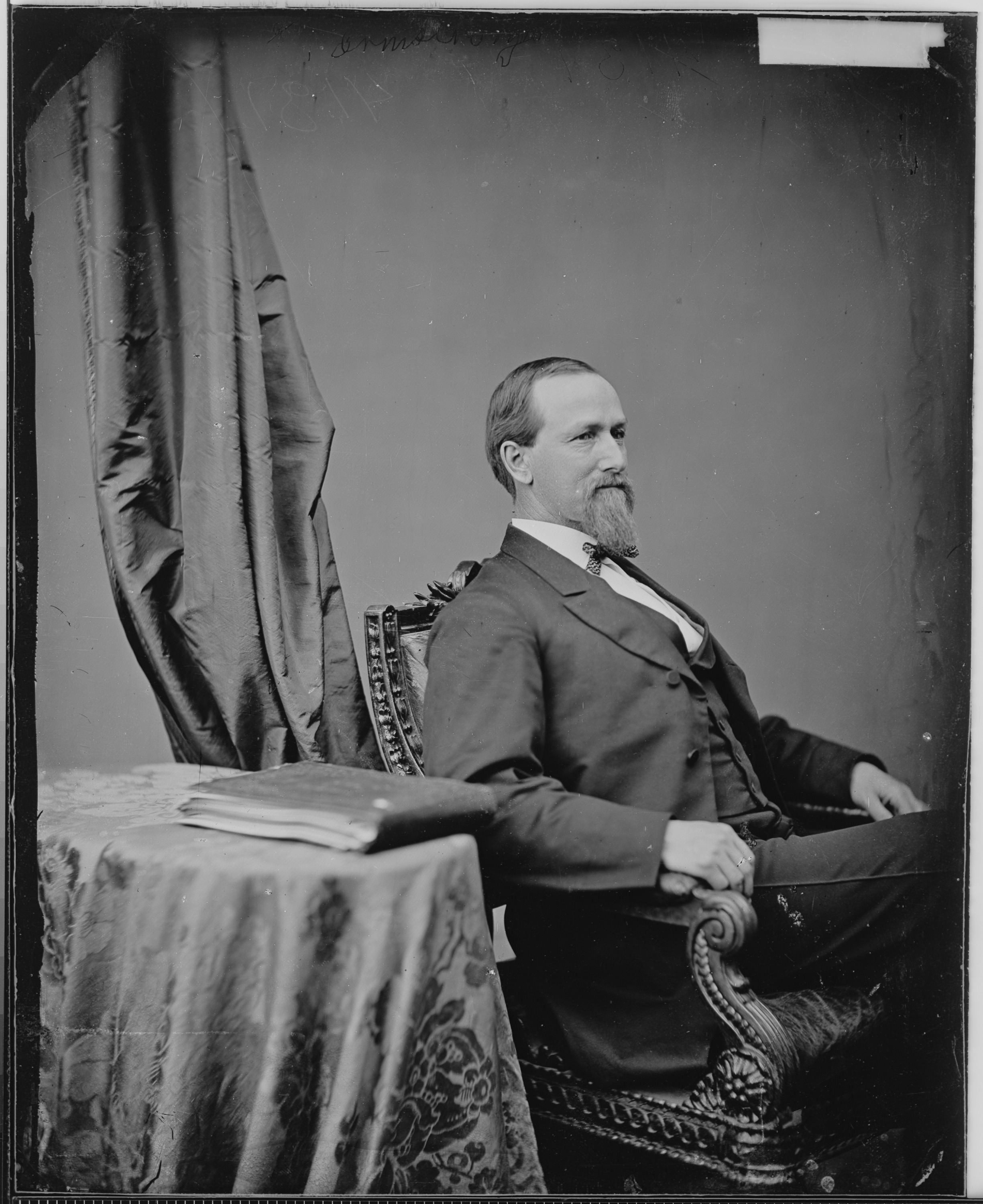
Moses Armstrong
Former U.S. Representative · DK At-Large · 1871–1875 · Democratic
Moses Armstrong represented DK's At-Large in the United States House of Representatives (1871–1875) for the Democratic party. The page below collects sourced biographical facts, term history, committee roles, and provenance for Armstrong.
Bioguide ID: A000283
Key facts
- Full name
- Moses Armstrong
- State
- DK
- District
- At-Large
- Party
- Democratic
- House service
- 1871–1875
- First House term
- 1871
- Status
- Left office
- Current term ends
- —
- Born
- 1832
- Bioguide ID
- A000283
- Committee assignments
- —
- Dataset version
- 1.20260606
Biographical narrative
1,038 words · sourced from the Wikipedia REST extract
Moses Armstrong was an American politician and surveyor who served as a U.S. Representative from the Dakota Territory. A member of the Democratic Party, he was active in the political landscape of the region during a formative period of its development. Armstrong's congressional tenure spanned from 1871 to 1875, during which he represented the at-large district of Dakota Territory. His career encompassed various roles in public service, including significant contributions to land surveying and territorial governance.
Early life and career
Moses Kimball Armstrong was born on September 19, 1832, in Milan, Erie County, Ohio. His early education took place at the Huron Institute in Milan, followed by further studies at Western Reserve College in Cleveland, Ohio. These formative years provided him with a foundation in education that would serve him well in his later endeavors. In 1856, seeking new opportunities, Armstrong relocated to the Minnesota Territory, where he began to establish his career.
Upon his arrival in Minnesota, Armstrong was elected as the surveyor of Mower County. In this role, he was responsible for surveying federal lands, a task that was crucial for the development of the region as it transitioned from a territory to statehood. His work as a surveyor not only showcased his skills but also positioned him as a key figure in the expansion and organization of land in the area.
As Minnesota achieved statehood, Armstrong moved to Yankton in the Dakota Territory, which at the time was a small village primarily inhabited by Native Americans. His political career began to take shape when he was elected to the first Territorial House of Representatives in 1861. This marked the beginning of his involvement in the legislative processes of the territory. He was reelected to the House in 1862 and 1863, and during his final term in that body, he served as speaker in 1863, further solidifying his leadership role within the territorial government.
In addition to his legislative duties, Armstrong took on various other responsibilities. In 1864, he became the editor of the Dakota Union newspaper, a position that allowed him to influence public opinion and disseminate information about the territory's political and social issues. The following year, he was appointed as the clerk of the territorial Supreme Court, which involved overseeing legal proceedings and maintaining court records. His involvement in these diverse roles demonstrated his commitment to the governance and development of the Dakota Territory.
Armstrong's political career continued to flourish as he was elected to the territorial council in 1866 and again in 1867, eventually serving as the council's president. His leadership in these capacities contributed to the establishment of a functioning government in the territory, which was essential for its growth and stability. In 1867, he also acted as the secretary of the Indian peace commission in Dakota Territory, a role that involved negotiating and maintaining peace between Native American tribes and settlers.
Throughout this period, Armstrong maintained his work as a surveyor, where he made significant contributions to the establishment of the great meridian and standard lines for United States surveys in southern Dakota and the northern Red River Valley. His expertise in land surveying was vital for the accurate mapping and division of land, which was crucial for both governmental and private interests as the territory developed.
House tenure
In 1870, Moses Armstrong was elected as a Democrat to the United States House of Representatives, marking a significant milestone in his political career. His first term in Congress began on March 4, 1871, representing the at-large district of the Dakota Territory. During his time in the House, he was involved in various legislative discussions and decisions that impacted the territory and its residents. His election to Congress was indicative of the growing political influence of the Dakota Territory as it sought representation at the national level.
Armstrong was reelected in 1872, allowing him to continue his work in the House until March 3, 1875. His tenure coincided with a period of significant change and development in the United States, particularly in the western territories. As a representative, he was tasked with addressing the needs and concerns of his constituents, which included issues related to land, governance, and the integration of the territory into the broader framework of the United States.
Despite his efforts and contributions, Armstrong faced challenges in his political career. He was an unsuccessful candidate for reelection in 1874, which marked the end of his time in Congress. Following his departure from the House, he relocated to St. James, Watonwan County, Minnesota, where he shifted his focus to banking and real estate. This transition reflected his adaptability and willingness to engage in new ventures beyond his political career.
Legislative focus and committees
During his time in the House of Representatives, Moses Armstrong's legislative focus was likely influenced by his extensive background in surveying and territorial governance. While specific details regarding his committee assignments and legislative initiatives are not provided, it can be inferred that his experience as a surveyor and his involvement in territorial politics would have shaped his priorities as a congressman.
Armstrong's role in the House would have involved addressing the needs of a rapidly growing territory, particularly in relation to land management, infrastructure development, and the integration of diverse communities. As a representative from the Dakota Territory, he would have been particularly attuned to the challenges faced by settlers and Native American populations, as well as the importance of establishing a stable and effective government.
His previous roles, including his work with the Indian peace commission and his leadership in the territorial council, likely informed his approach to legislation and governance. Armstrong's commitment to fostering peace and cooperation between different groups within the territory would have been a critical aspect of his legislative focus.
After leaving Congress, Armstrong continued to engage with the community in Minnesota through his work in banking and real estate, demonstrating his ongoing commitment to public service and economic development. He passed away on January 11, 1906, in Albert Lea, Minnesota, and was laid to rest in Lakewood Cemetery in Minneapolis. His legacy as a pioneer in the Dakota Territory and a public servant reflects the complexities of governance and development during a transformative period in American history.
Notable legislation
Sponsored and co-sponsored legislation for Moses Armstrong is pending operator curation. The biographical narrative above carries the same provenance trail until per-bill rows are written.
Sources
- [1]https://en.wikipedia.org/wiki/Moses_K._ArmstrongWikipedia · retrieved 2026-06-06
Notable quotes
Sourced quotes for Moses Armstrong are pending operator curation. Narrative-scope provenance remains attached below.
Sources
- [1]https://en.wikipedia.org/wiki/Moses_K._ArmstrongWikipedia · retrieved 2026-06-06
Key positions
Curated policy positions for Moses Armstrong are pending operator review. The biographical narrative above carries the same provenance trail until per-topic positions are written.
Sources
- [1]https://en.wikipedia.org/wiki/Moses_K._ArmstrongWikipedia · retrieved 2026-06-06
Terms served
- 1871–1873U.S. House · Term 1 · Democratic
- 1873–1875U.S. House · Term 2 · Democratic
Sources & provenance
Every attributable claim above carries a per-section [N] marker that resolves to the corresponding URL below. Each entry records the upstream provider, the canonical URL, and the timestamp at which the source was retrieved by the ingest pipeline.
Key facts
- https://bioguide.congress.gov/search/bio/A000283bioguide · retrieved 2026-06-06
- https://www.govtrack.us/congress/members/400923govtrack · retrieved 2026-06-06
Biographical narrative
- https://en.wikipedia.org/wiki/Moses_K._Armstrongwikipedia · retrieved 2026-06-06
Find your representative
Every U.S. state elects representatives by district. Browse DK’s delegation, the full former-representative roster, or explore the role and term length.
Related on The Candidate
- Preceded by Solomon SpinkEarlier holder of the DK At-Large House seat · Republican.Open
- Succeeded by Jefferson KidderLater holder of the DK At-Large House seat · Republican.Open
- George MathewsFormer U.S. Representative · DK At-Large · RepublicanOpen
- Granville BennettFormer U.S. Representative · DK At-Large · RepublicanOpen
- John RaymondFormer U.S. Representative · DK At-Large · RepublicanOpen
- Democratic PartyFederal candidates and office holders on the Democratic line.Open