
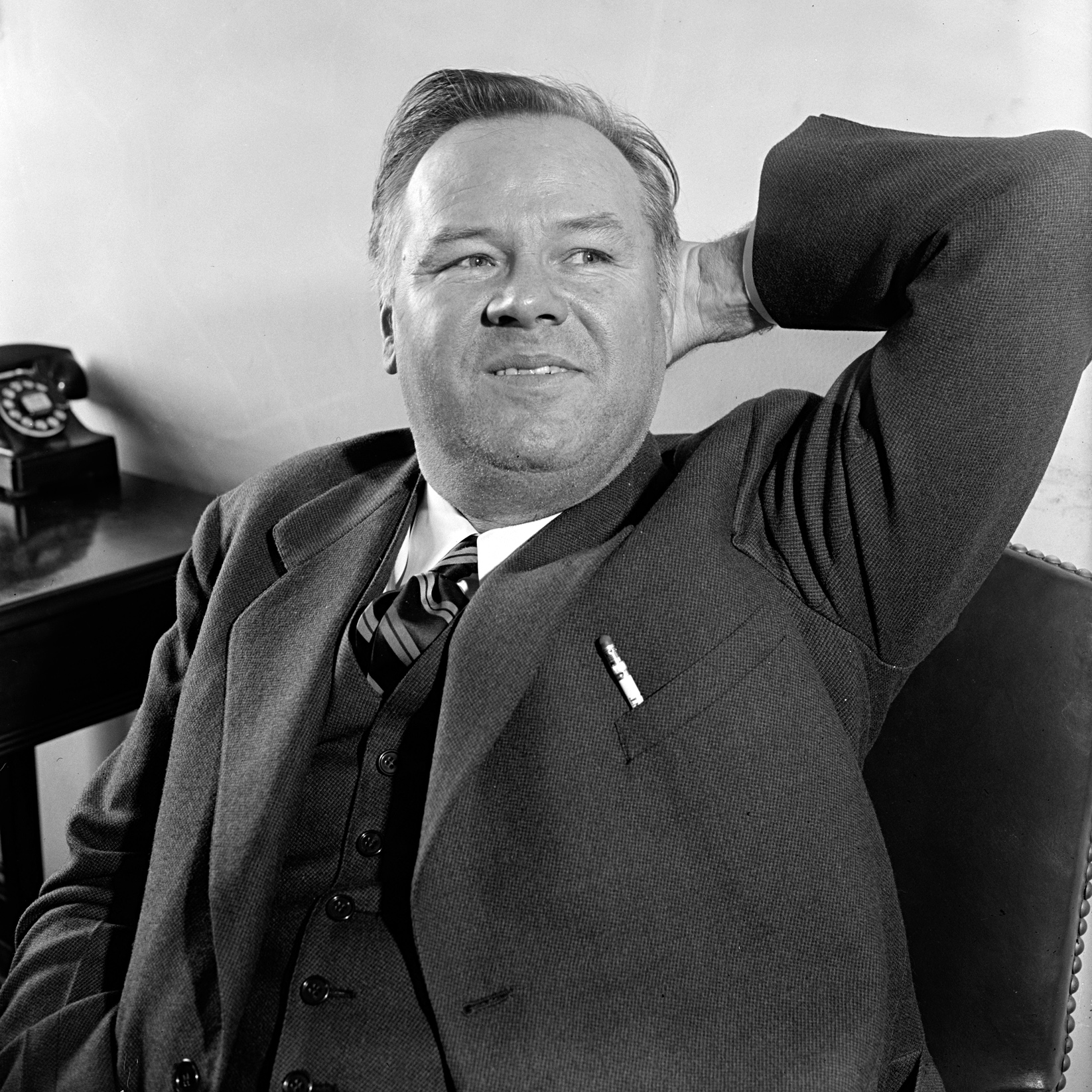
Historical · U.S. House · Florida · District 1
James Peterson
Former U.S. Representative · Florida District 1 · 1933–1951 · Democratic
James Peterson represented Florida's District 1 in the United States House of Representatives (1933–1951) for the Democratic party. The page below collects sourced biographical facts, term history, committee roles, and provenance for Peterson.
Bioguide ID: P000261
Key facts
- Full name
- James Peterson
- State
- Florida
- District
- District 1
- Party
- Democratic
- House service
- 1933–1951
- First House term
- 1933
- Status
- Left office
- Current term ends
- —
- Born
- 1894
- Bioguide ID
- P000261
- Committee assignments
- —
- Dataset version
- 1.20260605
Biographical narrative
893 words · sourced from the Wikipedia REST extract
James Peterson was a prominent American politician who served as a U.S. Representative from Florida's 1st congressional district. A member of the Democratic Party, he held office for a total of nine terms in the House of Representatives, beginning in 1933 and concluding in 1951. His legislative career spanned significant periods in American history, including the Great Depression and World War II, during which he played a role in shaping policies affecting his constituents and the nation.
Early life and career
James Hardin Peterson was born on February 11, 1894, in Batesburg, South Carolina. In 1903, his family relocated to Lakeland, Florida, where he pursued his education in the local public schools. Demonstrating a commitment to his academic and professional aspirations, Peterson graduated from the University of Florida College of Law in 1914. Following his graduation, he was admitted to the bar and began his legal career as a law clerk in the United States General Land Office the same year. By 1915, he had entered private practice in Lakeland, establishing himself in the legal community.
Peterson's early career included several significant roles in local government and law. He served as the city attorney for Lakeland during multiple terms, specifically in 1916, 1917, and from 1919 to 1932. Additionally, he held the position of city attorney in Frostproof from 1918 to 1929, in Lake Wales from 1920 to 1930, and in Eagle Lake from 1923 to 1933. His legal expertise extended to the role of prosecuting attorney and county solicitor for Polk County, Florida, from 1921 to 1932. In the early 1930s, Peterson also contributed to the community by teaching Sunday school at the First Methodist Church in Lakeland.
During World War I, Peterson served in the United States Navy as a chief yeoman from 1917 to 1919. This military experience likely influenced his later political career and his understanding of national issues. After the war, he continued to engage in public service, including a role as special counsel for the Florida Department of Agriculture from 1930 to 1932. His diverse experiences in law and public service laid the groundwork for his entry into politics.
House tenure
In the 1932 election, Peterson was elected as a Democrat to represent Florida's 1st congressional district in the United States House of Representatives. He defeated incumbent Herbert J. Drane, who had served in Congress since 1917. Peterson's congressional career began on March 4, 1933, and he served in the 73rd Congress and the eight succeeding Congresses, concluding his tenure on January 3, 1951. His time in office coincided with critical events in American history, including the New Deal and the Second World War.
Throughout his congressional service, Peterson was involved in various legislative initiatives and discussions that addressed the needs of his constituents and the nation. He was particularly active in matters related to public lands, serving as the chairman of the Committee on Public Lands during the 78th, 79th, and 81st Congresses. In this capacity, he played a significant role in shaping policies related to land use, conservation, and resource management, which were pivotal issues during his time in office.
Peterson's legislative focus reflected the priorities of his constituents, as he worked to address the economic challenges faced by Florida and the broader nation during the Great Depression. His efforts in Congress were marked by a commitment to public service and a dedication to representing the interests of his district. However, he chose not to seek renomination in 1950 for the 82nd Congress, concluding his long tenure in the House.
Legislative focus and committees
During his time in the House of Representatives, James Peterson's legislative focus encompassed a range of issues pertinent to his constituents and the national landscape. As a member of the Democratic Party, he aligned with the party's broader goals, particularly those related to economic recovery and social welfare during the challenging years of the Great Depression and the subsequent war period.
Peterson's leadership as chairman of the Committee on Public Lands allowed him to influence significant legislation concerning land management and resource allocation. His role in this committee involved overseeing policies that affected public lands, including issues related to agriculture, forestry, and conservation. The decisions made during this time had lasting implications for land use and environmental policy in the United States.
In addition to his work on public lands, Peterson's legislative contributions included participation in discussions and votes on various bills that addressed economic recovery, infrastructure development, and veterans' affairs. His background in law and local government provided him with a unique perspective on the challenges faced by his constituents, enabling him to advocate effectively for their needs in Congress.
After leaving Congress in 1951, Peterson returned to his legal practice in Lakeland, where he continued to serve his community. He also held various roles, including special counsel for the Territorial Government of Guam and chairman of the Commission on Federal Application of Laws to Guam. His involvement in these positions reflected his ongoing commitment to public service and legal affairs.
James Peterson passed away on March 28, 1978, in Lakeland, Florida. He was interred in Roselawn Cemetery, leaving behind a legacy of public service that spanned decades. His contributions to Florida's political landscape and his role in the U.S. House of Representatives remain a part of the historical narrative of American governance during a transformative era.
Notable legislation
Sponsored and co-sponsored legislation for James Peterson is pending operator curation. The biographical narrative above carries the same provenance trail until per-bill rows are written.
Sources
- [1]https://en.wikipedia.org/wiki/J._Hardin_PetersonWikipedia · retrieved 2026-06-05
Notable quotes
Sourced quotes for James Peterson are pending operator curation. Narrative-scope provenance remains attached below.
Sources
- [1]https://en.wikipedia.org/wiki/J._Hardin_PetersonWikipedia · retrieved 2026-06-05
Key positions
Curated policy positions for James Peterson are pending operator review. The biographical narrative above carries the same provenance trail until per-topic positions are written.
Sources
- [1]https://en.wikipedia.org/wiki/J._Hardin_PetersonWikipedia · retrieved 2026-06-05
Terms served
- 1933–1935U.S. House · Term 1 · Democratic
- 1935–1937U.S. House · Term 2 · Democratic
- 1937–1939U.S. House · Term 3 · Democratic
- 1939–1941U.S. House · Term 4 · Democratic
- 1941–1943U.S. House · Term 5 · Democratic
- 1943–1945U.S. House · Term 6 · Democratic
- 1945–1947U.S. House · Term 7 · Democratic
- 1947–1949U.S. House · Term 8 · Democratic
- 1949–1951U.S. House · Term 9 · Democratic
Sources & provenance
Every attributable claim above carries a per-section [N] marker that resolves to the corresponding URL below. Each entry records the upstream provider, the canonical URL, and the timestamp at which the source was retrieved by the ingest pipeline.
Key facts
- https://bioguide.congress.gov/search/bio/P000261bioguide · retrieved 2026-06-05
- https://www.govtrack.us/congress/members/408663govtrack · retrieved 2026-06-05
Biographical narrative
- https://en.wikipedia.org/wiki/J._Hardin_Petersonwikipedia · retrieved 2026-06-05
Find your representative
Every U.S. state elects representatives by district. Browse Florida’s delegation, the full former-representative roster, or explore the role and term length.
Related on The Candidate
- Preceded by Herbert DraneEarlier holder of the Florida District 1 House seat · Democratic.Open
- Succeeded by Chester McMullenLater holder of the Florida District 1 House seat · Democratic.Open
- Augustus MaxwellFormer U.S. Representative · Florida District 1 · DemocraticOpen
- Charles HamiltonFormer U.S. Representative · Florida District 1 · RepublicanOpen
- Courtney CampbellFormer U.S. Representative · Florida District 1 · DemocraticOpen
- Democratic PartyFederal candidates and office holders on the Democratic line.Open