
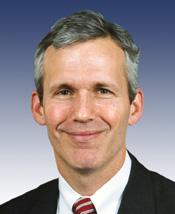
Historical · U.S. House · Florida · District 11
Jim Davis
Former U.S. Representative · Florida District 11 · 1997–2007 · Democratic
Jim Davis represented Florida's District 11 in the United States House of Representatives (1997–2007) for the Democratic party. The page below collects sourced biographical facts, term history, committee roles, and provenance for Davis.
Bioguide ID: D000114
Key facts
- Full name
- Jim Davis
- State
- Florida
- District
- District 11
- Party
- Democratic
- House service
- 1997–2007
- First House term
- 1997
- Status
- Left office
- Current term ends
- —
- Born
- 1957
- Bioguide ID
- D000114
- Committee assignments
- —
- Dataset version
- 1.20260605
Biographical narrative
949 words · sourced from the Wikipedia REST extract
James Oscar Davis III, commonly known as Jim Davis, is a former Democratic politician and attorney who served as a U.S. Representative for Florida's 11th congressional district from 1997 until 2007. During his tenure in Congress, he was involved in various legislative initiatives and later sought the governorship of Florida in 2006. Davis's political career is marked by his commitment to civil rights and public service, as well as his engagement in local and state politics prior to his congressional service.
Early life and career
Jim Davis was born on October 11, 1957, in Tampa, Florida. He completed his secondary education at Jesuit High School in Tampa, graduating in 1975. Following high school, he attended Washington and Lee University, where he earned a Bachelor of Arts degree in 1979. Davis then pursued legal studies at the University of Florida's College of Law, obtaining his Juris Doctor in 1982.
After completing his education, Davis began his professional career as a lawyer in private practice, where he worked from 1982 until 1988. In that year, he became a partner in the Tampa-based law firm of Bush, Ross, Gardner, Warren & Rudy. His legal career provided him with a foundation in civil rights litigation, which would later influence his political campaigns and legislative priorities.
In 1988, Davis entered the political arena by running for the Florida House of Representatives. He sought to succeed Democratic State Representative Helen Davis, who opted to run for the Florida Senate instead of seeking re-election. Davis's campaign focused on his experience with civil rights issues, and he garnered significant support from local media outlets, including endorsements from the St. Petersburg Times and the Tampa Tribune. In the Democratic primary, Davis placed first but did not achieve a majority, leading to a runoff election against attorney Tom Wright. Davis won the runoff decisively and subsequently defeated Republican nominee Maxx Hudson in the general election, securing a substantial majority of the vote.
Davis was re-elected to the Florida House in 1990 without opposition. In 1992, after the state legislative districts were reconfigured, he successfully ran for re-election in District 56, defeating Republican challenger Carl Mathews. His political career continued to flourish, and in 1994, despite a challenging political climate for Democrats, he won re-election against Republican businessman Bill Butler by a narrow margin. During the 1994 to 1996 legislative session, Davis was elected Majority Leader of the Florida House of Representatives, serving under Speaker Peter Rudy Wallace.
House tenure
In 1996, Jim Davis transitioned to national politics by running for the U.S. House of Representatives after incumbent Congressman Sam Gibbons announced his retirement. Davis faced a competitive Democratic primary that included notable figures such as former State Senator Pat Frank and former Tampa Mayor Sandra Freedman. In the primary election, Freedman received the most votes, but Davis advanced to the runoff election, where he won decisively against Freedman. In the general election, Davis faced Republican candidate Mark Sharpe, whom he defeated with a significant margin, winning 58 percent of the vote.
Davis's congressional career was characterized by several successful re-elections. In 1998, he faced Republican challenger Joe Chillura and won re-election with 65 percent of the vote. His popularity continued in subsequent elections, as he secured 85 percent of the vote against a Libertarian opponent in 2000 and was unopposed in 2002. In 2004, he again faced a Libertarian challenger and won with 86 percent of the vote.
During his time in Congress, Davis was involved in various legislative matters, including a notable vote on October 10, 2002, where he was among the House Democrats who supported the authorization for the invasion of Iraq. His tenure in the House concluded on January 3, 2007, after he chose not to seek re-election.
Legislative focus and committees
Throughout his time in the U.S. House of Representatives, Jim Davis focused on a range of issues, particularly those related to civil rights, education, and public health. His legal background in civil rights litigation informed his approach to legislation and advocacy, as he sought to address inequalities and promote social justice.
Davis's committee assignments and legislative initiatives reflected his commitment to these priorities, although specific details about his committee memberships and the bills he sponsored or co-sponsored are not provided in the available information. His work in Congress was characterized by a dedication to representing the interests of his constituents in Florida's 11th district and contributing to broader national discussions on key issues.
In 2006, Davis made the decision to run for Governor of Florida, opting not to seek re-election to Congress. He won the Democratic primary against State Senator Rod Smith, securing 47 percent of the vote. In the general election, he faced Republican Attorney General Charlie Crist. Despite a favorable national environment for Democrats, Davis was ultimately defeated, receiving 45 percent of the vote compared to Crist's 52 percent.
After leaving Congress, Davis returned to the legal profession, joining the Tampa and Washington, D.C. offices of the law firm Holland & Knight. He remained active in local politics, participating in initiatives such as the campaign for a transit tax in Hillsborough County aimed at funding a light rail system, although the measure was ultimately rejected by voters. Davis also considered a run for Mayor of Tampa in 2011 but ultimately decided against it.
In his personal life, Jim Davis is married to Peggy Bessent Davis, and the couple has two children, Peter and William. He is a member of the Episcopal Church, reflecting his engagement with both community and faith-based initiatives. Davis's career in public service and law has left a lasting impact on the political landscape of Florida, particularly in the areas of civil rights and local governance.
Notable legislation
Sponsored and co-sponsored legislation for Jim Davis is pending operator curation. The biographical narrative above carries the same provenance trail until per-bill rows are written.
Sources
- [1]https://en.wikipedia.org/wiki/Jim_Davis_(Florida_politician)Wikipedia · retrieved 2026-06-05
Notable quotes
Sourced quotes for Jim Davis are pending operator curation. Narrative-scope provenance remains attached below.
Sources
- [1]https://en.wikipedia.org/wiki/Jim_Davis_(Florida_politician)Wikipedia · retrieved 2026-06-05
Key positions
Curated policy positions for Jim Davis are pending operator review. The biographical narrative above carries the same provenance trail until per-topic positions are written.
Sources
- [1]https://en.wikipedia.org/wiki/Jim_Davis_(Florida_politician)Wikipedia · retrieved 2026-06-05
Terms served
- 1997–1999U.S. House · Term 1 · Democratic
- 1999–2001U.S. House · Term 2 · Democratic
- 2001–2003U.S. House · Term 3 · Democratic
- 2003–2005U.S. House · Term 4 · Democratic
- 2005–2007U.S. House · Term 5 · Democratic
Sources & provenance
Every attributable claim above carries a per-section [N] marker that resolves to the corresponding URL below. Each entry records the upstream provider, the canonical URL, and the timestamp at which the source was retrieved by the ingest pipeline.
Key facts
- https://bioguide.congress.gov/search/bio/D000114bioguide · retrieved 2026-06-05
- http://www.house.gov/jimdavishouse.gov · retrieved 2026-06-05
Biographical narrative
- https://en.wikipedia.org/wiki/Jim_Davis_(Florida_politician)wikipedia · retrieved 2026-06-05
Find your representative
Every U.S. state elects representatives by district. Browse Florida’s delegation, the full former-representative roster, or explore the role and term length.
Related on The Candidate
- Preceded by Sam GibbonsEarlier holder of the Florida District 11 House seat · Democratic.Open
- Succeeded by Richard NugentLater holder of the Florida District 11 House seat · Republican.Open
- Augustus MaxwellFormer U.S. Representative · Florida District 1 · DemocraticOpen
- Charles HamiltonFormer U.S. Representative · Florida District 1 · RepublicanOpen
- Chester McMullenFormer U.S. Representative · Florida District 1 · DemocraticOpen
- Courtney CampbellFormer U.S. Representative · Florida District 1 · DemocraticOpen