
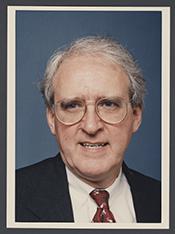
Historical · U.S. House · Florida · District 13
Dan Miller
Former U.S. Representative · Florida District 13 · 1993–2003 · Republican
Dan Miller represented Florida's District 13 in the United States House of Representatives (1993–2003) for the Republican party. The page below collects sourced biographical facts, term history, committee roles, and provenance for Miller.
Bioguide ID: M000720
Key facts
- Full name
- Dan Miller
- State
- Florida
- District
- District 13
- Party
- Republican
- House service
- 1993–2003
- First House term
- 1993
- Status
- Left office
- Current term ends
- —
- Born
- 1942
- Bioguide ID
- M000720
- Committee assignments
- —
- Dataset version
- 1.20260605
Biographical narrative
873 words · sourced from the Wikipedia REST extract
Frederick Daniel Miller, commonly known as Dan Miller, is a former American politician who served as a U.S. Representative for Florida's 13th congressional district. A member of the Republican Party, Miller's congressional career spanned a decade, during which he was known for his fiscal conservatism and advocacy for various reforms. He was born on May 30, 1942, in Highland Park, Michigan, and later moved to Florida, where he became an influential figure in local and national politics.
Early life and career
Dan Miller was born in Highland Park, Michigan, and spent his formative years in Florida, where he graduated from Manatee High School in Bradenton in 1960. He pursued higher education at the University of Florida in Gainesville, where he completed his undergraduate studies. He furthered his education by obtaining a Master of Business Administration (MBA) from Emory University. Miller later earned a Ph.D. and took on the role of professor at various colleges throughout the Southern United States, contributing to the academic field with his expertise.
In addition to his academic pursuits, Miller engaged in business ventures alongside his family. He collaborated with his father, Don Sr., and brother, Don Jr., in developing a successful enterprise that included a restaurant, a nursing home, and real estate projects. This blend of education and business experience provided Miller with a robust foundation for his future political career.
Miller's personal life includes his marriage to Glenda Burton Darsey, which took place on December 14, 1968, in Baton Rouge, Louisiana. The couple's partnership and shared values likely influenced Miller's perspectives and decisions throughout his political journey.
In 1992, Miller entered the political arena by running for Congress in Florida's newly established 13th congressional district. This district encompassed all of Manatee and Sarasota Counties, as well as parts of Hillsborough and Charlotte Counties. His campaign was successful, and he was elected to the U.S. House of Representatives, marking the beginning of a decade-long tenure in Congress.
House tenure
Dan Miller's tenure in the U.S. House of Representatives began in 1993 and lasted until January 3, 2003. During this time, he was elected to serve five consecutive terms, representing the interests of his constituents in Florida's 13th district. Miller's decision to run for office was influenced by his commitment to public service and his desire to contribute to the legislative process.
Throughout his time in Congress, Miller was recognized for his fiscal conservatism and commitment to spending restraint. He often emphasized the importance of responsible budgeting and advocated for policies aimed at reducing government expenditure. His approach resonated with the Republican-leaning electorate of his district, which valued economic prudence and limited government intervention.
In 2002, Miller chose not to seek re-election, adhering to a self-imposed term limit of ten years in office. This decision reflected his belief in the principle of rotating leadership and the importance of allowing new voices to emerge in political representation. Following his departure from Congress, Florida Secretary of State Katherine Harris was elected to succeed him.
Legislative focus and committees
During his time in the House, Dan Miller was actively involved in several key legislative committees that shaped his contributions to national policy. He served on the Appropriations Committee, which is responsible for determining the allocation of federal funds, as well as the Government Reform and Oversight Committee, which focuses on ensuring accountability and efficiency in government operations. Additionally, he was a member of the Budget Committee, where he worked on fiscal matters critical to the nation's financial health.
Miller's legislative focus included a range of issues, with a particular emphasis on Medicare reform. He recognized the importance of healthcare policy and sought to address the challenges facing the Medicare system. His efforts in this area were part of a broader commitment to improving healthcare access and affordability for seniors.
Another significant aspect of Miller's legislative agenda was his opposition to the sugar subsidy, which he viewed as a costly government program that required reform. He advocated for ending this subsidy, arguing that it imposed unnecessary financial burdens on taxpayers and distorted market dynamics. His stance on this issue reflected his broader commitment to reducing government spending and promoting free-market principles.
Miller also took a strong position against earmarking, a practice that allows legislators to designate specific funds for particular projects or programs. He believed that such practices often led to wasteful spending and a lack of transparency in government funding decisions. By opposing earmarks, Miller aimed to promote a more accountable and efficient allocation of federal resources.
In addition to his committee work, Miller served as the chairman of the subcommittee overseeing the United States Census. This role was particularly fitting given his background as a former statistics professor, which equipped him with the knowledge and skills necessary to manage the complexities of the decennial census. Under his leadership, the subcommittee worked to ensure that the census was conducted accurately and effectively, which is crucial for determining representation and federal funding allocations.
Throughout his congressional career, Dan Miller's legislative efforts were characterized by a focus on fiscal responsibility, healthcare reform, and government accountability. His commitment to these principles shaped his actions in the House and left a lasting impact on the policies he championed during his time in office.
Notable legislation
Sponsored and co-sponsored legislation for Dan Miller is pending operator curation. The biographical narrative above carries the same provenance trail until per-bill rows are written.
Sources
- [1]https://en.wikipedia.org/wiki/Dan_Miller_(Florida_politician)Wikipedia · retrieved 2026-06-05
Notable quotes
Sourced quotes for Dan Miller are pending operator curation. Narrative-scope provenance remains attached below.
Sources
- [1]https://en.wikipedia.org/wiki/Dan_Miller_(Florida_politician)Wikipedia · retrieved 2026-06-05
Key positions
Curated policy positions for Dan Miller are pending operator review. The biographical narrative above carries the same provenance trail until per-topic positions are written.
Sources
- [1]https://en.wikipedia.org/wiki/Dan_Miller_(Florida_politician)Wikipedia · retrieved 2026-06-05
Terms served
- 1993–1995U.S. House · Term 1 · Republican
- 1995–1997U.S. House · Term 2 · Republican
- 1997–1999U.S. House · Term 3 · Republican
- 1999–2001U.S. House · Term 4 · Republican
- 2001–2003U.S. House · Term 5 · Republican
Sources & provenance
Every attributable claim above carries a per-section [N] marker that resolves to the corresponding URL below. Each entry records the upstream provider, the canonical URL, and the timestamp at which the source was retrieved by the ingest pipeline.
Key facts
- https://bioguide.congress.gov/search/bio/M000720bioguide · retrieved 2026-06-05
- https://www.govtrack.us/congress/members/400510govtrack · retrieved 2026-06-05
Biographical narrative
- https://en.wikipedia.org/wiki/Dan_Miller_(Florida_politician)wikipedia · retrieved 2026-06-05
Find your representative
Every U.S. state elects representatives by district. Browse Florida’s delegation, the full former-representative roster, or explore the role and term length.
Related on The Candidate
- Succeeded by Katherine HarrisLater holder of the Florida District 13 House seat · Republican.Open
- Augustus MaxwellFormer U.S. Representative · Florida District 1 · DemocraticOpen
- Charles HamiltonFormer U.S. Representative · Florida District 1 · RepublicanOpen
- Chester McMullenFormer U.S. Representative · Florida District 1 · DemocraticOpen
- Courtney CampbellFormer U.S. Representative · Florida District 1 · DemocraticOpen
- Republican PartyFederal candidates and office holders on the Republican line.Open