
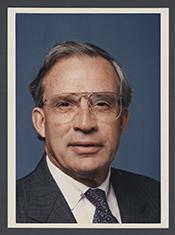
Historical · U.S. House · Florida · District 14
Porter Goss
Former U.S. Representative · Florida District 14 · 1989–2004 · Republican
Porter Goss represented Florida's District 14 in the United States House of Representatives (1989–2004) for the Republican party. The page below collects sourced biographical facts, term history, committee roles, and provenance for Goss.
Bioguide ID: G000336
Key facts
- Full name
- Porter Goss
- State
- Florida
- District
- District 14
- Party
- Republican
- House service
- 1989–2004
- First House term
- 1989
- Status
- Left office
- Current term ends
- —
- Born
- 1938
- Bioguide ID
- G000336
- Committee assignments
- —
- Dataset version
- 1.20260605
Biographical narrative
919 words · sourced from the Wikipedia REST extract
Porter J. Goss is a former American politician who served as a Republican member of the U.S. House of Representatives for Florida's 14th congressional district from 1989 until 2004. He is also known for his tenure as the Director of the Central Intelligence Agency (CIA) from 2004 to 2006. Goss's political career is marked by his involvement in intelligence and national security matters, as well as his participation in various legislative initiatives during his time in Congress.
Early life and career
Porter Johnston Goss was born on November 26, 1938, in Waterbury, Connecticut. He was raised in a family with a background in manufacturing; his father, Richard Wayne Goss, was an executive at the Scovill Manufacturing Company. Goss received his early education at Camp Timanous in Maine and the Fessenden School. He graduated from the Hotchkiss School in Lakeville, Connecticut, in 1956 before attending Yale University, where he earned a Bachelor of Arts degree in ancient Greek in 1960. During his time at Yale, Goss was involved in various extracurricular activities, including membership in the Psi Upsilon fraternity and the secret society Book and Snake.
In his junior year at Yale, Goss was recruited by the CIA, marking the beginning of a lengthy career in intelligence. He worked for the Directorate of Operations, the clandestine services of the CIA, from 1960 until 1971. His early career involved assignments in Latin America and the Caribbean, as well as in Europe. Although many details of his work remain classified, Goss has indicated that he was involved in recruiting and training foreign agents and participated in significant events such as the Cuban Missile Crisis in 1962.
After retiring from the CIA in 1971, Goss moved to Sanibel, Florida, where he entered local politics. He was elected to the City Council and subsequently served as mayor. In 1983, he was appointed to the Lee County Board of Commissioners by then-Governor Bob Graham. These local government positions laid the groundwork for his later congressional campaign.
House tenure
In 1988, Porter Goss ran for a seat in the U.S. House of Representatives, contesting what was then the 13th congressional district of Florida, which included areas along the Gulf Coast from Sarasota to Naples. The seat became available when incumbent Connie Mack III successfully ran for the U.S. Senate. Goss faced a competitive primary against former congressman Louis A. "Skip" Bafalis, who had name recognition and prior experience in the region. Despite Bafalis's initial favorability, Goss secured the nomination with a well-financed campaign, ultimately winning the primary and then the general election with a significant majority.
Goss's congressional career began in January 1989, and he was re-elected multiple times, with his district renumbered as the 14th District following the 1990 census. His electoral success can be attributed to the Republican leanings of his district, which allowed him to win re-election with substantial margins, often facing little to no opposition. Over his eight terms in Congress, Goss maintained a conservative voting record, though he distinguished himself by supporting environmental legislation more than many of his Republican colleagues.
During his time in the House, Goss served as Chairman of the House Permanent Select Committee on Intelligence from 1997 until 2004. This role positioned him at the forefront of national security discussions and intelligence oversight, particularly in the aftermath of the September 11 attacks. He was a co-sponsor of the USA PATRIOT Act, which aimed to enhance national security measures, and played a significant role in the Joint 9/11 Intelligence Inquiry, which sought to investigate the failures of intelligence leading up to the attacks.
Goss's legislative initiatives included various intelligence authorization bills and local constituent services legislation. He also sponsored a constitutional amendment aimed at establishing term limits for congressional representatives, proposing to limit them to three consecutive terms of four years. Other notable legislative efforts included a bill to restrict congressional pay raises to align with Social Security cost-of-living adjustments, as well as the Public Interest Declassification Act of 1999, although neither of these bills was passed.
Legislative focus and committees
Throughout his tenure in the House, Porter Goss was primarily focused on issues related to national security and intelligence. His leadership of the House Permanent Select Committee on Intelligence allowed him to influence significant policies and oversight related to the CIA and other intelligence agencies. Goss's experience as a former CIA officer informed his approach to legislative matters concerning national security, and he was known for advocating for increased funding and resources for intelligence operations.
In addition to his work on intelligence, Goss demonstrated a commitment to environmental issues, which set him apart from many of his Republican peers. He supported initiatives aimed at strengthening the Environmental Protection Agency and endorsed international agreements such as the Kyoto Protocol. His legislative record reflects a blend of traditional conservative values with a more progressive stance on environmental protection.
Goss's congressional career concluded in September 2004 when he resigned to become the Director of the CIA, a position he held until May 2006. His transition from Congress to the CIA marked a significant shift in his career, allowing him to apply his legislative experience and intelligence background to the challenges facing the agency in the post-9/11 era.
In summary, Porter J. Goss's career in the U.S. House of Representatives was characterized by his focus on intelligence and national security, as well as a notable commitment to environmental legislation. His leadership roles and legislative initiatives reflect his extensive background in intelligence and his engagement with pressing national issues.
Notable legislation
Sponsored and co-sponsored legislation for Porter Goss is pending operator curation. The biographical narrative above carries the same provenance trail until per-bill rows are written.
Sources
- [1]https://en.wikipedia.org/wiki/Porter_GossWikipedia · retrieved 2026-06-05
Notable quotes
Sourced quotes for Porter Goss are pending operator curation. Narrative-scope provenance remains attached below.
Sources
- [1]https://en.wikipedia.org/wiki/Porter_GossWikipedia · retrieved 2026-06-05
Key positions
Curated policy positions for Porter Goss are pending operator review. The biographical narrative above carries the same provenance trail until per-topic positions are written.
Sources
- [1]https://en.wikipedia.org/wiki/Porter_GossWikipedia · retrieved 2026-06-05
Terms served
- 1989–1991U.S. House · Term 1 · Republican
- 1991–1993U.S. House · Term 2 · Republican
- 1993–1995U.S. House · Term 3 · Republican
- 1995–1997U.S. House · Term 4 · Republican
- 1997–1999U.S. House · Term 5 · Republican
- 1999–2001U.S. House · Term 6 · Republican
- 2001–2003U.S. House · Term 7 · Republican
- 2003–2004U.S. House · Term 8 · Republican
Sources & provenance
Every attributable claim above carries a per-section [N] marker that resolves to the corresponding URL below. Each entry records the upstream provider, the canonical URL, and the timestamp at which the source was retrieved by the ingest pipeline.
Key facts
- https://bioguide.congress.gov/search/bio/G000336bioguide · retrieved 2026-06-05
- http://www.house.gov/gosshouse.gov · retrieved 2026-06-05
Biographical narrative
- https://en.wikipedia.org/wiki/Porter_Gosswikipedia · retrieved 2026-06-05
Find your representative
Every U.S. state elects representatives by district. Browse Florida’s delegation, the full former-representative roster, or explore the role and term length.
Related on The Candidate
- Preceded by Daniel MicaEarlier holder of the Florida District 14 House seat · Democratic.Open
- Succeeded by Connie Mack IVLater holder of the Florida District 14 House seat · Republican.Open
- Augustus MaxwellFormer U.S. Representative · Florida District 1 · DemocraticOpen
- Charles HamiltonFormer U.S. Representative · Florida District 1 · RepublicanOpen
- Chester McMullenFormer U.S. Representative · Florida District 1 · DemocraticOpen
- Courtney CampbellFormer U.S. Representative · Florida District 1 · DemocraticOpen