
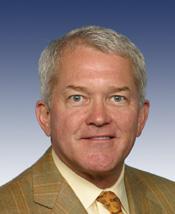
Historical · U.S. House · Florida · District 16
Mark Foley
Former U.S. Representative · Florida District 16 · 1995–2006 · Republican
Mark Foley represented Florida's District 16 in the United States House of Representatives (1995–2006) for the Republican party. The page below collects sourced biographical facts, term history, committee roles, and provenance for Foley.
Bioguide ID: F000238
Key facts
- Full name
- Mark Foley
- State
- Florida
- District
- District 16
- Party
- Republican
- House service
- 1995–2006
- First House term
- 1995
- Status
- Left office
- Current term ends
- —
- Born
- 1954
- Bioguide ID
- F000238
- Committee assignments
- —
- Dataset version
- 1.20260605
Biographical narrative
933 words · sourced from the Wikipedia REST extract
Mark Foley is a former American politician who served as a member of the United States House of Representatives from 1995 until 2006. Representing Florida's 16th congressional district as a member of the Republican Party, Foley's tenure was marked by his involvement in various legislative initiatives, particularly concerning child protection laws. His congressional career ended amid controversy, leading to his resignation in September 2006 following allegations of inappropriate communications with teenage congressional pages.
Early life and career
Mark Adam Foley was born on September 8, 1954, in Newton, Massachusetts. He was raised in a family that valued education and civic engagement, with his father, Edward Joseph Foley Jr., working as a teacher and civic activist. Foley's early life in Massachusetts laid the foundation for his later political career. He moved to Florida, where he began his political journey by serving in the Florida House of Representatives from 1990 to 1992. Following this, he advanced to the Florida State Senate, where he served from 1993 to 1994. These early experiences in state politics provided him with a platform to build his political career and establish connections within the Republican Party.
In 1994, Foley transitioned to national politics, successfully running for a seat in the U.S. House of Representatives. His election marked the beginning of a significant congressional career that would span over a decade. Foley's background in state politics and his understanding of local issues contributed to his appeal among voters in Florida's 16th district.
House tenure
Mark Foley was elected to the U.S. House of Representatives in 1994, securing approximately 58 percent of the vote against his Democratic opponent, John Comerford. His initial victory set the stage for a series of re-elections, during which he consistently garnered a significant majority of the votes. In 1996, he was re-elected with 64 percent of the vote against Democrat Jim Stuber. The following election cycle in 1998 saw him run unopposed, and he continued to demonstrate electoral strength in 2000, winning with 60 percent against Democrat Jean Elliott Brown and a Reform Party candidate. In 2002, he received 79 percent of the vote, and in 2004, he was re-elected with 68 percent.
Throughout his time in Congress, Foley was recognized as a moderate Republican, often aligning with the party's leadership while also advocating for certain issues that distinguished him from more conservative members. He spent a considerable portion of his tenure on the House Ways and Means Committee, which is one of the most influential committees in Congress, overseeing taxation and other significant economic policies. His role on this committee allowed him to engage in critical discussions regarding fiscal policy and social programs.
Foley was also involved in the political landscape during the contentious 2000 Presidential election recount in Florida, where he played a significant role in supporting George W. Bush. His involvement in this high-profile political event further solidified his standing within the Republican Party.
In 2006, Foley held a leadership position as deputy whip, reflecting his influence within the House Republican leadership. However, his congressional career was abruptly cut short when allegations surfaced regarding his communications with teenage congressional pages. These revelations led to significant media coverage and investigations by both the Federal Bureau of Investigation (FBI) and the Florida Department of Law Enforcement. Foley resigned from Congress on September 29, 2006, following a request from Republican leadership amid growing scrutiny.
Legislative focus and committees
During his time in Congress, Mark Foley was particularly noted for his efforts in legislation concerning child protection and issues related to sexual offenses. He served as the chairman of the House Caucus on Missing and Exploited Children, demonstrating a commitment to addressing the challenges faced by vulnerable youth. Foley introduced the "Child Modeling Exploitation Prevention Act of 2002," aimed at prohibiting websites that featured sexually suggestive images of preteen children. Although the bill ultimately failed due to concerns about its implications for the entertainment industry, it highlighted Foley's focus on combating child exploitation.
Foley also played a crucial role in advocating for changes to federal sex offender laws. His efforts were recognized and supported by various organizations, including the National Center for Missing and Exploited Children and victims' rights groups. His legislative initiatives culminated in the passage of a law that was signed by President George W. Bush as part of the Adam Walsh Child Protection and Safety Act of 2006. This law aimed to enhance protections for children and improve the tracking of sex offenders.
In addition to his work on child protection, Foley's legislative record included a range of social issues that sometimes diverged from the mainstream Republican stance. He was a member of The Republican Majority For Choice, advocating for reproductive rights without restrictions on abortion, while also promoting alternatives such as adoption and sexual abstinence. Foley supported the Patriot Act, the death penalty, and strict sentencing for hate crimes, reflecting a blend of moderate and conservative viewpoints.
Foley's involvement in various civic organizations, including the Republican Main Street Partnership and Christine Todd Whitman's It's My Party Too, further illustrated his moderate approach within the Republican Party. His voting record on social policy issues was characterized as moderate by the National Journal in 2005, indicating a willingness to engage with a range of perspectives on contentious issues.
In summary, Mark Foley's congressional career was marked by significant legislative efforts, particularly in the realm of child protection, alongside a moderate political stance that occasionally set him apart from his party's leadership. His tenure, however, was overshadowed by the circumstances surrounding his resignation, which ultimately defined the conclusion of his time in public office.
Notable legislation
Sponsored and co-sponsored legislation for Mark Foley is pending operator curation. The biographical narrative above carries the same provenance trail until per-bill rows are written.
Sources
- [1]https://en.wikipedia.org/wiki/Mark_FoleyWikipedia · retrieved 2026-06-05
Notable quotes
Sourced quotes for Mark Foley are pending operator curation. Narrative-scope provenance remains attached below.
Sources
- [1]https://en.wikipedia.org/wiki/Mark_FoleyWikipedia · retrieved 2026-06-05
Key positions
Curated policy positions for Mark Foley are pending operator review. The biographical narrative above carries the same provenance trail until per-topic positions are written.
Sources
- [1]https://en.wikipedia.org/wiki/Mark_FoleyWikipedia · retrieved 2026-06-05
Terms served
- 1995–1997U.S. House · Term 1 · Republican
- 1997–1999U.S. House · Term 2 · Republican
- 1999–2001U.S. House · Term 3 · Republican
- 2001–2003U.S. House · Term 4 · Republican
- 2003–2005U.S. House · Term 5 · Republican
- 2005–2006U.S. House · Term 6 · Republican
Sources & provenance
Every attributable claim above carries a per-section [N] marker that resolves to the corresponding URL below. Each entry records the upstream provider, the canonical URL, and the timestamp at which the source was retrieved by the ingest pipeline.
Key facts
- https://bioguide.congress.gov/search/bio/F000238bioguide · retrieved 2026-06-05
- http://www.house.gov/foleyhouse.gov · retrieved 2026-06-05
Biographical narrative
- https://en.wikipedia.org/wiki/Mark_Foleywikipedia · retrieved 2026-06-05
Find your representative
Every U.S. state elects representatives by district. Browse Florida’s delegation, the full former-representative roster, or explore the role and term length.
Related on The Candidate
- Preceded by Thomas LewisEarlier holder of the Florida District 16 House seat · Republican.Open
- Succeeded by Tim MahoneyLater holder of the Florida District 16 House seat · Democratic.Open
- Augustus MaxwellFormer U.S. Representative · Florida District 1 · DemocraticOpen
- Charles HamiltonFormer U.S. Representative · Florida District 1 · RepublicanOpen
- Chester McMullenFormer U.S. Representative · Florida District 1 · DemocraticOpen
- Courtney CampbellFormer U.S. Representative · Florida District 1 · DemocraticOpen