
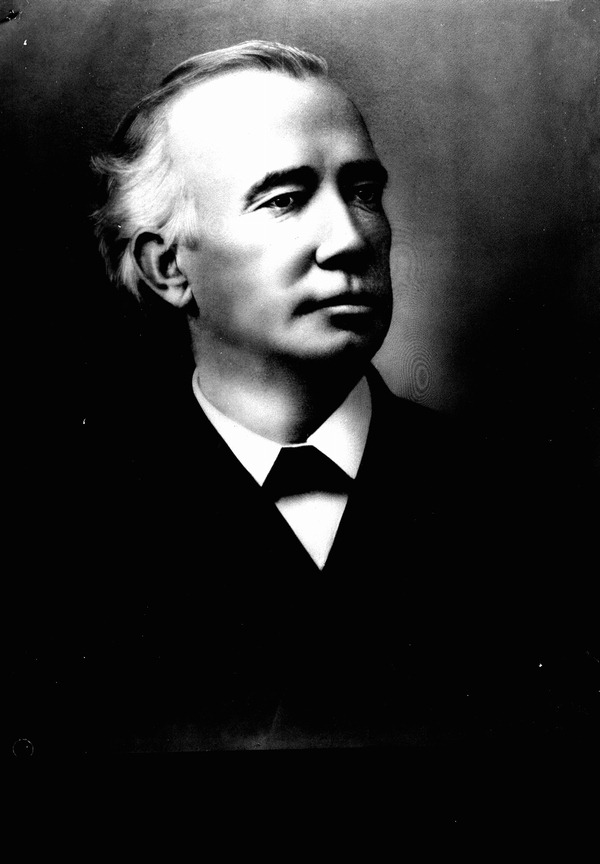
Historical · U.S. House · Florida · District 2
Robert Davis
Former U.S. Representative · Florida District 2 · 1897–1905 · Democratic
Robert Davis represented Florida's District 2 in the United States House of Representatives (1897–1905) for the Democratic party. The page below collects sourced biographical facts, term history, committee roles, and provenance for Davis.
Bioguide ID: D000132
Key facts
- Full name
- Robert Davis
- State
- Florida
- District
- District 2
- Party
- Democratic
- House service
- 1897–1905
- First House term
- 1897
- Status
- Left office
- Current term ends
- —
- Born
- 1849
- Bioguide ID
- D000132
- Committee assignments
- —
- Dataset version
- 1.20260606
Biographical narrative
938 words · sourced from the Wikipedia REST extract
Robert Wyche Davis was a notable figure in American politics, serving as a U.S. Representative from Florida. A member of the Democratic Party, Davis's political career spanned several decades, during which he held various roles, including serving in the Confederate Army, practicing law, and engaging in local governance. His tenure in the U.S. House of Representatives lasted from 1897 to 1905, during which he was involved in significant legislative activities. After leaving Congress, he continued to contribute to his community through various roles, including as a newspaper editor and mayor.
Early life and career
Robert Wyche Davis was born on March 15, 1849, near Albany, Georgia. He grew up in a region that was deeply affected by the Civil War, which would later shape his early experiences and career choices. Davis attended public schools in Georgia, where he received a foundational education that would serve him well in his future endeavors. In 1863, at the age of 14, he enlisted in the Fifth Georgia Volunteer Infantry Regiment of the Confederate States Army. His service lasted until the surrender of his company on April 26, 1865, marking a formative period in his life that influenced his perspectives and ambitions.
Following the war, Davis pursued a legal career. He studied law in Florida and was admitted to the bar in 1869, beginning his practice in Blakely, Georgia. His legal career laid the groundwork for his later political engagements, as he developed a reputation as a skilled attorney. In 1879, Davis relocated to Florida, where he continued his law practice in various towns, including Green Cove Springs in Clay County, Gainesville in Alachua County, and Palatka in Putnam County. His move to Florida marked the beginning of his long-standing connection with the state, where he would eventually make significant political contributions.
Davis's political career began in earnest when he was elected to the Florida House of Representatives, representing Clay County in 1884 and 1885. His leadership abilities were recognized when he was elected Speaker of the House during his second term. This role allowed him to gain valuable experience in legislative processes and governance, further preparing him for his future role in the U.S. Congress. In addition to his legislative duties, he served as the general attorney for the Florida Southern Railway in 1885, a position he resigned upon being elected to the U.S. Congress.
House tenure
Robert Davis was elected as a Democratic Representative to the Fifty-fifth Congress and subsequently to three additional Congresses, serving from March 4, 1897, until March 3, 1905. His election to the House of Representatives marked a significant step in his political career, allowing him to represent the interests of his constituents at the national level. Throughout his four terms in Congress, Davis was involved in various legislative matters, contributing to discussions and decisions that would shape the future of Florida and the nation.
During his time in the House, Davis participated in the legislative process during a period of significant change in the United States. The late 19th and early 20th centuries were characterized by rapid industrialization, urbanization, and social change, which influenced the political landscape. While specific details of his legislative contributions are not documented, it is understood that he engaged with the pressing issues of his time, advocating for policies that aligned with the interests of his constituents and the Democratic Party.
Davis chose not to seek renomination for the Fifty-ninth Congress in 1904, concluding his congressional career after serving four terms. His decision to step back from national politics allowed him to return to his legal practice, where he continued to contribute to his community through his professional work.
Legislative focus and committees
While specific details regarding Robert Davis's legislative focus and committee assignments during his tenure in the U.S. House of Representatives are not extensively documented, it can be inferred that his background as a lawyer and his experience in state politics influenced his approach to national issues. As a member of the Democratic Party, he likely aligned with the party's platform, which during this period included support for agrarian interests, labor rights, and economic reforms.
Davis's legislative work would have been shaped by the broader political context of the time, including the challenges faced by Southern states in the post-Reconstruction era. Issues such as civil rights, economic development, and infrastructure improvements were prominent during his time in office, and it is reasonable to assume that he engaged with these topics in some capacity.
After concluding his congressional service, Davis returned to Florida, where he resumed his legal practice in Palatka and later in Tampa. His commitment to public service continued as he took on various roles, including serving as the register of the United States Land Office in Gainesville from 1914 to 1922. Additionally, he became involved in local media as the editor of the Gainesville Sun, a position that allowed him to influence public opinion and engage with the community on important issues.
Davis's local governance experience was further highlighted by his tenure as mayor of Gainesville in 1924 and 1925. His leadership in this role demonstrated his ongoing commitment to public service and community development. In 1928, he resumed his legal practice, continuing to contribute to the legal profession until his later years.
Robert Wyche Davis passed away on September 15, 1929, in Gainesville, Florida. His contributions to both state and national politics, as well as his involvement in local governance and the legal field, reflect a life dedicated to public service. He was interred in Evergreen Cemetery in Gainesville, leaving behind a legacy of engagement in the political and civic life of Florida.
Notable legislation
Sponsored and co-sponsored legislation for Robert Davis is pending operator curation. The biographical narrative above carries the same provenance trail until per-bill rows are written.
Sources
- [1]https://en.wikipedia.org/wiki/Robert_Wyche_DavisWikipedia · retrieved 2026-06-06
Notable quotes
Sourced quotes for Robert Davis are pending operator curation. Narrative-scope provenance remains attached below.
Sources
- [1]https://en.wikipedia.org/wiki/Robert_Wyche_DavisWikipedia · retrieved 2026-06-06
Key positions
Curated policy positions for Robert Davis are pending operator review. The biographical narrative above carries the same provenance trail until per-topic positions are written.
Sources
- [1]https://en.wikipedia.org/wiki/Robert_Wyche_DavisWikipedia · retrieved 2026-06-06
Terms served
- 1897–1899U.S. House · Term 1 · Democratic
- 1899–1901U.S. House · Term 2 · Democratic
- 1901–1903U.S. House · Term 3 · Democratic
- 1903–1905U.S. House · Term 4 · Democratic
Sources & provenance
Every attributable claim above carries a per-section [N] marker that resolves to the corresponding URL below. Each entry records the upstream provider, the canonical URL, and the timestamp at which the source was retrieved by the ingest pipeline.
Key facts
- https://bioguide.congress.gov/search/bio/D000132bioguide · retrieved 2026-06-06
- https://www.govtrack.us/congress/members/403267govtrack · retrieved 2026-06-06
Biographical narrative
- https://en.wikipedia.org/wiki/Robert_Wyche_Daviswikipedia · retrieved 2026-06-06
Find your representative
Every U.S. state elects representatives by district. Browse Florida’s delegation, the full former-representative roster, or explore the role and term length.
Related on The Candidate
- Preceded by Charles CooperEarlier holder of the Florida District 2 House seat · Democratic.Open
- Succeeded by Frank ClarkLater holder of the Florida District 2 House seat · Democratic.Open
- Augustus MaxwellFormer U.S. Representative · Florida District 1 · DemocraticOpen
- Charles HamiltonFormer U.S. Representative · Florida District 1 · RepublicanOpen
- Chester McMullenFormer U.S. Representative · Florida District 1 · DemocraticOpen
- Courtney CampbellFormer U.S. Representative · Florida District 1 · DemocraticOpen